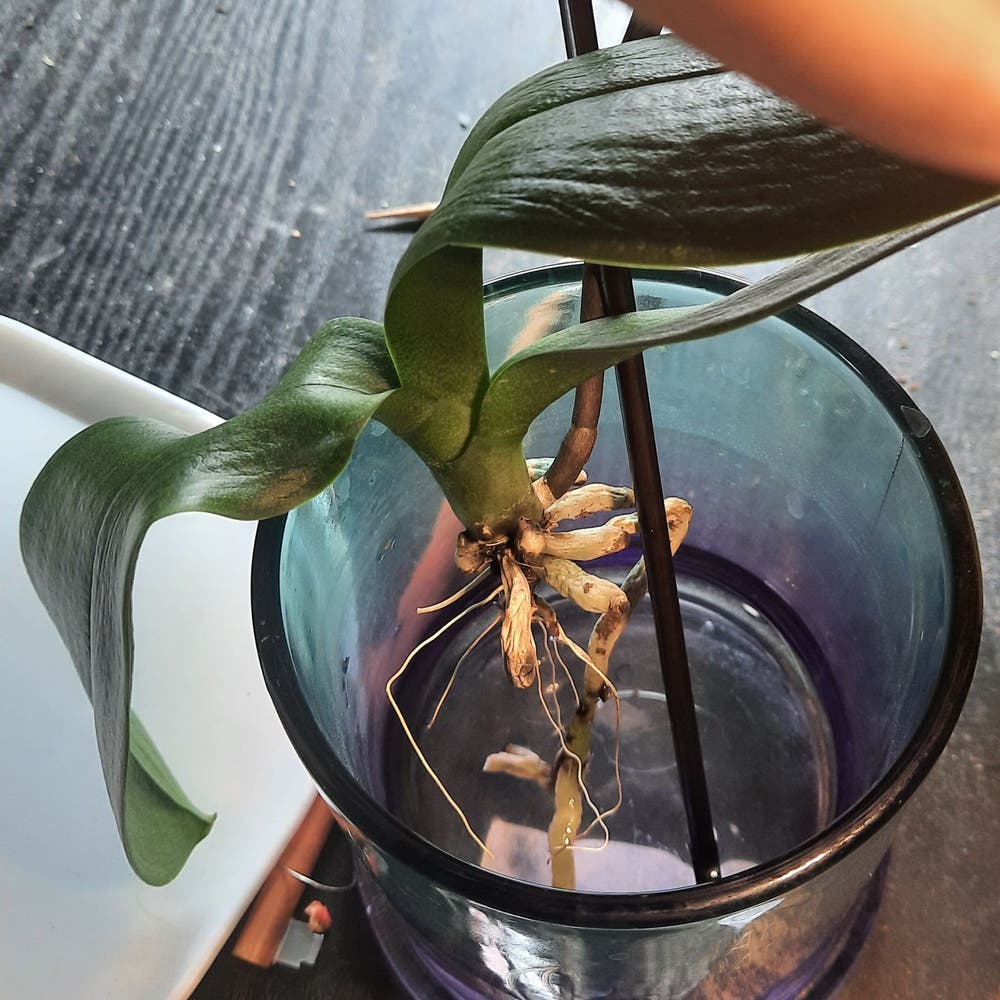
Why Are My Mini Phalaenopsis Orchid Leaves Curling?
Phalaenopsis amabilis 'Miniature'
By the Greg Editorial Team
Jun 18, 2024•4 min read
This article was created with the help of AI so we can cover more plants for you. May contain errors. See one? Report it here.
- 🌱 Curling leaves signal distress; watch for changes, especially in older leaves.
- 💧 Balance watering and climate to prevent over/underwatering and temperature stress.
- 🌞 Proper light and nutrients are key to avoiding future leaf curling issues.
Spotting the Signs: When Your Orchid's Leaves Start to Curl
🌀 Identifying Leaf Curl
Curling leaves on your Mini Phalaenopsis Orchid can be subtle at first. Look for leaves that no longer lay flat or have a twisted appearance. Early signs might include a slight upward curl at the edges or a concave shape developing. Vigilance is key; catching these changes early can make all the difference.
🚨 Understanding the Severity
Not all curl is a crisis. Some natural variation is normal, especially in new leaves. However, if older leaves start to curl or if the curling is accompanied by discoloration or a brittle texture, it's time to pay attention. These could be distress signals, indicating that your orchid's environment is less than ideal.

The Usual Suspects: Common Causes of Leaf Curling
💧 Thirsty Roots or Drowning?
Overwatering is like suffocating your orchid's roots, leading to limp, curled leaves. It's a silent killer, often mistaken for dehydration. Conversely, underwatering leaves your orchid's roots gasping for moisture, causing leaves to curl inward, resembling a dried-out autumn leaf.
Finding the watering sweet spot is crucial; it's a balancing act that requires attention and adaptation to your plant's needs.
🔥 It's Getting Hot in Here
Temperature stress is like an unwanted sauna for your orchid. Too hot, and the leaves curl up as if trying to escape the heat. Too cold, and they curl inward, as if shivering. Consistent temperatures within the orchid's comfort zone prevent these stress responses.
💨 A Breath of Fresh Air
Humidity and airflow are the unsung heroes in the world of orchid care. Without enough humidity, leaves curl and crisp like they're yearning for a drop of water. Yet, with poor airflow, leaves become stagnant and susceptible to disease. It's about creating an environment that mimics the gentle breezes and moist air of a tropical paradise.

First Aid for Curly Leaves: Immediate Actions to Take
💧 Watering Woes: Finding the Sweet Spot
Adjusting your watering routine is crucial when you notice your Mini Phalaenopsis Orchid's leaves curling. The goal is to find that hydration equilibrium where the roots are moist but not waterlogged. If the soil feels dry, give your orchid a thorough watering, allowing excess water to drain away. Conversely, if the soil is soggy, hold off on watering and let it dry out. Remember, the top 2 inches of soil should be your moisture gauge—dry to the touch before the next watering session.
🌡️ Climate Control: Tweaking Your Orchid's Environment
Leaf curl can also be a cry for help due to temperature stress or improper humidity. Orchids enjoy a stable environment, so keep them away from drafts and direct heat sources. If your home is dry, especially during winter months, consider using a humidifier to maintain ambient moisture. During hot spells, ensure your orchid isn't baking in direct sunlight. Rotate the plant to find a spot with indirect light where it can bask without the risk of leaf scorch.

Long-Term Care: Preventing Future Episodes of Leaf Curling
💡 Light It Up Right
Proper lighting is crucial for your Mini Phalaenopsis Orchid. It's a bit like Goldilocks' porridge—too much and the leaves curl up in defense, too little and they droop in despair. Aim for that sweet spot of bright, indirect light. If your orchid's leaves are darker than the rich green of a healthy plant, it's a sign to move it closer to the light source. Conversely, if the leaves are lighter or have a reddish tinge, your orchid might be sunburned—time to dial it back.
🍽️ Feeding Finesse
Nutrition balance is key; think of it as a diet for your orchid. A balanced fertilizer is like a multivitamin, providing all the necessary nutrients without overdoing it. Use a 20-20-20 fertilizer diluted to quarter strength every other week during the growing season. In the dormant period, ease up—like cutting back on snacks between meals. Remember, overfeeding can be just as problematic as underfeeding, leading to nutrient burn and—you guessed it—leaf curling. Keep the soil's pH neutral to ensure your orchid can actually absorb these nutrients.
⚠️ Safety First
This content is for general information and may contain errors, omissions, or outdated details. It is not medical, veterinary advice, or an endorsement of therapeutic claims.
Always consult a qualified healthcare professional before using any plant as food, medicine, or supplement.
Never eat any plant (or feed one to pets) without confirming its identity with at least two trusted sources.
If you suspect poisoning, call Poison Control (800) 222-1222, the Pet Poison Helpline (800) 213-6680, or your local emergency service immediately.
Spotted an error? Please report it here.
Prevent leaf curling 🌿 in your mini Phalaenopsis by letting Greg tailor your watering and care routine for orchid success.