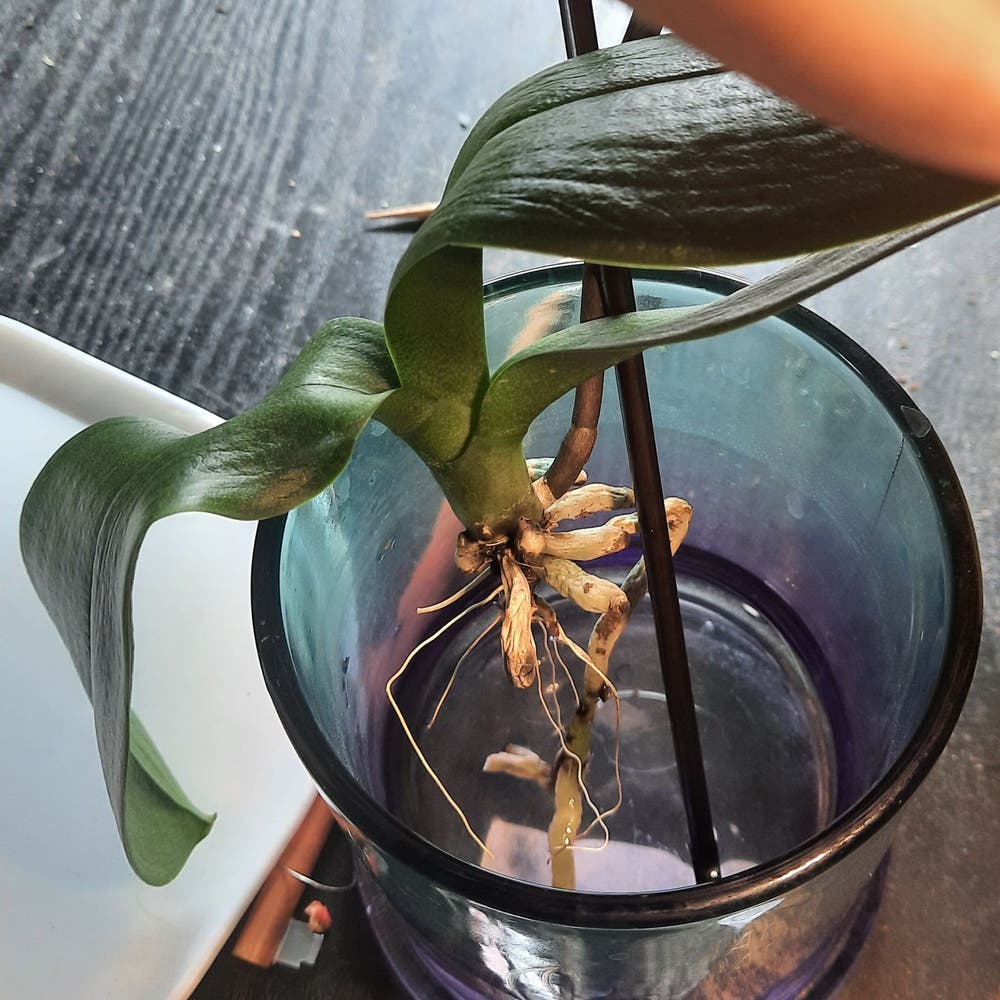
Why Are My Mini Phalaenopsis Orchid Leaves Falling Over? 😔
Phalaenopsis amabilis 'Miniature'
By the Greg Editorial Team
Jun 18, 2024•5 min read
This article was created with the help of AI so we can cover more plants for you. May contain errors. See one? Report it here.
- 🌊 Overwatering causes root rot; trim and dry roots to rescue.
- 🌞 Low light leads to droop; east-facing windows provide ideal sunlight.
- 🌱 Consistent care routine prevents future leaf droop and promotes health.
When Water Works Against You: Balancing Hydration for Your Orchid
🌧️ Overwatering Woes
Yellow leaves and a soggy base are the tattletales of overwatering your Mini Phalaenopsis Orchid. The roots should be a healthy white, not a mushy brown mess. Overwatering can lead to root rot, the silent killer of orchid enthusiasm.
To rescue an overwatered orchid, take swift action. Remove the plant from its pot and trim any rotten roots with a sterile instrument. Let the roots dry before repotting in fresh, well-draining media. Remember, your orchid's not a fish; it doesn't need to swim.
💧 The Thirsty Orchid Dilemma
Wrinkled leaves and dry soil? Your orchid's screaming for a drink. Underwatering sucks the life out of leaves, leaving them limp and lifeless. It's a thirsty world for an orchid that's not getting its fill.
Revive your parched plant by checking the soil moisture with your finger—nature's probe. When watering, do it deeply, ensuring the roots get a satisfying gulp. If the potting mix dries out faster than your phone battery, increase the watering frequency. And if your orchid's living in the fast lane of dehydration, consider repotting to a more moisture-retentive home.

Let There Be Light: Ensuring Your Orchid Gets the Glow It Needs
🌞 Too Much Shade, Not Enough Support
Low light levels can leave your Mini Phalaenopsis Orchid's leaves drooping in despair. It's a classic case of light deprivation leading to a lackluster plant.
To test if your orchid is getting enough light, place your hand above the leaves during peak sunlight hours. A sharp shadow means the light might be too intense, while a faint one suggests the light is just right.
💡 Bright ideas for lighting up your orchid's life without burning it out
If your orchid's leaves are paler than a ghost, it's probably begging for a sunnier spot. But don't just shove it into the spotlight; orchids can't handle the paparazzi flash of direct sunlight.
East-facing windows are your orchid's best friend, offering the Goldilocks zone of sunlight. If natural light is playing hard to get, consider LED grow lights with a color temperature of 5000-6000K.
Remember, your orchid's leaves are like mood rings, subtly telling you whether they're basking in bliss or silently screaming for shade. Keep an eye out for yellow leaves or dark, droopy ones—they're your orchid's way of saying, "Help me out here!"
Rotate your plant regularly to avoid the dreaded "Quasimodo stance." And if you're introducing it to a brighter spot, do it gradually. Orchids need time to acclimate, or they'll throw a fit.
Keep the light consistent, and your orchid will reward you with leaves that stand up like they've just had a shot of espresso.

The Right Fit: Pot and Stability Tricks for Upright Leaves
🌱 Choosing the Perfect Pot
Selecting a pot size that's just right is crucial for your Mini Phalaenopsis Orchid's posture. Too big, and you're inviting soggy, unhappy roots; too snug, and your orchid's growth is stifled. Aim for a pot that's an inch larger than the current one, ensuring a cozy but not cramped fit.
Drainage holes are non-negotiable. They're the unsung heroes in the fight against root rot. Clear pots can be insightful for monitoring root health, but remember to shield roots from too much light with an outer pot if needed.
🌿 Repotting Tips for a Stable and Happy Orchid
Repotting is like moving day for your orchid—stressful but sometimes necessary. Use a mix of potting soil, perlite, and orchid bark to create a luxurious yet practical bed for your plant's roots. Be gentle with the roots to avoid transplant shock and water carefully post-repotting to encourage recovery.
🌼 Anchors Aweigh: Stabilizing Your Orchid
For the orchid that's all wobble and no waggle, stability is key. If your orchid is playing the leaning tower of Pisa, it's time for some support. DIY stakes and clips can act as a scaffold, helping your orchid maintain its poise.
Securing your orchid properly ensures it won't topple over and can focus on flaunting those magnificent leaves. Use soft ties to avoid damaging the stems, and voilà, your orchid stands tall once more.

Reviving and Thriving: Long-Term Care for Non-Droopy Leaves
🕰️ Routine Checks and Balances
Creating a care schedule that prevents future leaf droop is like setting up a regular coffee date with your orchid. It's all about consistency.
- Monitor Regularly: Keep an eye on your plant as if it's the latest binge-worthy series. Changes in leaf texture or color are your orchid's way of waving a red flag.
- Watering Rhythm: Establish a watering schedule that's as regular as your morning alarm. Overwatering and underwatering are both no-nos.
- Pruning Practice: Regularly snip off any unhealthy leaves. It's like hitting the refresh button on your orchid's health.
💪 The Strong Stem Strategy
Strengthening your orchid's stems is akin to giving it a gym membership for leaf support.
- Support System: Use stakes or clips to give your orchid's stems a bit of backup. Think of it as a personal trainer for your plant.
- Fertilize Wisely: A balanced fertilizer is like a multivitamin for your orchid. It'll help build those stem muscles.
- Temperature Checks: Orchids enjoy a little day-night temperature swing. It's the difference between a cozy bed and a hot yoga class for your plant's stems.
Remember, your orchid is not just another pretty face. It's a living, breathing entity that craves attention and routine. Keep up with these tips, and your Mini Phalaenopsis Orchid will be less drama queen and more green goddess.
⚠️ Safety First
This content is for general information and may contain errors, omissions, or outdated details. It is not medical, veterinary advice, or an endorsement of therapeutic claims.
Always consult a qualified healthcare professional before using any plant as food, medicine, or supplement.
Never eat any plant (or feed one to pets) without confirming its identity with at least two trusted sources.
If you suspect poisoning, call Poison Control (800) 222-1222, the Pet Poison Helpline (800) 213-6680, or your local emergency service immediately.
Spotted an error? Please report it here.
Prevent your mini Phalaenopsis orchid leaves from drooping by relying on Greg's reminders 🌱 to balance watering and light, ensuring your orchid stands tall and thrives.