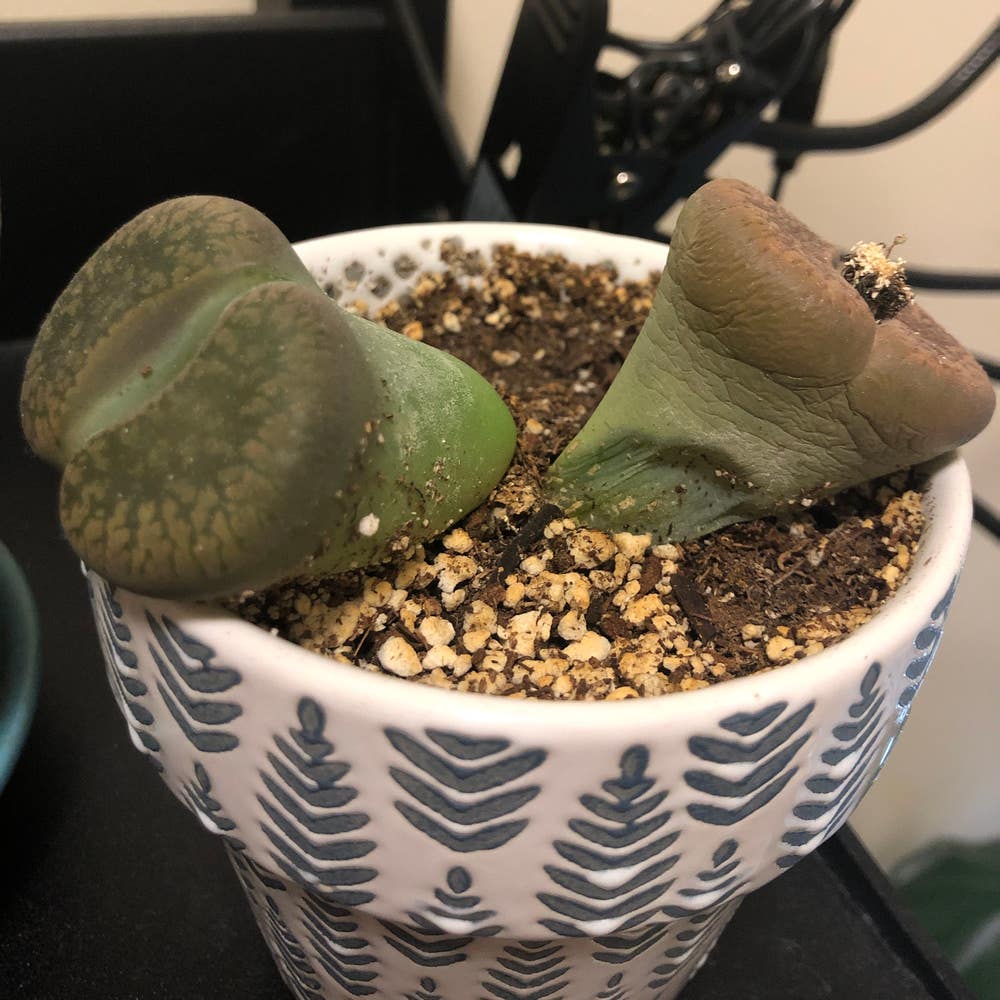
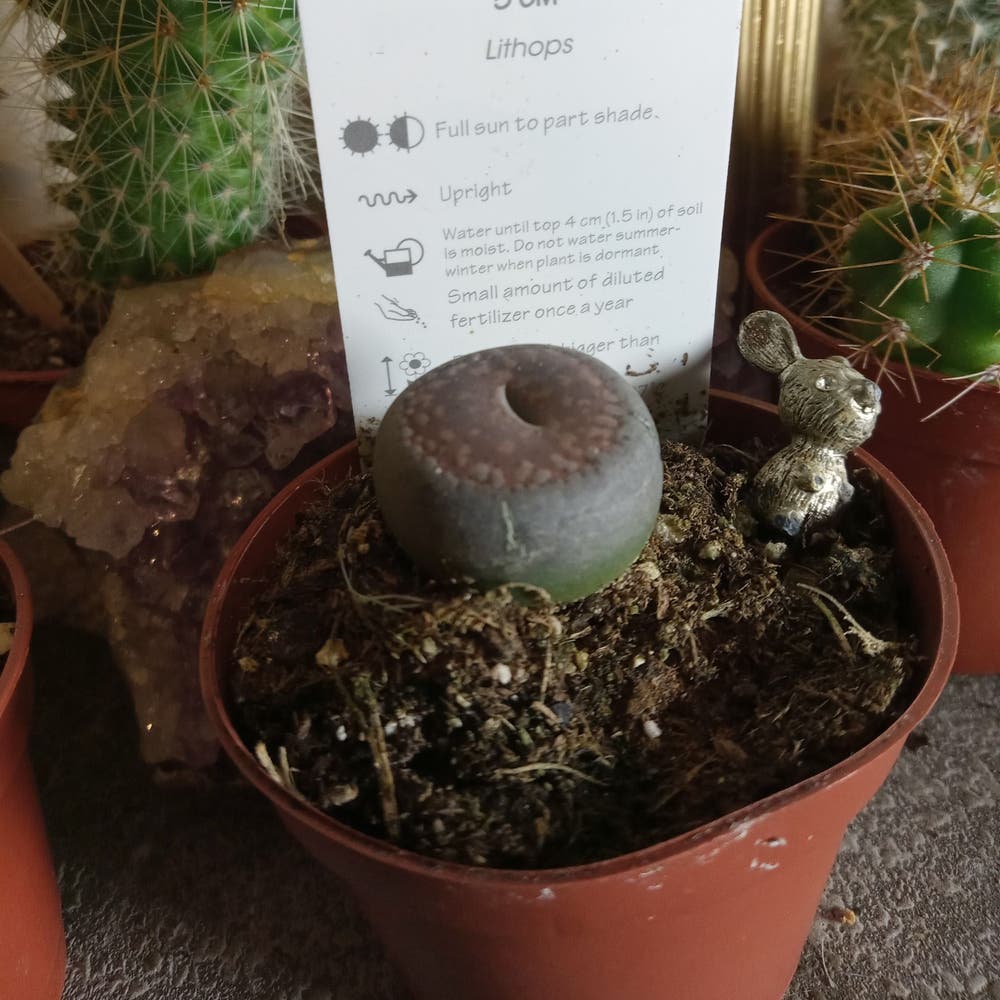
🪨 Why Are My Lithops Leaves Curling?
Lithops bromfieldii
By the Greg Editorial Team
Jun 18, 2024•5 min read
This article was created with the help of AI so we can cover more plants for you. May contain errors. See one? Report it here.
Curl no more: Discover how to keep your Lithops thriving with the right care 🌵.
- Adjust watering and soil to prevent Lithops leaf curling.
- Mimic Lithops' natural habitat for optimal growth and health.
- Act promptly against pests and disease to avoid irreversible damage.
Common Treatments for Lithops Leaves Curling
💧 Adjusting Watering Practices
Watering is a fine art for Lithops. Overdo it, and you're on a slippery slope to mushy leaves. Underwatering makes them look like crumpled paper. The trick? Water only when the top inch of soil is dry. If you're second-guessing your touch, a moisture meter is your no-drama solution. During summer, these stone impersonators prefer a drought-like vacation. So, ease up on the hydration.
🌱 Soil and Pot Considerations
The right soil mix and pot size are non-negotiable for happy Lithops. Think lean and mean – well-draining soil that doesn't hold a grudge, meaning no waterlogged roots. The pot should be like a tailored suit: snug but not suffocating. Too big, and you risk root rot; too small, and growth is cramped. Make sure there are enough drainage holes to let excess water escape. It's all about creating an environment where water visits but doesn't overstay.

Preventive Measures for Leaf Curling
🌿 Environmental Optimization
Lithops, like any self-respecting hermit, thrive in stability. To prevent leaf curling, it's crucial to mimic their natural habitat.
🌡️ Temperature Control
Keep your living stones cozy but not hot; above 50°F is their comfort zone. Drafts are their nemesis, so steer clear of those chilly windows in winter.
🌞 Light Requirements
These sun worshippers demand bright, indirect light. Direct sunlight is their kryptonite, causing leaves to curl up in distress. Position them where they can bask without the burn.
💨 Humidity and Airflow
Lithops are not fans of the tropical vibe; they prefer their air like their soil—dry. If your air is more rainforest than desert, a dehumidifier might be your new best friend.
🚫 Avoiding Common Mistakes
Consistency is key. These plants detest surprises in their care routine. Stick to a regular watering and care schedule to keep them from throwing a leafy fit.
🐜 Pest Vigilance
Pests are the ninjas of the plant world—silent but deadly. Keep an eye out for these critters and show them the door with insecticidal soap or neem oil before they induce curling chaos.
🍽️ Nutrient Balance
Yellow leaves could be crying out for nitrogen, while crispy edges might be a potassium SOS. A balanced, water-soluble fertilizer can save the day, but remember, moderation is the mantra. Too much love can be just as lethal as neglect.
🌡️ Monitoring Environmental Conditions
Be the helicopter parent of the plant world. Use a thermometer and hygrometer to monitor temperature and humidity. Your Lithops will reward you with flat, happy leaves.

Potential Complications and Risks
Fungal infections and irreversible leaf damage are the grim reapers of the Lithops world when it comes to leaf curling. If you don't act with the urgency of a caffeine-fueled ER doctor, you might as well say goodbye to your stony succulent pals.
🍄 Fungal Infections: The Sneaky Culprits
Fungi are like the uninvited party crashers that ruin your Lithops' vibe. Powdery mildew and botrytis can turn leaves into a sad, curled mess. If you spot any funky-looking spots or a powdery substance, it's time to bring out the big guns: fungicides. But remember, it's like antibiotics – don't overuse or you'll end up with a whole new set of problems.
🍃 Irreversible Leaf Damage: The Point of No Return
Let's get real: once your Lithops leaves curl like a bodybuilder's biceps, they're often past the point of no return. It's a silent scream for help, and if you've ignored their cries for too long, you might have to start from scratch. Prevention is your best friend here, not a cure.
💧 Water Quality: The Silent Killer
You might not think it, but the water you're giving your Lithops could be more toxic than your ex. Chlorine and other chemicals can wreak havoc, causing the leaves to curl like they're trying to escape. Use filtered water, or let tap water sit out overnight to let the nasties evaporate.
🌡️ Temperature and Environmental Stress: The Cold Shoulder
Lithops are as picky about temperature as a teenager choosing their outfit. Too cold, and the leaves curl up tighter than a rolled-up sleeping bag. Keep them cozy, but not too hot, or you'll have a different kind of meltdown on your hands.
🐜 Pests: The Tiny Terrorists
Pests are the ninjas of the plant world – small, sneaky, and devastating. Red spider mites and other critters love to munch on Lithops, causing the leaves to curl in distress. Regular inspections and a good blast of insecticidal soap or neem oil can send these pests packing.
🔗 The Copper Conundrum: A Double-Edged Sword
Copper sprays can be a lifesaver against certain fungal diseases, but it's a delicate dance. Too much copper in the soil, and you're looking at a toxic wasteland for your Lithops. Use sparingly, and always follow the "less is more" philosophy.
Remember, Lithops are like the canaries in the coal mine – any change in their leaves is a sign that something's up. Keep a vigilant eye, and you might just prevent a full-blown plant apocalypse.

⚠️ Safety First
This content is for general information and may contain errors, omissions, or outdated details. It is not medical, veterinary advice, or an endorsement of therapeutic claims.
Always consult a qualified healthcare professional before using any plant as food, medicine, or supplement.
Never eat any plant (or feed one to pets) without confirming its identity with at least two trusted sources.
If you suspect poisoning, call Poison Control (800) 222-1222, the Pet Poison Helpline (800) 213-6680, or your local emergency service immediately.
Spotted an error? Please report it here.
Prevent your Lithops leaves from curling by letting Greg craft a custom care schedule 📅, ensuring your succulents thrive in their unique environment.