How Often Should I Water My Berlandier's Nettlespurge?
Jatropha cathartica
By the Greg Editorial Team
Apr 28, 2024•5 min read
This article was created with the help of AI so we can cover more plants for you. May contain errors. See one? Report it here.
- Drooping leaves? Time to water. Yellow leaves? Too much water.
- Seasons change, so does watering - more in summer, less in winter.
- Monitor soil moisture with meters or finger test to guide watering.
When to Water Your Berlandier's Nettlespurge
💧 Recognizing Thirsty Plants
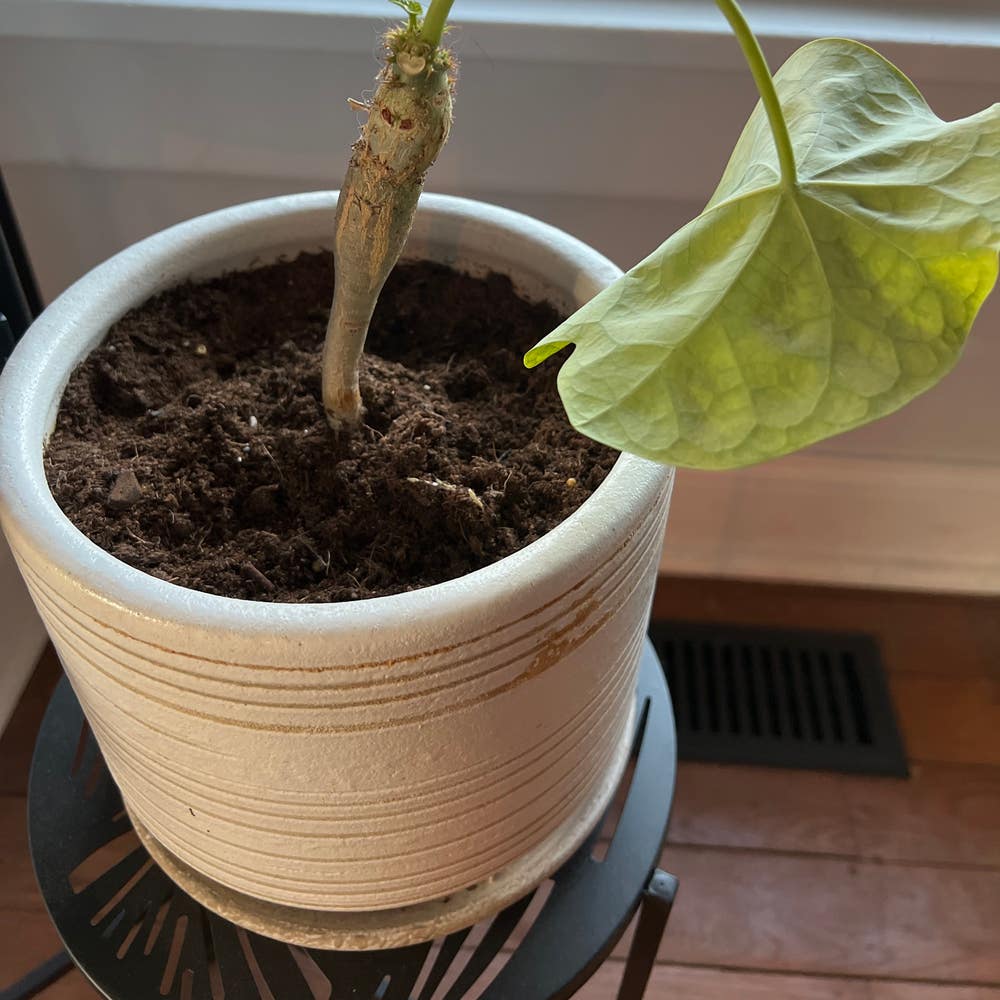
Drooping leaves and a dry topsoil layer are your Berlandier's Nettlespurge cry for hydration. Underwatering can lead to a plant that's as lackluster as a neglected garden. On the flip side, overwatering symptoms include leaves that are more yellow than a school bus and soil that's perpetually soggy. Your plant's not auditioning for a role in a swamp; let the soil dry out between waterings.
🌦 The Role of Seasons
As the seasons shift, so should your watering game. Summer's heat demands more frequent watering, while winter's chill calls for restraint. Don't be a slave to the calendar; let your plant's thirst guide you. If it's guzzling water like a marathon runner in July, quench its thirst. When it's barely sipping in January, ease up on the watering can.
🌿 The Plant's Environment
Light, temperature, and humidity aren't just small talk topics; they're critical to your watering strategy. High light and warm temps can turn your plant into a thirsty beast, while low light and cooler conditions mean less frequent drinks. Humidity acts like a secret agent, stealthily reducing your plant's need for water. Keep these factors in check, and you'll be the Sherlock Holmes of plant care, deducing the perfect watering schedule.
How to Water Berlandier's Nettlespurge
💧 The Right Technique
Watering your Berlandier's Nettlespurge isn't just a chore—it's a ritual. Here's how to do it right:
- Check the soil before you even think about watering. If the top inch feels dry, it's time.
- Use a watering can or hose with a gentle flow to avoid disturbing the soil or damaging the foliage.
- Aim for the base of the plant, not the leaves. You want to quench the roots, not give the leaves a bath.
- Water until you see it escape from the drainage holes at the bottom of the pot—that's your cue to stop.
- Wait for the soil to dry out before the next watering session. Overenthusiasm can lead to root rot.
💦 Water Quality Matters
The water you use can be the difference between a thriving plant and a dying one. Keep these pointers in mind:
- Room temperature water is your plant's best friend. Cold water can shock the roots, and hot water is just cruel.
- If you're using tap water, let it sit out overnight to dechlorinate. Your plant's roots are sensitive to chemicals.
- For the plant connoisseur, distilled or rainwater is the equivalent of a fine wine. It's pure, and your Berlandier's Nettlespurge will thank you.
- Monitor your plant's reaction over time. If it's not thriving, consider switching up your water source.
Remember, watering is more than just a task—it's the heartbeat of your plant's life. Get it right, and you'll be rewarded with lush growth.
The Perfect Home for Your Plant
🌱 Choosing the Right Pot
Size matters when it comes to pots for your Berlandier's Nettlespurge. A pot too large will hold excess moisture, risking root rot, while a small one will dry out too quickly, demanding constant attention. Aim for a pot that gives your plant's roots room to grow but isn't so spacious that water doesn't drain properly.
Terracotta pots are porous, allowing soil to dry out more quickly, which can be both a blessing and a curse. They're great for plants that dislike wet feet, but they'll have you reaching for the watering can more often. Plastic pots, on the other hand, retain moisture longer, which means less frequent watering but a higher risk of waterlogging if you're not careful.
🌱 The Best Soil Mix
The right soil mix is like a good support system for your plant—it provides nutrients, aeration, and moisture without suffocating the roots. For Berlandier's Nettlespurge, a well-draining mix is non-negotiable. It should hold enough water to quench the plant's thirst but let excess moisture escape to prevent waterlogging.
Consider adding perlite or sand to increase drainage, or organic matter like compost to help retain just the right amount of water. Remember, the soil is the plant's pantry, and you want it stocked with the right balance of air and water. Too much of either, and your plant will either drown or starve.
Keeping Track: Monitoring Soil Moisture
🌱 Tools of the Trade
Forget playing guessing games with your Berlandier's Nettlespurge. Moisture meters are like secret agents, delivering intel on when to water. They're simple: stick them in the soil, get a reading, and act. No meter? No problem. The finger test is your trusty sidekick—plunge in an inch deep, and if the soil feels like a dry martini, it's time to water.
🔄 Adjusting on the Fly
Your plant's thirst can be as unpredictable as a plot twist. Observe and adapt—if the leaves drop hints of distress, tweak your watering routine. Got a moisture meter reading that doesn't sit right? Trust your gut and double-check with your finger. Remember, your plant's well-being trumps any schedule. Keep your eyes peeled and adjust on the fly; it's the secret to a drama-free plant life.
⚠️ Safety First
This content is for general information and may contain errors, omissions, or outdated details. It is not medical, veterinary advice, or an endorsement of therapeutic claims.
Always consult a qualified healthcare professional before using any plant as food, medicine, or supplement.
Never eat any plant (or feed one to pets) without confirming its identity with at least two trusted sources.
If you suspect poisoning, call Poison Control (800) 222-1222, the Pet Poison Helpline (800) 213-6680, or your local emergency service immediately.
Spotted an error? Please report it here.
Ensure your Berlandier's Nettlespurge is perfectly watered 💧 with Greg's custom reminders that consider your home's unique environment and the plant's seasonal needs!