Why Are My Berlandier's Nettlespurge Leaves Falling Over?
Jatropha cathartica
By the Greg Editorial Team
Apr 28, 2024•4 min read
This article was created with the help of AI so we can cover more plants for you. May contain errors. See one? Report it here.
- Yellow or crisp leaves? Overwatering and underwatering are likely culprits.
- Soil structure matters: Use perlite, coarse sand, and compost for health.
- Stable temps and filtered light keep Berlandier's Nettlespurge happy.
Spotting the Trouble Signs
🚱 When Overwatering Takes Its Toll
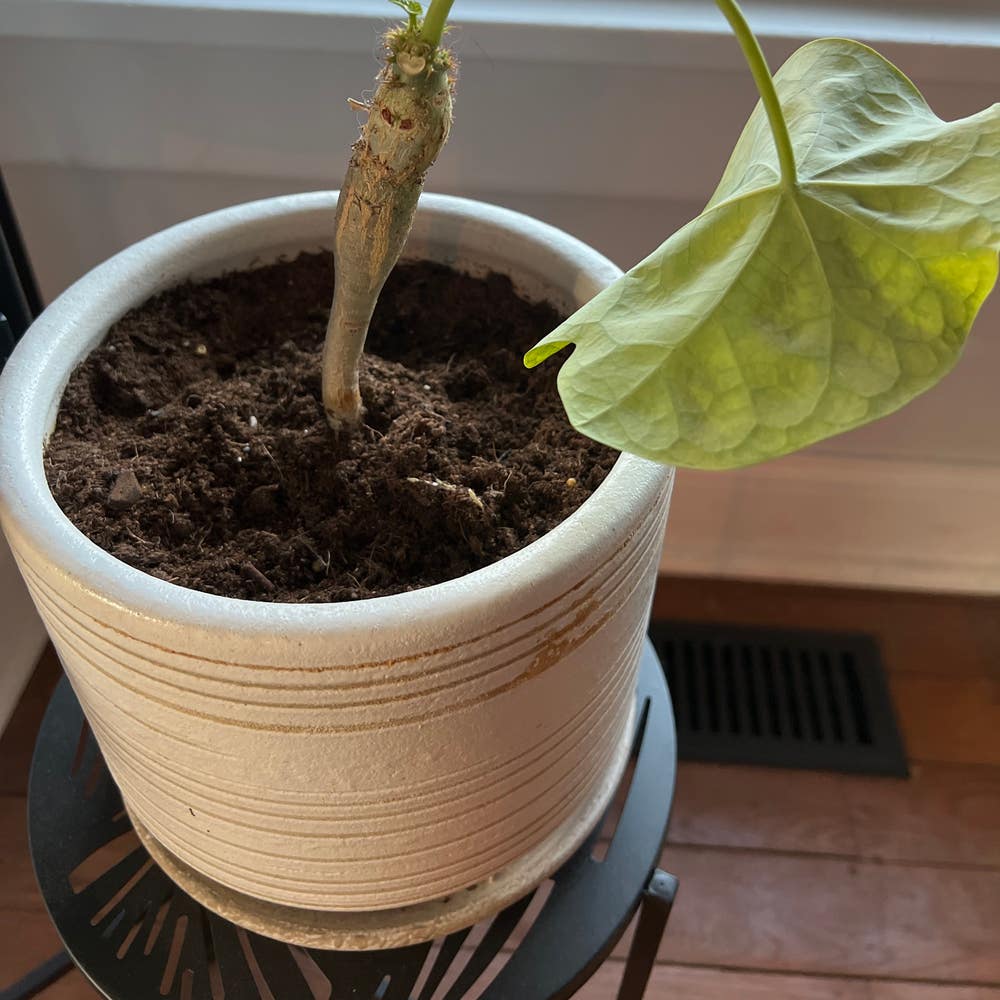
Yellowing leaves are the plant's distress signal; they're practically waving a white flag. If the soil feels like a soggy mess, your watering enthusiasm needs to be dialed back. Overwatered roots are like party guests who've overstayed their welcome; they're suffocating and desperate for some breathing room.
🏜️ The Underwatering Conundrum
Crisp, curling leaves are your plant's way of saying it's thirsty. When the soil is as dry as a desert, it's a clear sign to hydrate. If the soil pulls away from the pot's edge, it's like your plant is shouting from a billboard, begging for a drink.
🌧️ Soil Woes: Compaction and Poor Drainage
Soil that's harder than a trivia quiz indicates compaction; it's time to loosen up. Poor drainage turns your pot into a miniature swamp; mix in some sand or perlite to let the water flow. If your plant's roots are swimming rather than sipping, it's a one-way ticket to droopy leaf town.
Getting to the Root of the Problem
💧 Balancing the Watering Act
Watering your Berlandier's Nettlespurge should be like checking your phone—done often enough to stay updated but not so much that it becomes a problem. Aim for soil that's moist, like a well-wrung sponge, and always check before adding more water.
Drainage holes are your plant's lifeline. They prevent the dreaded soggy soil syndrome that can lead to root rot. If you're the forgetful type, a moisture meter can be your cheat sheet, telling you when it's time to water.
🌱 Soil Rehab 101
Soil compaction is the silent dream killer for your plant's roots. It's like living in a cramped apartment with no air; nobody thrives in that. Loosen up the soil by mixing in some perlite or coarse sand to improve aeration and drainage.
Organic matter is your soil's superfood. Adding compost can boost nutrient availability and enhance soil structure. Think of it as upgrading your plant's bed from a lumpy mattress to a memory foam paradise.
Remember, your plant's health is in your hands. Regular check-ups and tweaks to the soil and watering habits can prevent a whole host of issues. Keep it light, keep it airy, and keep it moist—just don't overdo it.
Let There Be Light (But Not Too Much)
💡 Finding the Perfect Spot
Bright, filtered sunlight is the sweet spot for Berlandier's Nettlespurge. To achieve this, position your plant near east or west-facing windows, where the light is kinder. Sheer curtains can be your best friend here, serving as a gentle filter against the harsher rays.
Artificial grow lights are a solid plan B if your window game is weak. Just keep them at a respectful distance to prevent the dreaded leaf burn. And if you're into gadgets, a light meter can take the guesswork out of the equation. Otherwise, watch your plant's reaction over time and adjust its spot like you're tuning a guitar—until the tone is just right.
🌡️ Temperature Swings and Plant Health
Stable temperatures are like a cozy blanket for your plant. Room temperature is the comfort zone; avoid the extremes of a sauna or an icebox. Rotate your plant to ensure even light exposure, and as the seasons change, so should your plant's position. Less water in winter, more shade in summer—it's not high maintenance, it's just adapting to the rhythm of the year.
Remember, your plant hates surprises more than you do. Drafts are the jump scares of the plant world, so keep them away. And just like you'd adjust the thermostat to keep your dinner guests happy, tweak your plant's environment to keep it from throwing a leafy tantrum.
Pro Tips for Leafy Success
💧 Watering Wisdom
Consistency is your plant's best friend when it comes to watering. Check the top inch of soil; if it's dry, it's time to water. But don't get carried away – overwatering leads to a sad, soggy situation. Establish a routine that mimics natural rainfall patterns, and adjust as needed for seasonal changes.
🌱 Soil and Root Vigilance
Your plant's roots need a "studio apartment" with good airflow and drainage. Regularly check the soil's condition and be ready to intervene with aeration or amendments. Loose, chunky soil is the goal, allowing roots to breathe and preventing water from becoming an uninvited guest.
⚠️ Safety First
This content is for general information and may contain errors, omissions, or outdated details. It is not medical, veterinary advice, or an endorsement of therapeutic claims.
Always consult a qualified healthcare professional before using any plant as food, medicine, or supplement.
Never eat any plant (or feed one to pets) without confirming its identity with at least two trusted sources.
If you suspect poisoning, call Poison Control (800) 222-1222, the Pet Poison Helpline (800) 213-6680, or your local emergency service immediately.
Spotted an error? Please report it here.
Keep your Berlandier's Nettlespurge thriving with custom watering plans 💧 and environmental tips from Greg, ensuring your plant's roots and leaves stay perfectly balanced.