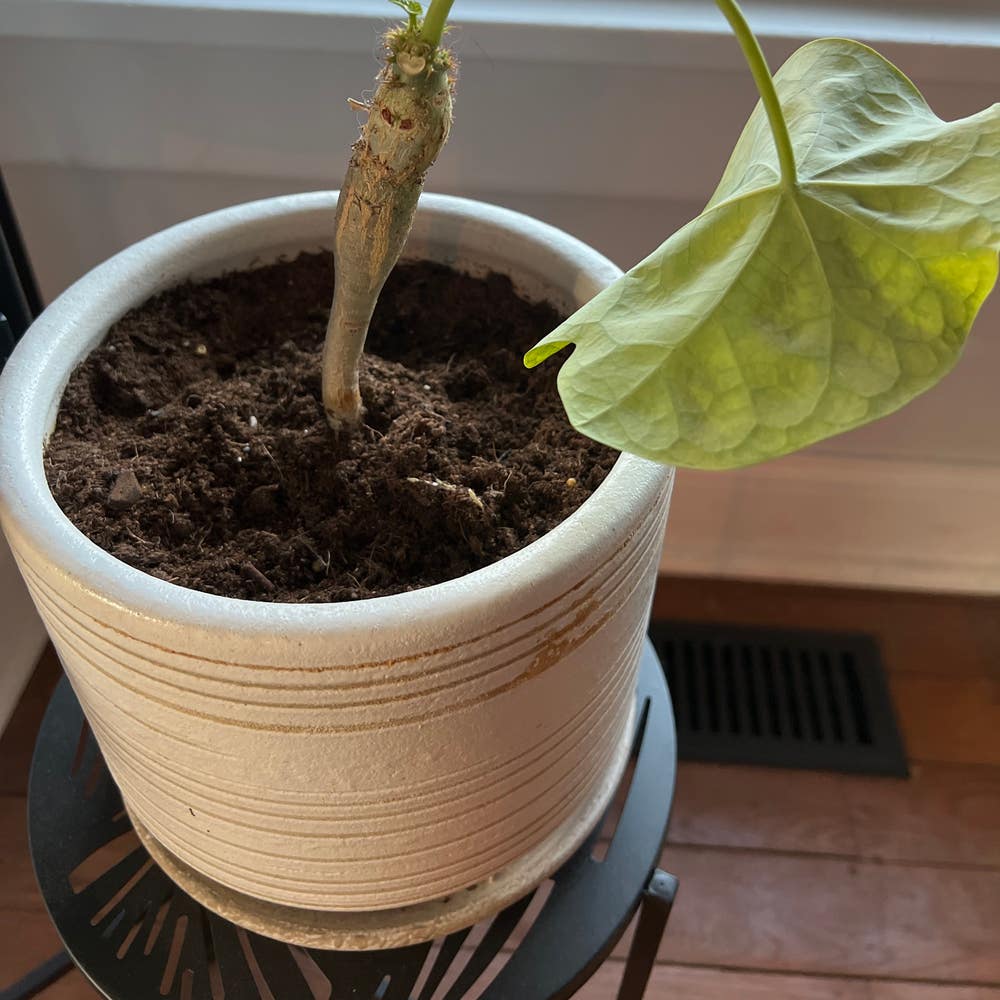
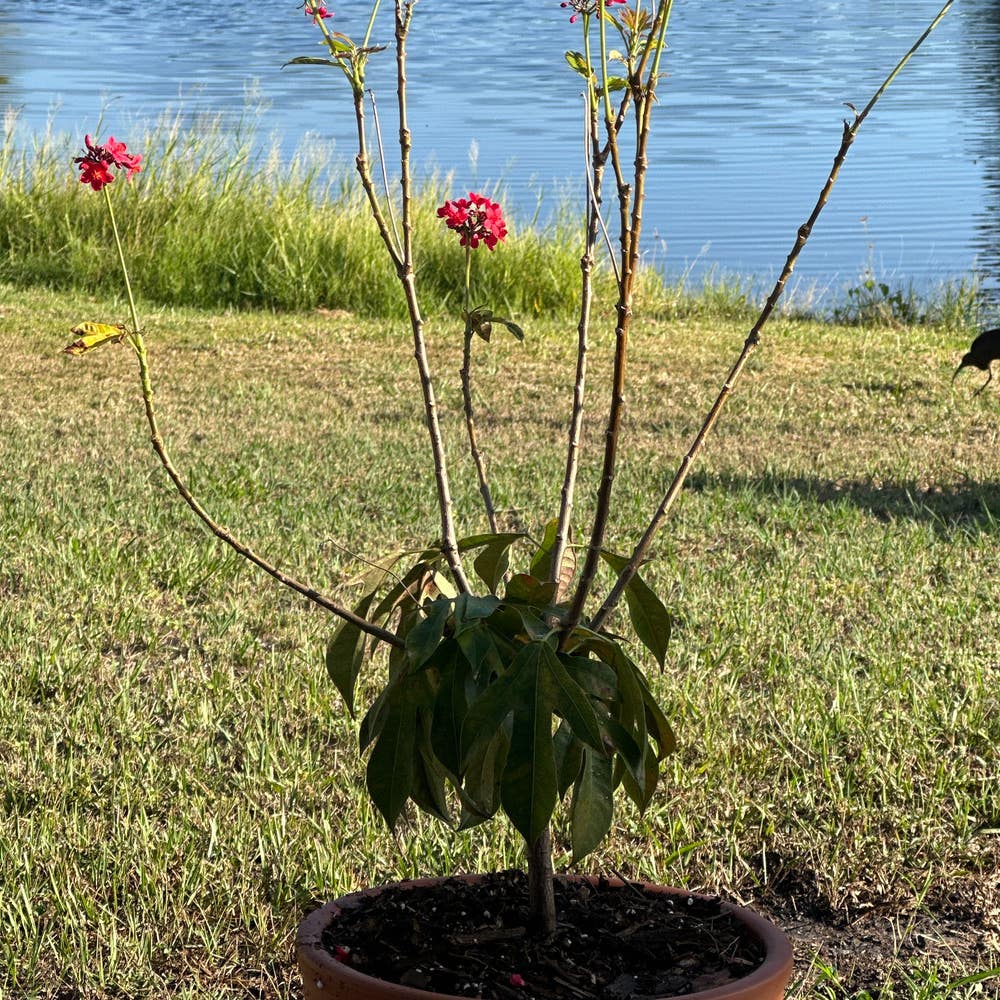
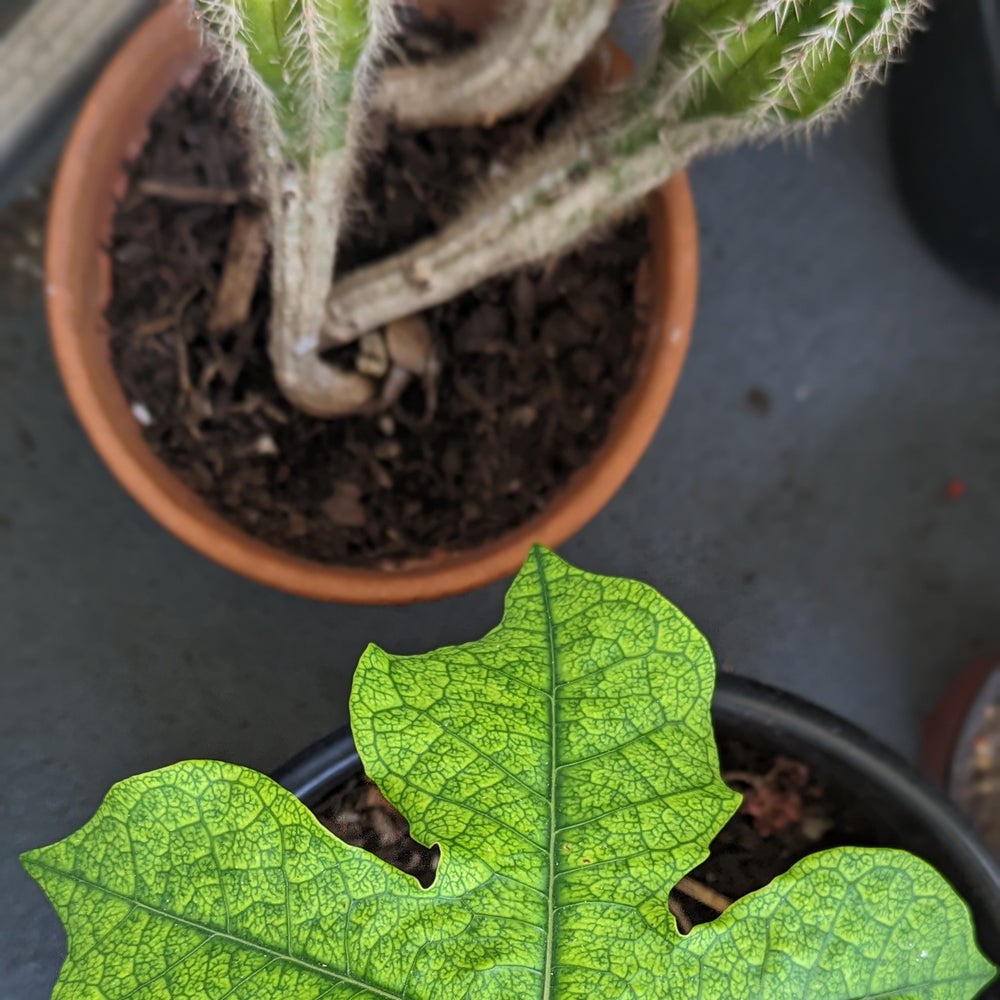
Why Are My Berlandier's Nettlespurge Leaves Mushy?
Jatropha cathartica
By the Greg Editorial Team
Apr 28, 2024•4 min read
This article was created with the help of AI so we can cover more plants for you. May contain errors. See one? Report it here.
- Overwatering leads to mushy leaves, check soil before watering.
- 🌱 Ensure clear drainage holes and use well-draining soil.
- Treat fungal issues promptly with fungicide and dry conditions.
Spotting the Signs of Trouble
💧 Recognizing Overwatering
Yellow leaves that seem to have had one too many sips of water might be your first clue. If they're also swollen and squishy, that's your plant waving a white flag. Before you water again, do the poke test—the soil should feel like a well-wrung sponge, not a soaked bath mat.
🚰 Identifying Poor Drainage
If your pot feels heavier than your last regrettable online shopping spree, you've got a drainage dilemma. Check those holes at the bottom; they should be clear and functioning, not decorative. A pot without proper drainage is like a pool without a drain—nowhere for the excess to go.
🍄 Detecting Fungal Foes
Spotted any unwanted mold guests? That's a telltale sign of a fungal fiesta, thanks to overwatering. If the soil smells like it's fermenting its own sourdough starter, you've got a fungal issue. And if your plant's roots look like overcooked noodles, it's time to stage an intervention.
Getting to the Root of the Problem
💧 Assessing Your Watering Routine
Watering should be a ritual, not a roulette. Check the soil's top inch; if it's dry, it's time to hydrate. If not, your plant can wait. Overzealous watering is often the villain behind those mushy leaves.
🌱 Checking Soil and Drainage
Soil should be a freeway, not a parking lot for water. Poke around to see if water drains freely or if it's throwing a pool party for your plant's roots. Compacted or non-porous soil is a red flag—your plant's roots are gasping for air.
🦠 Investigating for Infections
Roots should be healthy and firm, not resembling something from a zombie flick. Black, mushy roots scream root rot. If you catch a whiff of decay, it's time for a serious plant intervention.
Turning the Tide on Mushiness
🚰 Fine-Tuning Your Watering Technique
Watering isn't just about quantity; it's about timing. Adjust your routine to allow the soil to dry between waterings. Forget the calendar; use your finger or a moisture meter to check the soil's thirst level.
🏡 Upgrading Your Plant's Home
Soil should be loose and airy, like a good cheesecake. Mix in perlite or coarse sand for that perfect drainage. Pots need holes, period. Terracotta is the MVP here, wicking away excess moisture like a pro.
🍄 Fighting the Fungus Among Us
Spot a funky leaf? Hit it with a fungicide, but think sniper, not shotgun. Keep the leaves dry and the air flowing; fungi hate a breeze. After treatment, play detective and monitor for signs of recovery.
Keeping Your Plant Happy and Healthy
💧 Establishing a Watering Rhythm
To prevent your Berlandier's Nettlespurge from turning into a mushy mess, establish a watering schedule. This isn't about dousing on a whim; it's about reading the room—or pot. Check the soil moisture before you water; if the top inch feels like a dry martini, it's time to hydrate. Remember, your plant's thirst changes with the seasons, so adjust accordingly.
🌱 Preventative Potting Practices
Choosing the right potting mix and container is like picking a good roommate; it can make or break your plant's vibe. Go for a mix that's the life of the party—well-draining yet holds moisture like a juicy gossip. And the pot? Make sure it's got holes. We're talking drainage, not Swiss cheese, but you get the picture.
🩺 Regular Health Checks
Routine check-ups are the secret sauce to a thriving plant. Like a plant doctor making house calls, inspect for pests and fungi. If you spot trouble, don't panic—just pluck or treat it. Keep the foliage dry to avoid fungal raves and ensure the plant isn't throwing shade by getting too much sun. Clean up fallen debris to keep the area around your plant from turning into a pest hostel.
⚠️ Safety First
This content is for general information and may contain errors, omissions, or outdated details. It is not medical, veterinary advice, or an endorsement of therapeutic claims.
Always consult a qualified healthcare professional before using any plant as food, medicine, or supplement.
Never eat any plant (or feed one to pets) without confirming its identity with at least two trusted sources.
If you suspect poisoning, call Poison Control (800) 222-1222, the Pet Poison Helpline (800) 213-6680, or your local emergency service immediately.
Spotted an error? Please report it here.
Revive your Berlandier's Nettlespurge from mushy to mighty 🌱 with Greg's custom watering reminders that prevent overwatering and promote healthy growth!