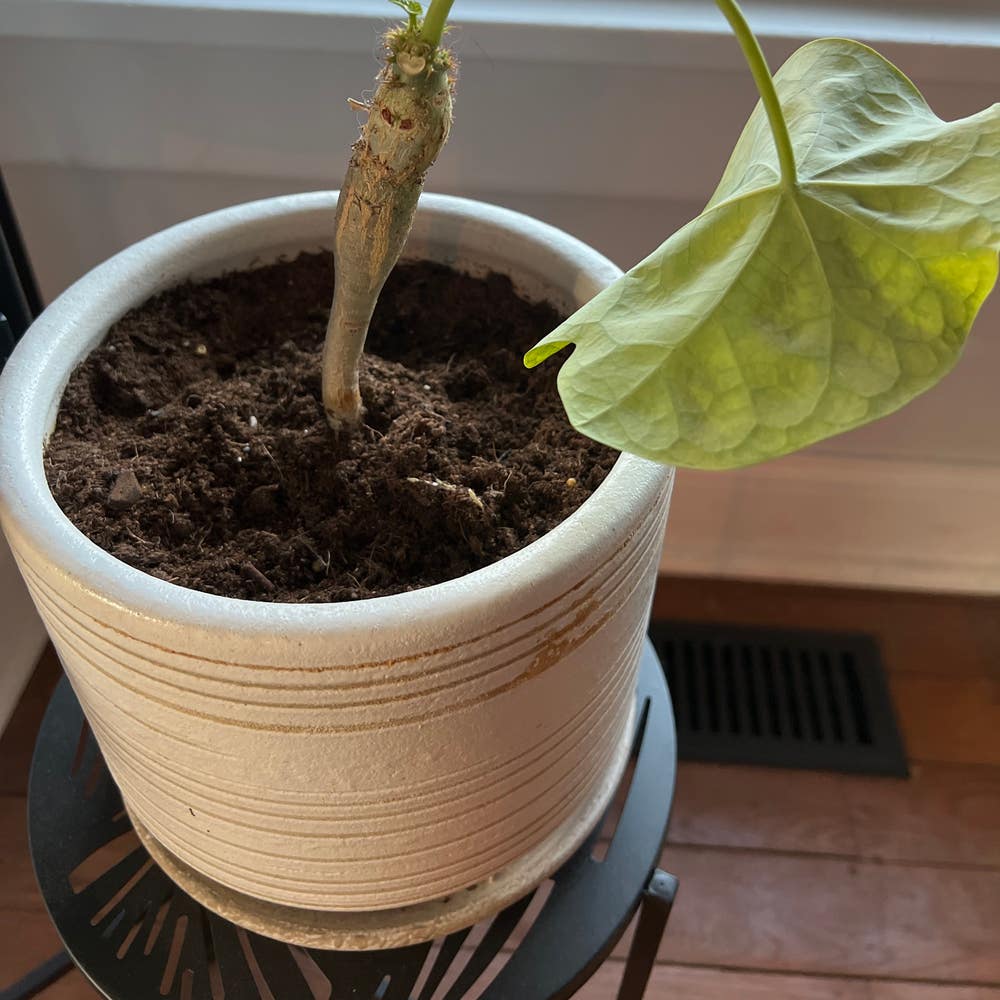
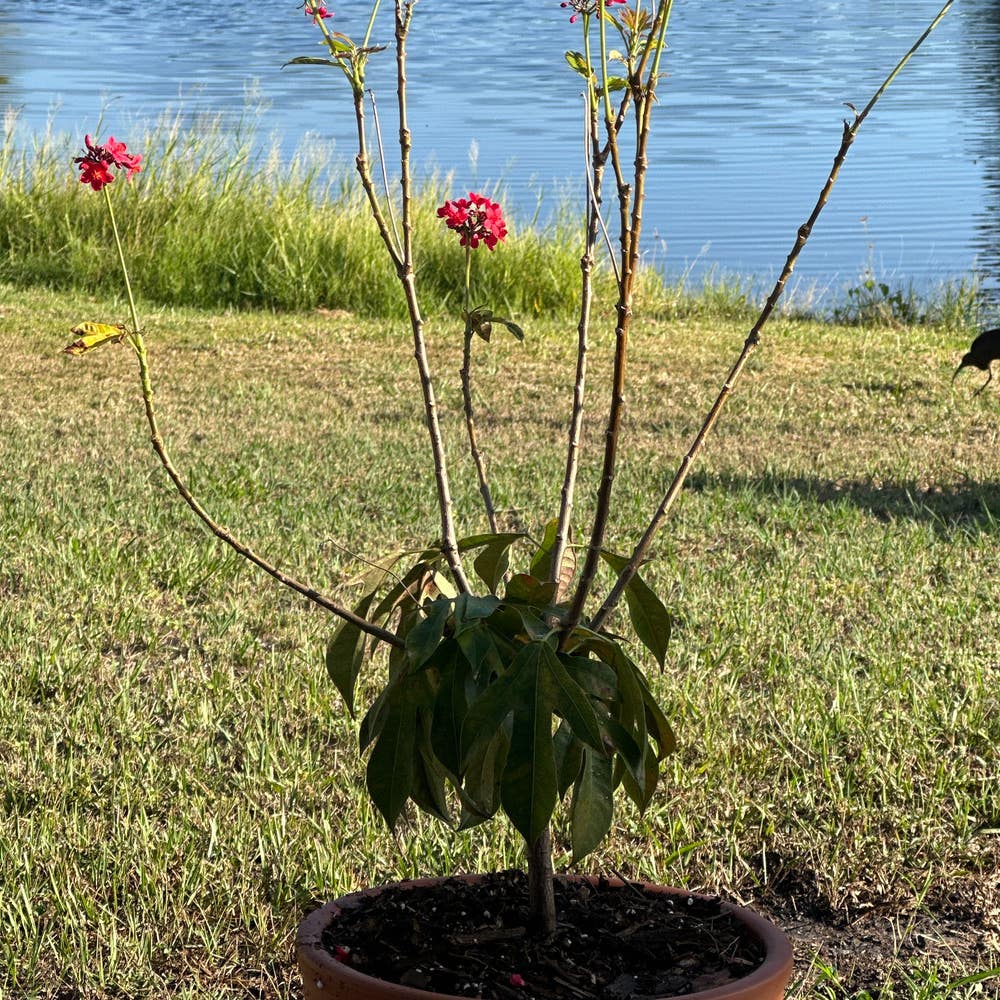
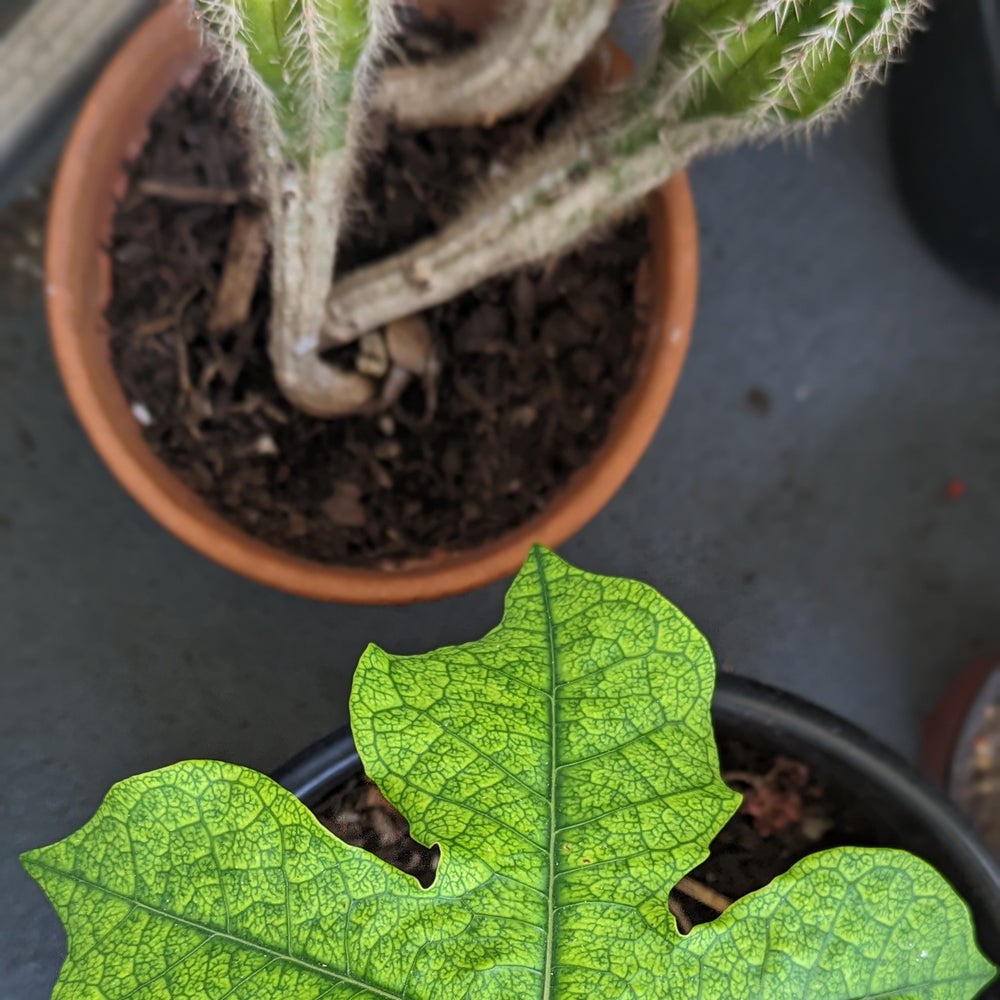
Why Does My Berlandier's Nettlespurge Have Yellow Leaves?
Jatropha cathartica
By the Greg Editorial Team
Apr 28, 2024•4 min read
This article was created with the help of AI so we can cover more plants for you. May contain errors. See one? Report it here.
- 🌞 Bright, indirect light is key - reposition to avoid direct rays.
- 💧 Consistent soil moisture - check before watering, aim for balance.
- 🌡️ Stable temperature, well-draining soil - shield from drafts and heat, add perlite or sand.
Pinpointing the Culprits Behind Yellow Leaves
💡 Insufficient Light: Finding the Sweet Spot
Berlandier's Nettlespurge thrives in bright, indirect light. Too little light saps its strength, leading to pale leaves and a lackluster presence. To remedy this, reposition your plant to bask in the glow without the scorch of direct rays.
🚰 Water Woes: Striking a Balance
Yellow leaves can scream overwatering or whisper underwatering. Check the soil: soggy means ease up, bone-dry means amp up. Aim for consistent moisture—not a swamp, not a desert.
🍽️ Soil Secrets: Ensuring a Healthy Foundation
Soil issues? They're a silent saboteur. Berlandier's Nettlespurge prefers well-draining soil that holds onto nutrients without waterlogging roots. Mix in some perlite or sand to hit that sweet spot.
⛅️ Temperature Trials: Keeping the Chill and Heat at Bay
This plant doesn't do well with the chills or the fever. Keep the thermostat steady—Berlandier's Nettlespurge likes it like we do: comfortable. Shield it from drafts and direct heat sources to avoid temperature-induced yellowing.
Turning Over a New Leaf: Remedial Actions
💡 Let There Be Light: Adjusting Exposure
Berlandier's Nettlespurge thrives in bright light but despises a sunburn. To avoid leaf scorch, gradually move your plant closer to the light source over several days. Start with an hour of morning sun, then increase exposure incrementally. If natural light is a rare commodity in your home, consider grow lights as a sun stand-in.
🚰 Watering Wisdom: Hydration without Harm
Check soil moisture before watering—dryness one inch below the surface is your green light to water. In the morning, water at the base to keep leaves dry and happy, reducing the risk of uninvited fungal guests. Remember, your plant's thirst varies with the seasons—water less in winter, more in summer.
🌱 Soil Solutions: Revitalizing Your Plant's Home
Revamp your soil mix to ensure it's well-draining; think of it as upgrading your plant's living quarters. Incorporate perlite or pumice to enhance aeration, letting those roots breathe easy. A balanced fertilizer is the cherry on top, but don't overdo it—overfeeding is as unwelcome as overwatering.
🌡️ Temperature Tactics: Creating a Stable Atmosphere
Berlandier's Nettlespurge dislikes temperature surprises more than a cat dislikes a bath. Shield your plant from drafts and direct heat sources. Aim for a consistent temperature range, and if your home's air is drier than a stand-up comedian, consider a humidifier to keep the atmosphere plant-friendly.
Keeping the Green: Ongoing Care and Prevention
Routine check-ups are the cornerstone of preventing yellow leaves in your Berlandier's Nettlespurge. Like a quick peek at your car's dashboard to ensure everything's running smoothly, a weekly inspection of your plant can reveal a lot. Examine the leaves for early signs of yellowing, and don't ignore the undersides where trouble often starts.
🕵️ Establishing a Routine Check-Up
Regular monitoring is akin to a health screening for your plant. It's not just about watering and admiring; it's about being proactive. Inspect your plant for pests, diseases, and general leaf health. This isn't just a chore—it's essential for catching issues before they escalate.
🍂 Seasonal Adjustments
As the seasons shift, so do the needs of your Berlandier's Nettlespurge. Adapt your care routine accordingly. Less water may be needed during the cooler months, and as the growing season kicks in, your plant might crave more sunlight and nutrients. It's a balancing act that requires attention to detail.
🌸 Spring and Summer Care
During these growth-intensive months, your plant's thirst and hunger will increase. Water more frequently, but always check the soil moisture first. Fertilize with a light hand; think of it as a vitamin boost rather than a full meal.
❄️ Fall and Winter Care
As growth slows, so should your watering and fertilization schedule. Reduce both to prevent root rot and nutrient overload. Keep an eye on light levels too; shorter days mean less sunlight, so you might need to adjust your plant's position.
Remember, prevention isn't a once-off task but a continuous process. Stay vigilant and your Berlandier's Nettlespurge will thank you with lush, green leaves.
⚠️ Safety First
This content is for general information and may contain errors, omissions, or outdated details. It is not medical, veterinary advice, or an endorsement of therapeutic claims.
Always consult a qualified healthcare professional before using any plant as food, medicine, or supplement.
Never eat any plant (or feed one to pets) without confirming its identity with at least two trusted sources.
If you suspect poisoning, call Poison Control (800) 222-1222, the Pet Poison Helpline (800) 213-6680, or your local emergency service immediately.
Spotted an error? Please report it here.
Ensure your Berlandier's Nettlespurge stays vibrantly green and thrives 🌿 with Greg's precise monitoring of light, water, and soil, tailored to keep those leaves perfectly perky.