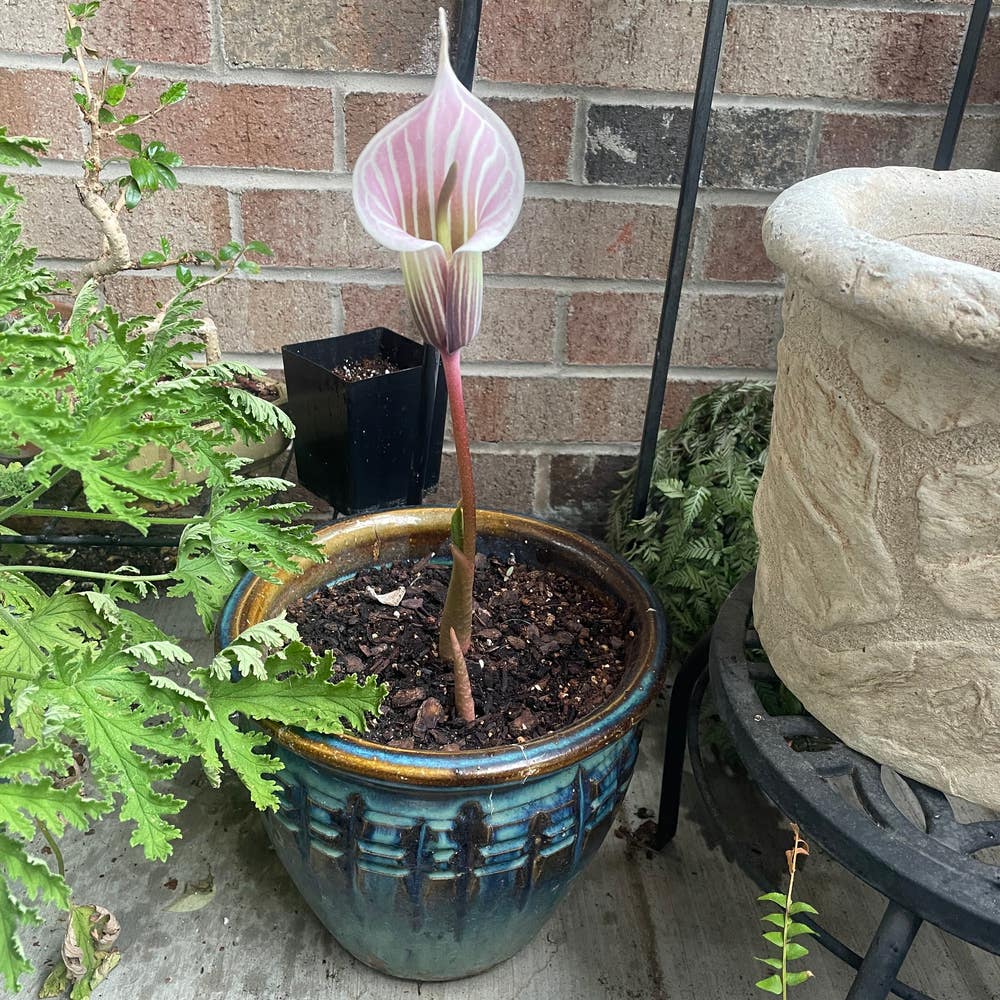
Why Are My Dragon Root Leaves Dropping?
Arisaema dracontium
By the Greg Editorial Team
Mar 27, 2024•5 min read
This article was created with the help of AI so we can cover more plants for you. May contain errors. See one? Report it here.
Halt the Dragon Root leaf-drop panic 🍂 with these essential care tips for a thriving, happy plant! 🌿
- Under/overwatering? Check leaf crispiness or yellowing and soil wetness.
- 🌞 Bright, indirect light and stable temperatures prevent leaf drop.
- Repot and prune for recovery and ongoing Dragon Root health.
When Thirsty Roots Cry Out: Underwatering Woes
🚰 Spotting the Signs of a Thirsty Dragon Root
If your Dragon Root's leaves have turned into crispy critters, it's waving a red flag for water. A soil check is in order—bone-dry at an inch deep means your green buddy's gasping for a drink. Leaves perking up post-watering? That's the sweet sound of root relief.
🚰 Quenching the Thirst: Adjusting Your Watering Routine
Consistency trumps guesswork. Establish a watering routine that's as reliable as your morning coffee ritual. Adjust based on your plant's feedback, not the calendar. When the soil feels like a slightly damp sponge, you're hitting the hydration sweet spot.
🚰 The Recovery Process: What to Expect After Proper Watering
Post-watering, expect a gradual comeback. Leaves will slowly ditch the crispiness for a more pliable feel. Patience is key—don't expect an overnight miracle. Keep the watering steady and watch for signs of improvement, adjusting as you go.
Drowning in Excess: The Perils of Overwatering
Recognizing the symptoms of waterlogged roots is crucial. Leaves may turn yellow, and stems can become mushy. If the soil feels perpetually wet and has a swampy odor, it's a red flag.
🚰 Recognizing the Symptoms of Waterlogged Roots
- Yellowing leaves
- Mushy stems
- Persistent soil wetness
- Swamp-like smell
Draining the swamp means ensuring your pot has adequate drainage holes. Opt for a soil mix that includes perlite or sand to improve water flow.
🚰 Ensuring Proper Soil Drainage
- Adequate drainage holes in pots
- Soil mix with perlite or sand
Finding the right watering frequency is a balancing act. Before watering, check if the top inch of soil is dry. If it clings to your finger, hold off on the water.
🚰 Balancing Act: Finding the Right Watering Frequency
- Check the top inch of soil for dryness
- Skip watering if soil sticks to your finger
Remember, your plant's roots should sip, not swim. Overwatering can suffocate roots, leading to a plant's untimely demise. Keep a keen eye on your watering habits and adjust as necessary.
Let There Be Light (But Not Too Much!)
🌞 Identifying Light-Related Stress Signals in Your Dragon Root
Dragon Root plants are drama queens when it comes to light. Leaf scorch is their way of saying, "I'm getting fried!" On the flip side, if your Dragon Root is stretching out like it's doing yoga, it's probably light-starved. Keep an eye out for these telltale signs: crispy edges or a plant that's more leggy than a supermodel.
🎨 Shifting Shades: Optimizing Light Exposure for Health
It's all about location, location, location. Your Dragon Root craves that sweet spot of bright, indirect light. If it's looking a bit sun-kissed (and not in a good way), it's time to play musical chairs with your pots. Move it further from the window, or filter the light with a sheer curtain. It's like giving your plant a pair of sunglasses.
📐 The Goldilocks Zone: Achieving the Perfect Light Balance
Finding the Goldilocks zone for your Dragon Root doesn't require a PhD, just some common sense. If your plant could talk, it would ask for a spot that's not too bright, not too dim. Use your home's quirks to your advantage. Rotate the plant regularly for even light distribution, and if you're in a dungeon-like space, consider a grow light. Just remember, grow lights are supplements, not tanning beds.
Weathering the Storm: Temperature and Humidity Challenges
🌡️ Understanding the Impact of Temperature Extremes on Leaf Retention
Dragon Root plants are not fans of the rollercoaster ride that is temperature fluctuation. Too hot or too cold, and you'll notice a leaf drop faster than you can say "thermometer." Keep your plant in a stable environment, ideally between 65-75°F (18-24°C), to prevent leaves from dropping like flies.
💦 Humidity's Role in Leaf Drop: Finding the Sweet Spot
Humidity is a silent player in the health of your Dragon Root, but get it wrong, and it's as noticeable as a sore thumb. Aim for a humidity level of 50-60% to keep your plant's leaves firm and perky. Too dry, and they'll crisp up; too humid, and you're inviting mold to the party.
🏠 Creating a Stable Environment for Your Dragon Root
Stability is key. Avoid placing your Dragon Root near drafty windows or heating vents, which can create a seesaw of temperature and humidity levels. Consistency in the plant's environment will help avoid the dreaded leaf drop and keep your Dragon Root looking its best. Use tools like humidifiers or pebble trays to maintain the ideal climate and keep those leaves on the plant, not the floor.
Taking Action: Immediate Steps to Stop the Drop
🌱 Conducting a Root-and-Soil Checkup
Before you play doctor, get dirty. Unpot your Dragon Root and check for soggy, brown roots—they're the kiss of death. Sniff the soil; a foul odor is a cry for help. Remember, roots need to breathe, so if your soil is denser than a fruitcake, it's time for a change.
🚀 The Intervention: Repotting and Soil Amendments
If the roots are circling like sharks, they need more space. Repot with fresh, well-draining soil—think light and airy, not heavy and clingy. A pot with drainage holes is non-negotiable; it's the difference between a life vest and cement shoes for your plant.
✂️ Pruning for Health: When and How to Trim Back
Grab your sterilized scissors—it's pruning time. Cut away the dead weight, but don't get snip-happy; focus on the damaged or diseased parts. It's like removing split ends to let the healthy hair shine, or in this case, leaves. After the haircut, keep an eye on your Dragon Root; it should bounce back with a bit of TLC and a well-adjusted watering schedule.
⚠️ Safety First
This content is for general information and may contain errors, omissions, or outdated details. It is not medical, veterinary advice, or an endorsement of therapeutic claims.
Always consult a qualified healthcare professional before using any plant as food, medicine, or supplement.
Never eat any plant (or feed one to pets) without confirming its identity with at least two trusted sources.
If you suspect poisoning, call Poison Control (800) 222-1222, the Pet Poison Helpline (800) 213-6680, or your local emergency service immediately.
Spotted an error? Please report it here.
Revive your Dragon Root's vibrance and prevent leaf drop by letting Greg 🌿 tailor your plant's care routine for a consistently perfect environment.