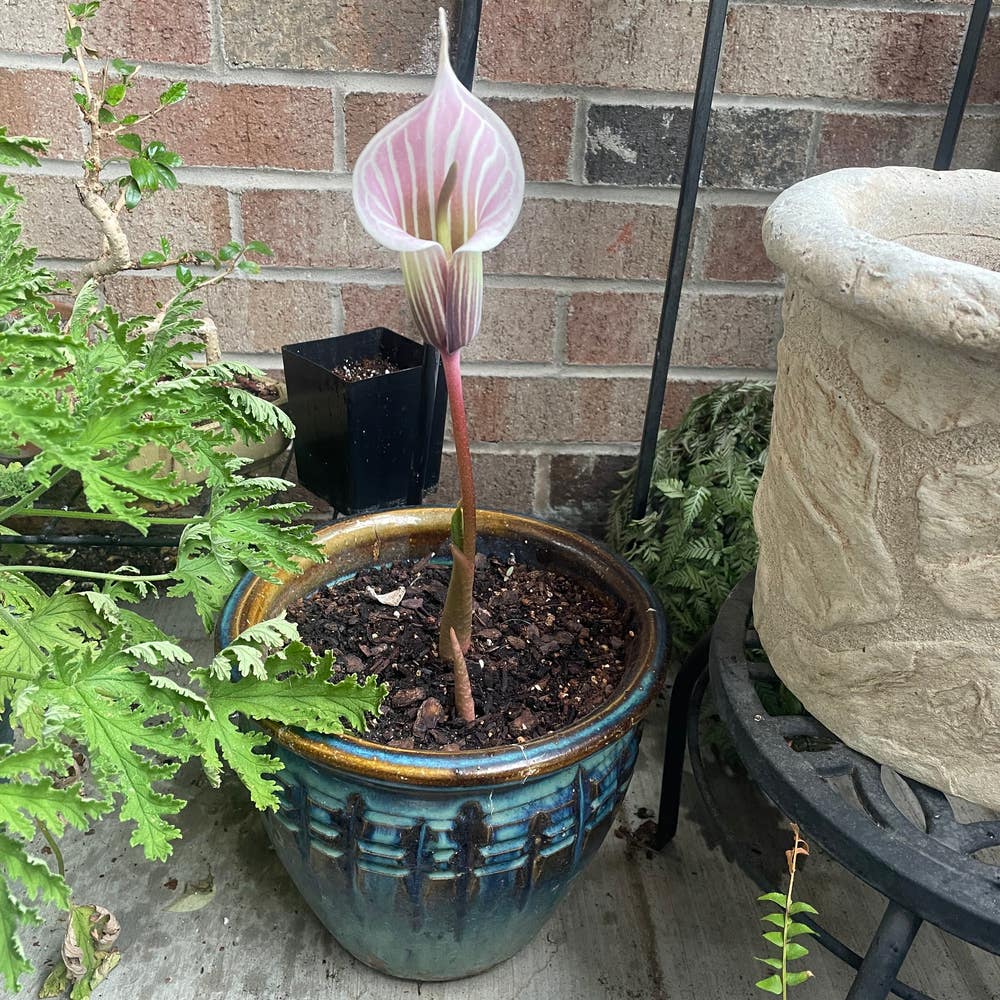
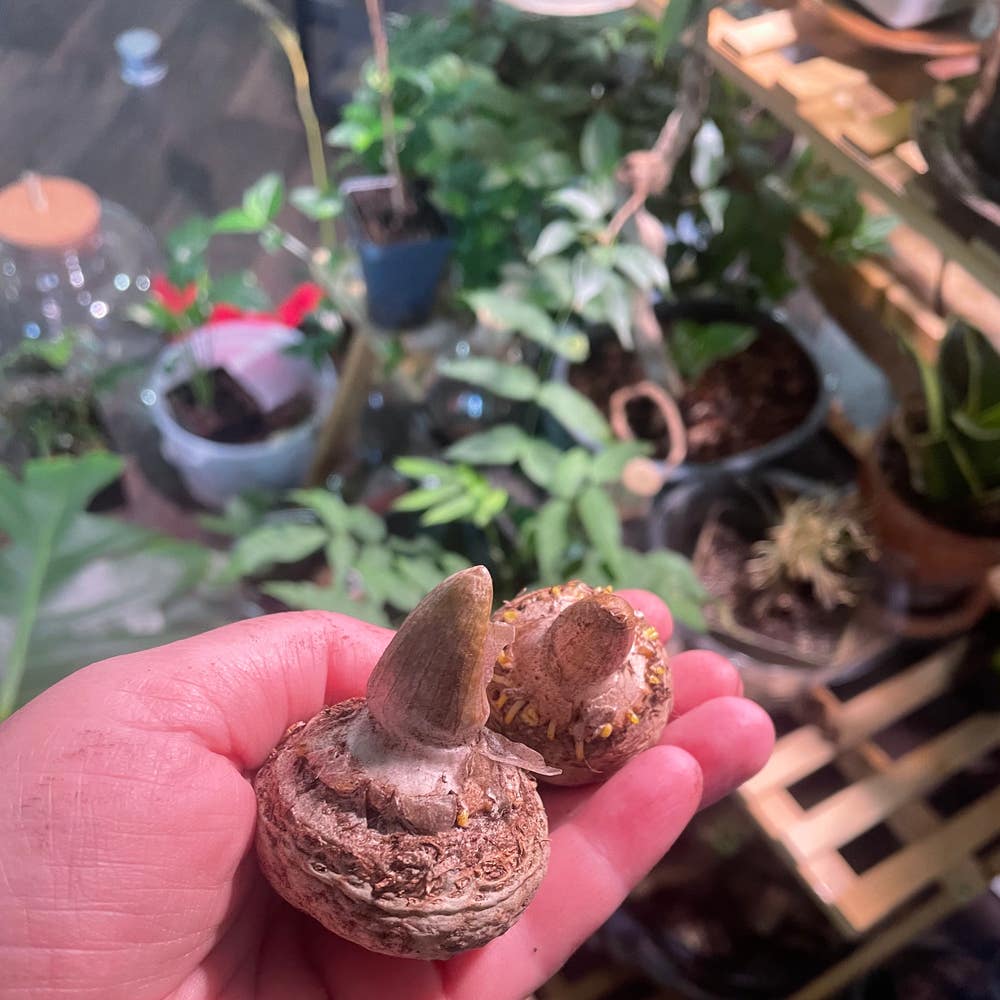
Why Are My Dragon Root Leaves Curling?
Arisaema dracontium
By the Greg Editorial Team
Mar 27, 2024•4 min read
This article was created with the help of AI so we can cover more plants for you. May contain errors. See one? Report it here.
Solve your Dragon Root's leaf curl mystery and revive its health with this guide! 🌿🔍
- Water wisely to prevent over/underwatering-induced leaf curl.
- 🌡️ Consistent temperature and humidity keep leaves flat.
- Soil quality and nutrients matter, use balanced fertilizer.
Spotting the Signs: When Your Dragon Root is Unhappy
🍃 Recognizing Leaf Curling
When your Dragon Root starts to look more like a crumpled piece of paper than a vibrant plant, leaf curling is the culprit. This tell-tale sign is hard to miss: leaves twist and contort, often taking on a shape that's far from their usual flat and open form.
Other Symptoms to Watch For
Discoloration and texture changes are the sidekicks to leaf curling. Yellow or brown leaves are waving red flags, and if they feel as limp as overcooked spaghetti, your Dragon Root is sending an SOS. Keep an eye out for these signs; they're as subtle as a bull in a china shop.
The Usual Suspects: Common Causes of Leaf Curling
💧 Thirsty Roots or Drowning?
When your Dragon Root's leaves start to curl, it's time to play plant detective. Underwatering leaves the roots gasping for moisture, causing leaves to curl up as if reaching for the last drop of rain. Conversely, overwatering can drown the roots, leaving them in a soggy grave that leads to curling down, signaling a silent SOS. The trick is to water when the top inch of soil feels like a dry handshake – not too wet, not too dry.
🌡️ It's Getting Hot in Here
Temperature stress is like a bad fever for your Dragon Root. Too hot, and the leaves curl up, trying to shield themselves from a scorching sun. Too cold, and they curl down, as if trying to wrap themselves in an invisible blanket. Keep the temperature consistent; think of your plant's comfort zone as a cozy café where the air is just right.
💦 The Air Up There
Humidity and air circulation are the yin and yang of leaf wellness. Low humidity turns leaves into tight scrolls, while high humidity makes them droop like overcooked noodles. Aim for a humidity level that feels like a morning dew, not a tropical rainforest. And don't forget about airflow – stagnant air is as unwelcome as a lingering bad joke. A gentle breeze, however, can work wonders, keeping the air around your Dragon Root as fresh as a daisy.
The Root of the Problem: Soil and Nutrition
🌱 Soil Quality and Drainage
Poor soil quality and inadequate drainage can turn your Dragon Root's leaves into a crinkled mess. Drainage is crucial; without it, roots suffocate, and leaves curl in distress. To combat this, mix perlite or sand into your soil. This simple tweak allows excess water to escape, ensuring roots aren't left swimming for survival.
🌿 Feeding Your Dragon Root
Nutrient deficiencies are like silent alarms for your plant, with curling leaves being the flashing lights. Iron, calcium, and magnesium are the unsung heroes in the nutrient world. A lack of these can lead to leaves curling quicker than a chameleon changes colors. To replenish these key nutrients, opt for a balanced 10-10-10 fertilizer. But remember, moderation is key—too much fertilizer is like overindulging in junk food for plants, leading to nutrient burn. Keep the soil's pH neutral to ensure these nutrients are readily available to your Dragon Root.
Turning Over a New Leaf: Fixing and Preventing Curling
💧 Watering Wisdom
Adjusting your watering habits is crucial for combating leaf curling. Overwatering is like a flood to your Dragon Root's roots, while underwatering leaves them parched. The trick is to let the top inch of soil dry before the next watering.
🐉 Creating the Perfect Dragon Den
Temperature and humidity tweaks can work magic. Your Dragon Root craves stability, so avoid drastic swings. Use a humidifier or dehumidifier to hit that sweet spot of moisture in the air, and keep it away from drafts.
🌱 Soil and Supplementation Strategies
Soil quality is non-negotiable. Ensure it's well-draining to prevent root rot, which can cause curling. If it's too dense, mix in some perlite or sand. Nutrient-wise, a balanced fertilizer can correct deficiencies that lead to curling.
⚠️ Safety First
This content is for general information and may contain errors, omissions, or outdated details. It is not medical, veterinary advice, or an endorsement of therapeutic claims.
Always consult a qualified healthcare professional before using any plant as food, medicine, or supplement.
Never eat any plant (or feed one to pets) without confirming its identity with at least two trusted sources.
If you suspect poisoning, call Poison Control (800) 222-1222, the Pet Poison Helpline (800) 213-6680, or your local emergency service immediately.
Spotted an error? Please report it here.
Fix those curly leaves with Greg's custom care 🌿 plan, ensuring your Dragon Root thrives with the right water, light, and soil conditions from our app's tailored advice!