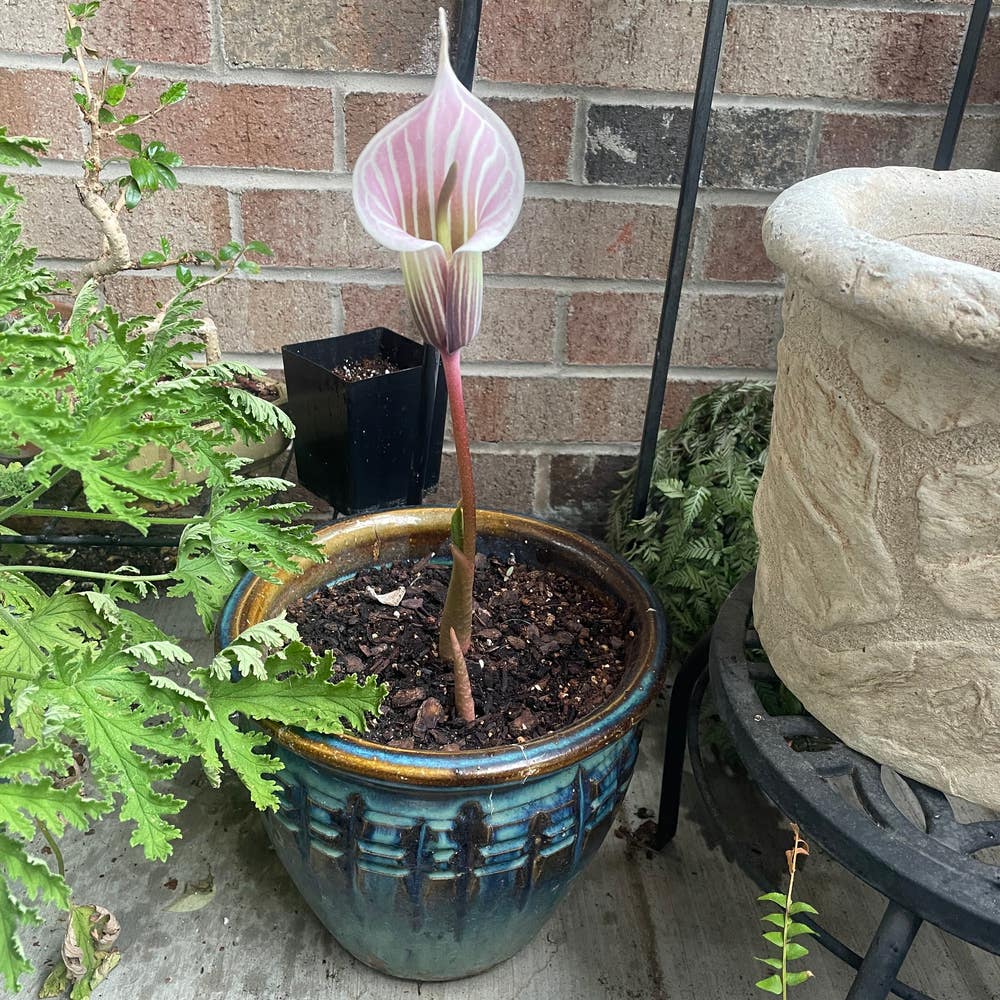
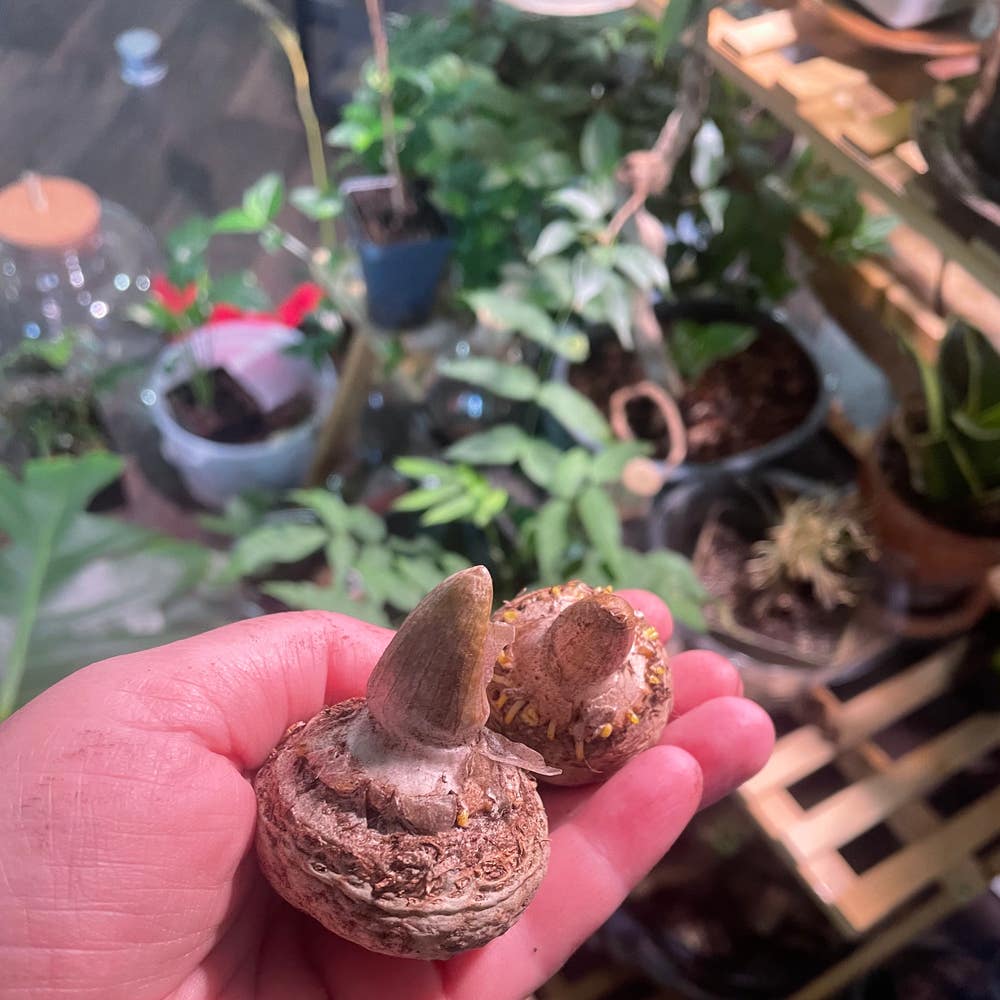
🐉 How to Get a Dragon Root to Bloom
Arisaema dracontium
By the Greg Editorial Team
Mar 27, 2024•4 min read
This article was created with the help of AI so we can cover more plants for you. May contain errors. See one? Report it here.
Unleash your Dragon Root's elusive blooms 🌺 with these expert light and care tips!
- Medium to bright indirect light is essential for Dragon Root blooming.
- Steady 65-75°F temperature and slightly acidic soil pH 6-6.5 promote flowers.
- Prune and fertilize in growth seasons for energy focus on blooming.
The Right Light and Temperature to Spark Blooms
💡 Light: The Key to Unlocking Dragon Root Flowers
Light intensity and duration are non-negotiable for Dragon Root blooming. These plants need a light show of medium to bright indirect rays to kickstart their flowering process. It's like flipping the switch to start the bloom party.
To mimic these conditions indoors, position your Dragon Root in a spot that bathes it in bright, filtered light for most of the day. If natural light is lacking, a quality grow light can step in as understudy, ensuring your plant doesn't miss its cue to bloom.
🌡️ Temperature: The Blooming Catalyst
Temperature plays a supporting role in the blooming saga of Dragon Root plants. They prefer a steady temperature, akin to a consistent and reliable partner. Seasonal adjustments can nudge your plant towards its flowering phase, with a preference for warmth between 65-75°F (18-24°C).
Avoid sudden temperature changes as they can cause your plant to drop the blooming act. Think of maintaining the right temperature as setting the stage for an epic floral performance. Keep it stable, and your Dragon Root's blooms might just stick around for an encore.
Feeding Your Dragon Root for Fabulous Flowers
🏡 Soil: The Foundation for Flowering
Your Dragon Root's soil is its home base. It needs to be well-draining yet rich, striking a balance between being airy and holding onto moisture. Organic matter is your go-to for enriching the soil, making it the perfect stage for blooming. Aim for a pH that's just slightly acidic, around 6 to 6.5, to ensure your plant can absorb all the nutrients it craves.
🚀 Nutrition: The Flower Fuel
Nutrients are the rocket fuel for your Dragon Root's blooms. A balanced 10-10-10 liquid fertilizer is your best bet, applied monthly during the growing season. Phosphorus is the star of the show here, giving your plant the green light to produce those coveted flowers. But watch out—overfeeding can backfire, so think of fertilization as a precision task, not an all-you-can-eat buffet.
Watering Wisdom for Wondrous Blooms
💧 Moisture Mastery
Watering your Dragon Root is a balancing act. Too much, and you're setting up a root rot rave; too little, and your plant's as parched as a desert wanderer. Consistent moisture is the goal, but avoid sogginess like a bad habit. Ensure the top inch of soil dries out before the next watering rendezvous.
🌿 Humidity and Hydration
Creating a spa-like humidity for your Dragon Root can coax out those elusive blooms. Aim for that Goldilocks zone – not too dry, not a steam room. If your home's air is drier than a stand-up comedian, consider a humidifier or group your plants to create a mini rainforest vibe. Remember, a happy Dragon Root is a blooming one.
Pruning Practices to Promote Blooming
💇 Energy Redirection Through Pruning
Pruning isn't just a trim; it's strategic. By snipping away dead or excess foliage, you're channeling your Dragon Root's energy into blooming. Timing is key—prune during active growth seasons like spring or summer for best results.
- Prune above nodes: This encourages new branches, your future "bloom factories."
- Balance is crucial: Overzealous pruning can stress your plant. Aim to remove just enough.
🛠 Maintenance for Maximum Bloom Potential
Routine care is not glamorous, but it's the backstage hero ensuring your plant's energy is laser-focused on blooming. Regular maintenance includes removing spent blooms and yellowing leaves to prevent disease and promote airflow.
- Fertilize post-prune: A bit of fertilizer after pruning can support new growth. Choose a balanced one with an emphasis on phosphorus.
- Monitor health: Keep an eye out for stress or disease. Your plant's comeback after pruning should be a time of vigor, not vulnerability.
⚠️ Safety First
This content is for general information and may contain errors, omissions, or outdated details. It is not medical, veterinary advice, or an endorsement of therapeutic claims.
Always consult a qualified healthcare professional before using any plant as food, medicine, or supplement.
Never eat any plant (or feed one to pets) without confirming its identity with at least two trusted sources.
If you suspect poisoning, call Poison Control (800) 222-1222, the Pet Poison Helpline (800) 213-6680, or your local emergency service immediately.
Spotted an error? Please report it here.
Nurture your Dragon Root to a stunning bloom 🌺 with Greg's tailored care plan, ensuring just the right mix of light, temperature, and feeding for your floral success.