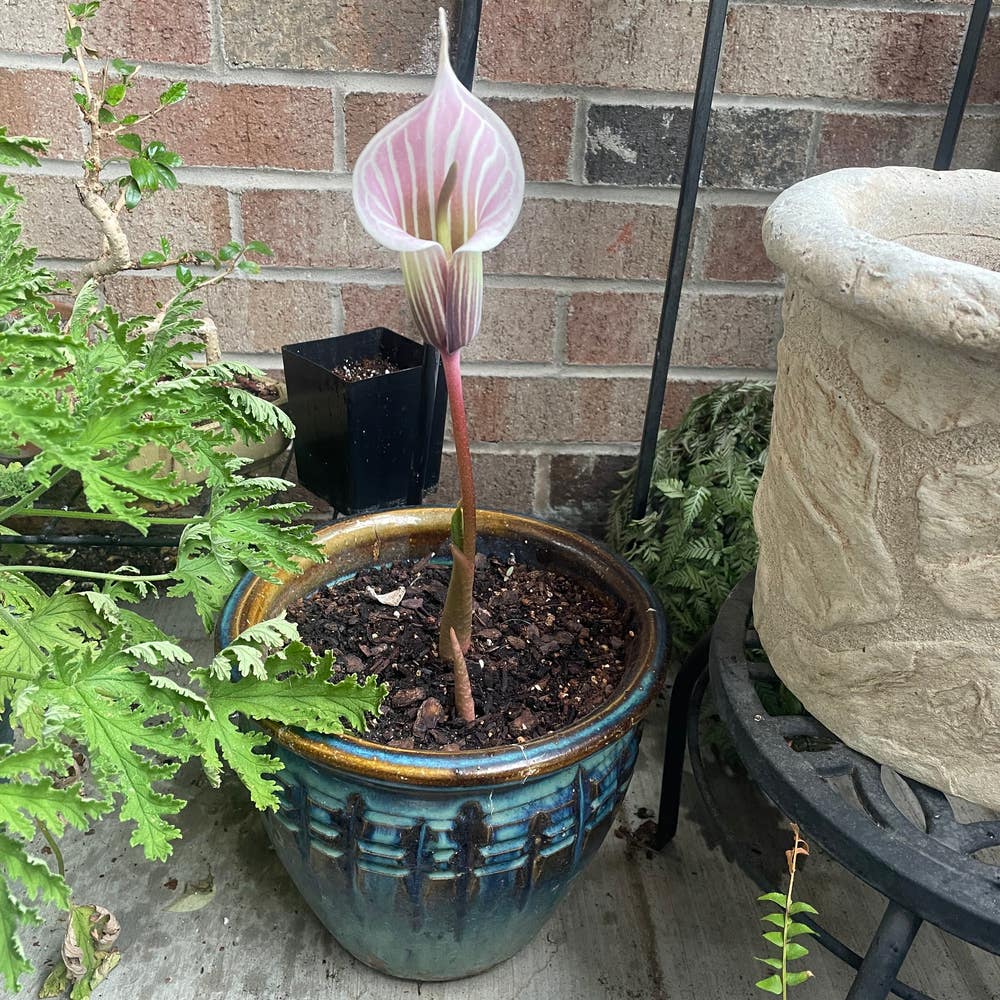
🐉 How Much Humidity Does My Dragon Root Need?
Arisaema dracontium
By the Greg Editorial Team
Mar 27, 2024•4 min read
This article was created with the help of AI so we can cover more plants for you. May contain errors. See one? Report it here.
Discover the secret to a lush Dragon Root 🐉 by nailing the perfect humidity balance! 🌬️
- 70-90% RH ideal for Dragon Root, monitor with hygrometers.
- 🍂 Crispy or limp leaves? Adjust humidity to prevent stress.
- Group plants, use pebble trays to naturally boost moisture.
Spotting the Signs: Dragon Root and Humidity
🏜️ When Your Dragon Root is Thirsty
Crispy leaves and soil dryness are your Dragon Root's cry for help. If the leaves are curling upwards and the top inch of soil feels like a dust bowl, it's time for a humidity intervention.
🚰 When Your Dragon Root is Drowning
Yellowing leaves and a musty odor are red flags for too much moisture. If the leaves are limp or you spot mold, your Dragon Root is essentially waving a white flag at excessive humidity. Reduce watering and consider improving air circulation to help your plant breathe easier.
Measuring Up: Tools for Tracking Humidity
🌡️ Hygrometers & Humidity Monitors
Hygrometers are the MVPs of plant care, giving you the lowdown on humidity with the precision of a Swiss watch. For your Dragon Root, this means no more guesswork. Digital hygrometers are top-notch, offering accuracy with the convenience of a digital display. Analog hygrometers have a classic charm and do the job, but they lack the bells and whistles.
Place your hygrometer near your Dragon Root, but keep it out of direct sunlight and away from drafts to avoid skewed readings. Consistency is key—check it at the same times daily to get a sense of your plant's humidity highs and lows.
🌍 Understanding Your Local Humidity
Your living room isn't the Amazon rainforest, and your Dragon Root knows it. Local humidity can be a wild card, so getting to know it is crucial. Start by checking your hygrometer throughout the day—morning mist and evening aridity tell different tales.
Keep an eye on your local weather reports; they're like the nosy neighbor who knows too much about everyone's business—except it's about your air's moisture levels. Adaptation is the game; use this intel to tweak your plant's environment, ensuring your Dragon Root doesn't throw a tantrum.
Hitting the Sweet Spot: Ideal Humidity for Dragon Root
⛅️ The Perfect Range
Dragon Root plants don't just like humidity; they demand it. 70-90% relative humidity (RH) is the sweet spot, a range where these plants can bask in moisture without drowning in it. It's a delicate balance, akin to walking a tightrope in the plant world—too little, and the Dragon Root gasps for air; too much, and it's swimming in discomfort.
The Role of Temperature
Temperature and humidity are like dance partners in a tango; they move together, closely entwined. A rise in temperature can cause the Dragon Root to thirst more, necessitating deeper watering. But it's not just about quantity; it's about timing. Watering in the cool of the morning or evening can be a game-changer, allowing the plant to hydrate effectively without the stress of the midday sun. Keep the temperature steady, and you'll avoid turning your Dragon Root's environment into a plant ICU.
Humidity Helpers: Boosting Moisture for Your Dragon Root
🌿 Group Therapy
Grouping plants together is like throwing a mini house party for your green friends. Each guest contributes to the overall humidity, creating a microclimate that's a shindig of shared moisture. It's a simple yet effective way to boost the air moisture for your Dragon Root without any fancy equipment.
💦 Mist & Pebbles
For a quick humidity hit, misting your Dragon Root is like splashing your face with water on a hot day—refreshing but fleeting. Use it sparingly to avoid turning your plant's habitat into a fungal fiesta.
On the other hand, pebble trays are the old-school rock stars of humidity. Fill a tray with water, toss in some pebbles, and let your plant pot perch on top. Just make sure it's not sitting in water; we're going for humid, not swampy. The evaporating water works its magic, wrapping your Dragon Root in a cozy blanket of moisture.
Too Much of a Good Thing: Reducing Humidity
💨 Airflow is Key
Air circulation is non-negotiable when your Dragon Root's leaves start to feel like they're in a sauna. Crack a window or let a fan orchestrate a gentle breeze. This isn't just about giving your plant a breath of fresh air—it's about keeping those roots from rotting in stagnant humidity.
🌬️ Dehumidify the Right Way
When the air in your home feels like a wet blanket, it's time for a dehumidifier to step into the limelight. Set it to maintain the ideal 40-60% humidity sweet spot. It's a straightforward fix: position it in the room, turn it on, and let it work its magic. Your Dragon Root will show its gratitude with healthy growth, minus the moisture-induced misery.
⚠️ Safety First
This content is for general information and may contain errors, omissions, or outdated details. It is not medical, veterinary advice, or an endorsement of therapeutic claims.
Always consult a qualified healthcare professional before using any plant as food, medicine, or supplement.
Never eat any plant (or feed one to pets) without confirming its identity with at least two trusted sources.
If you suspect poisoning, call Poison Control (800) 222-1222, the Pet Poison Helpline (800) 213-6680, or your local emergency service immediately.
Spotted an error? Please report it here.
Ensure your Dragon Root enjoys the perfect humidity 💧 with Greg's tailored environment monitoring and care alerts, keeping your green buddy in top shape!