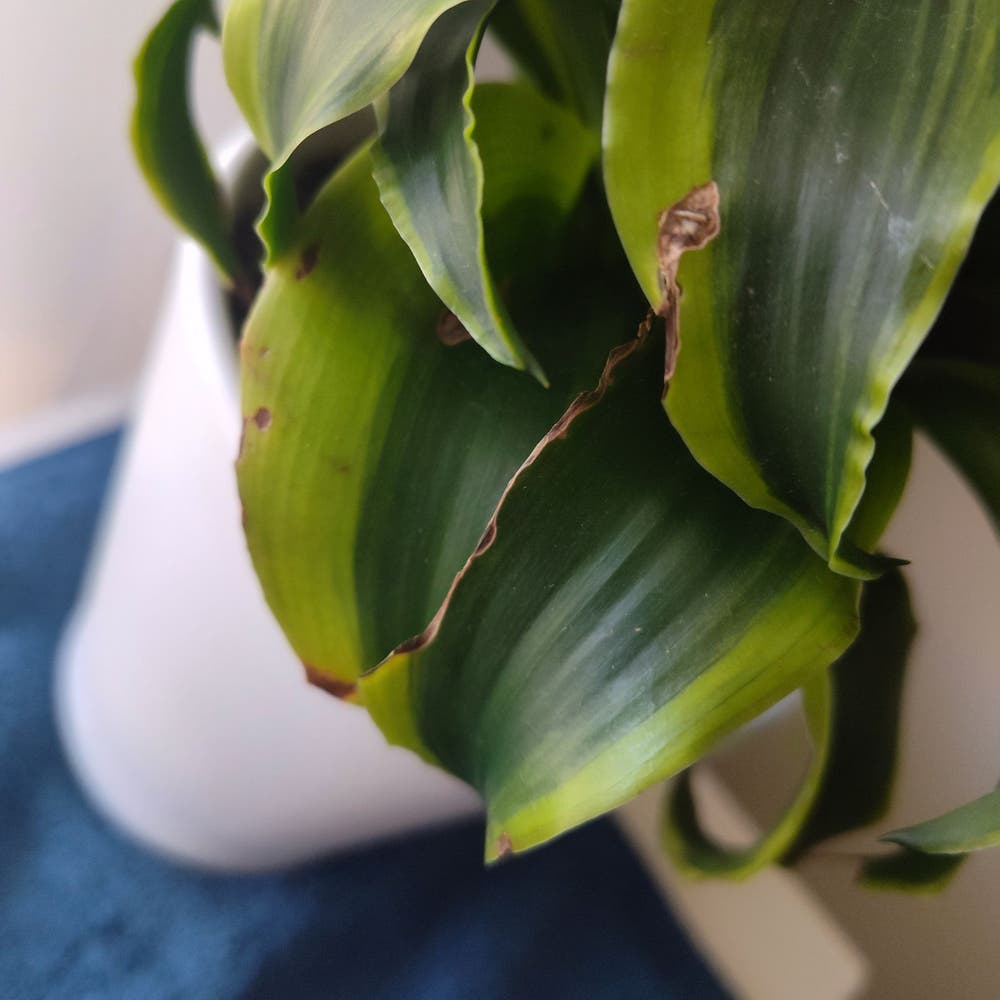
Why Are the Leaves on My Dracaena 'Tornado' Turning Yellow?
Dracaena fragrans 'Tornado'
By the Greg Editorial Team
Jun 18, 2024•3 min read
This article was created with the help of AI so we can cover more plants for you. May contain errors. See one? Report it here.
- 💧 Over/underwatering causes yellow leaves; adjust watering and ensure proper drainage.
- 🌞 Balance light exposure, use grow lights if necessary.
- 🌡️ Maintain 65-75°F and feed with balanced fertilizer during growing season.
Pinpointing the Culprits Behind Yellow Leaves
💧 Water Woes
Overwatering and underwatering are like two sides of the same problematic coin for your Dracaena 'Tornado'. The symptoms can be confusingly similar, with yellow leaves often waving the flag of distress. To determine if you're drenching or parching your plant, check the soil before watering—aim for damp, not soggy or bone-dry. Proper drainage is crucial; your plant's roots aren't looking to take a swim.
🌞 Light and Shadow Play
Dracaena 'Tornado' craves the perfect balance of light. Too much sun can bleach those vibrant leaves, while too little can cause them to yellow and droop. Aim to place your plant in a spot where it can bask in bright, indirect light. If your indoor lighting is more 'dungeon' than 'sunroom', consider a grow light to keep your Dracaena's photosynthesis game strong.
🌡 Feeling the Temperature
Your Dracaena 'Tornado' isn't a fan of extreme temperature swings. Hot drafts from heating vents or icy blasts from air conditioning can send your plant into a state of shock, resulting in yellow leaves. Strive for a stable environment, ideally between 65-75°F (18-24°C), to keep your plant comfortable and its leaves a healthy green.
🍽 The Hunger Games: Nutrient Edition
Yellow leaves can also scream nutrient deficiency—nitrogen, in particular, is a common culprit. If your Dracaena 'Tornado' is looking more pale than perky, it might be time to feed it. Stick to a balanced fertilizer and follow a monthly schedule during the growing season. Remember, your plant's appetite wanes in the winter, so ease up on the feeding during the colder months.

Turning Over a New Leaf: Solutions and Prevention
💧 Fine-Tuning Your Watering Technique
Watering your Dracaena 'Tornado' is less about sticking to a schedule and more about understanding its needs. Here's how to nail it:
- Check the soil moisture by feeling the top inch. If it's dry, it's time to water.
- Water slowly at the base until it drains out the bottom, then stop.
- Ensure your pot has drainage holes to prevent soggy soil syndrome.
- Let the plant experience a mini drought between waterings to encourage strong root growth.
☀️ Let There Be the Right Light
Your Dracaena 'Tornado' loves light, but not too much. Here's the sweet spot:
- Place it in a spot with bright, indirect light—a north-facing window or a few feet away from a sunny one.
- Rotate the plant a quarter turn with each watering to promote even growth.
- If you're unsure about light levels, consider using a light meter to avoid the guessing game.
🌡️ Keeping the Chill and Heat at Bay
Temperature swings are a no-go. Keep your Dracaena 'Tornado' in the Goldilocks zone:
- Aim for a steady 65-75°F (18-24°C) range.
- Avoid placing your plant near drafts or heat sources like radiators.
- In the summer, air conditioning can be too cold; in winter, central heating can be too dry. Be mindful of these extremes.
🥦 A Balanced Diet for Your Dracaena
Feeding your plant shouldn't be like a scene from a horror movie. Here's how to get it right:
- Use a balanced liquid fertilizer at half-strength, monthly during the growing season.
- In winter, your Dracaena 'Tornado' is basically hibernating—no food needed.
- Overfertilizing is as bad as not fertilizing at all. Think diet rather than feast.
Remember, your Dracaena 'Tornado' relies on you to avoid the pitfalls of plant care. With these strategies, you'll keep those leaves greener than a shamrock on St. Patrick's Day.


⚠️ Safety First
This content is for general information and may contain errors, omissions, or outdated details. It is not medical, veterinary advice, or an endorsement of therapeutic claims.
Always consult a qualified healthcare professional before using any plant as food, medicine, or supplement.
Never eat any plant (or feed one to pets) without confirming its identity with at least two trusted sources.
If you suspect poisoning, call Poison Control (800) 222-1222, the Pet Poison Helpline (800) 213-6680, or your local emergency service immediately.
Spotted an error? Please report it here.
Keep your Dracaena 'Tornado' leafy green 🍃 with Greg's moisture monitoring and light metering, ensuring your plant care is as balanced as its diet.