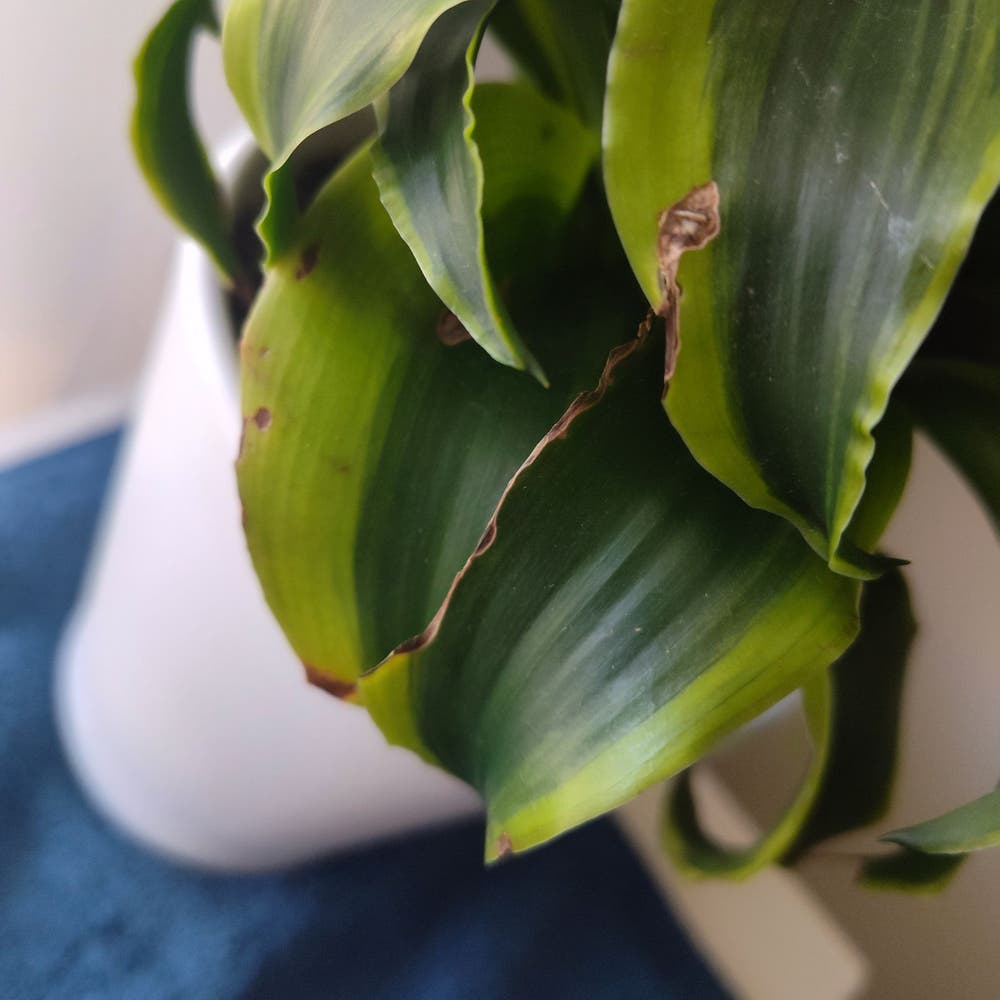
Black Spots on My Dracaena 'Tornado' Leaves
Dracaena fragrans 'Tornado'
By the Greg Editorial Team
Jun 18, 2024•4 min read
This article was created with the help of AI so we can cover more plants for you. May contain errors. See one? Report it here.
- Overwatering leads to black spots and potential root rot in Dracaena 'Tornado'.
- 🍄💧 Fungal vs. bacterial spots: Yellow halos or slimy texture are key indicators.
- Prevent spots with proper care: Adjust watering, inspect for damage, and sterilize tools.
Spotting the Trouble: Recognizing Black Spots on Your Dracaena 'Tornado'
🕵️ What Do Black Spots Look Like?
Black spots on Dracaena 'Tornado' leaves are the plant's cry for help. These blemishes can range from tiny, pinpoint dots to larger, more ominous blotches. They might appear as isolated incidents or throw a party, merging into unsightly clusters. A yellow halo often accompanies them, signaling a possible fungal fiesta.
🌱 Tracking the Spread: How Black Spots Grow and Affect Your Plant
The spread of black spots is like a slow invasion, gradually conquering the leaf's territory. Initially small, these spots can grow and coalesce, leading to significant leaf damage. This isn't just a cosmetic issue; it's a photosynthesis blocker, hindering your plant's ability to thrive. Keep an eye out for a pattern—spots that grow or multiply quickly are sending an SOS that requires immediate attention.

Zeroing in on the Culprits: What's Causing the Black Spots?
💦 Too Much Love: The Overwatering Connection
Overwatering is the equivalent of drowning your Dracaena 'Tornado' in affection. It's the perfect storm for root rot and a breeding ground for pathogens. Soggy soil is a telltale sign you've crossed the line from nurturing to noxious.
🦠 Unwanted Guests: Fungal and Bacterial Villains
Fungi and bacteria are the party poopers of the plant world. Yellow halos or red edges on spots scream fungal infection, while a slimy texture gives away a bacterial invasion. Remember, good airflow is like a bouncer at the door, keeping these troublemakers out.
🌧 Oops! Physical Damage and Its Role
Sometimes, it's just a case of bad luck. Physical damage to your Dracaena 'Tornado' can open the door for infections, leading to those dreaded black spots. It's like leaving your windows open in a rainstorm; you're asking for trouble.

The Plant Doctor Is In: Diagnosing Your Dracaena 'Tornado'
💧 Assessing Watering Habits and Soil Moisture
First, check the soil. If it's swampy, you've overdone the H2O. Dracaena 'Tornado' likes its soil like a good cake – moist but not soggy. Let the top 2 inches dry out before you water again. Remember, the finger test never lies; if it feels damp, put the watering can down.
🔍 Spotting Signs of Infection: Fungus vs. Bacteria
Now, let's play plant detective. Fungus and bacteria leave different marks on your Dracaena. Fungal issues often show as concentric rings or a powdery mildew, while bacterial problems can look like slimy, wet spots. If you see these, it's time for some plant medicine – and fast.
🩹 Checking for Wounds: When Accidents Cause Spots
Accidents happen, and your Dracaena isn't immune. Physical damage can invite pathogens, leading to those dreaded black spots. Inspect your plant for tears or cuts. If you find any, trim the damaged foliage with clean shears. Remember, a clean cut heals faster and prevents further issues.

Erasing the Spots: Treatment and Prevention Tactics
💧 Fine-Tuning Your Watering Technique
Watering is an art form. Check the soil before giving your Dracaena 'Tornado' a drink—only when it's dry. Aim for the base, not the leaves, to avoid unwanted fungal raves. Morning is the best time to water, giving any accidental leaf wetness time to evaporate. Ensure your pot has drainage holes; they're like secret tunnels for excess water escape. And don't forget, as seasons change, so should your watering schedule.
💊 Choosing and Applying the Right Medication
When it comes to medication, think of yourself as a plant pharmacist. Neem oil and baking soda mixtures are like natural health boosters for your plant. If you go the chemical route, cover all areas, but don't overdo it—less is often more. Always gear up with gloves; safety first. Remember, the key is thorough application, not a deluge of product.
🛡️ Shielding Your Plant from Harm: Preventive Measures
Prevention is your shield. Regular inspections can catch trouble before it escalates. If you find infected leaves, snip them off with sterilized shears—quick plant surgery. Keep your plant's environment clean; think of it as maintaining a healthy living space. Avoid watering in the evening when moisture lingers longer. And if you're repotting or pruning, sterilize your tools—it's like giving them a good scrub before surgery.
⚠️ Safety First
This content is for general information and may contain errors, omissions, or outdated details. It is not medical, veterinary advice, or an endorsement of therapeutic claims.
Always consult a qualified healthcare professional before using any plant as food, medicine, or supplement.
Never eat any plant (or feed one to pets) without confirming its identity with at least two trusted sources.
If you suspect poisoning, call Poison Control (800) 222-1222, the Pet Poison Helpline (800) 213-6680, or your local emergency service immediately.
Spotted an error? Please report it here.
Keep your Dracaena 'Tornado' spot-free 🌿 with Greg's tailored watering plans and environmental checks to ensure a thriving, healthy plant.