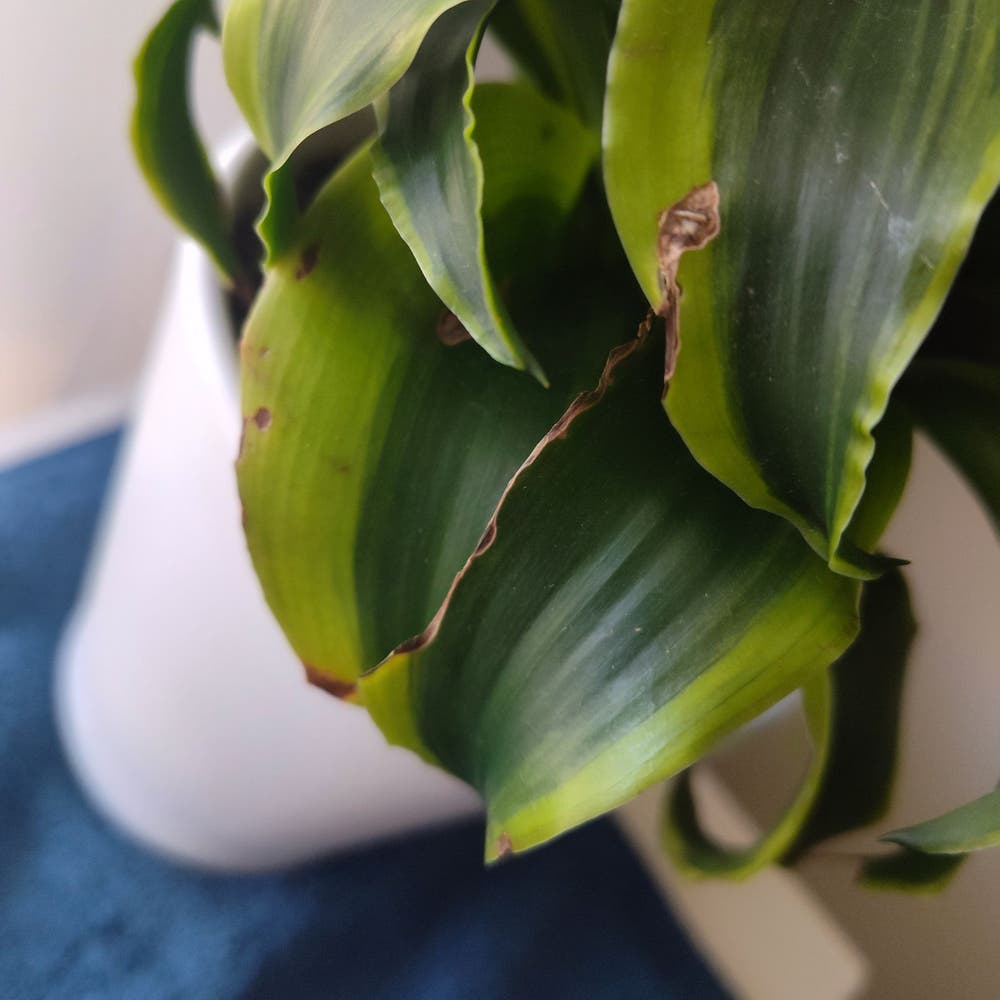
💧 How Much Humidity Does My Dracaena 'Tornado' Need?
Dracaena fragrans 'Tornado'
By the Greg Editorial Team
Jun 18, 2024•3 min read
This article was created with the help of AI so we can cover more plants for you. May contain errors. See one? Report it here.
- Brown tips and slow growth? Low humidity is likely the culprit.
- 🌫️ Boost humidity with pebble trays, misting, or plant grouping.
- 🌡️ Monitor and adjust using hygrometers and mindful watering.
Spotting the Signs: When Your Dracaena 'Tornado' Craves More Humidity
🌿 Telltale Symptoms of Low Humidity
- Brown leaf tips and dry, crispy edges
- Slow growth and lackluster leaves
🌧️ High Humidity Warnings
- Mold growth and overly soft stems
- Leaf yellowing and drop-off

Creating a Humidity Haven for Your Dracaena 'Tornado'
💦 Boosting Humidity Around Your Plant
Creating the ideal humidity for your Dracaena 'Tornado' doesn't have to be a chore. Pebble trays are your low-tech best friend here. Simply fill a tray with pebbles, add water, and place your plant on top. The water evaporates, giving your green buddy a localized humidity hug.
Misting can be a quick fix, but it's more of a temporary relief. Think of it as a hydration snack rather than a full meal. Use a spray bottle to mist your plant, focusing on early mornings or late afternoons to mimic natural dew.
Grouping plants together is like throwing a humidity party. As they transpire, they create a communal microclimate. Just ensure they're not too cozy; overcrowding can lead to issues.
🌬 When There's Too Much of a Good Thing: Lowering Humidity
Sometimes, you can have too much moisture in the air. Air flow is your ally against the damp. A fan or an open window can help keep the air moving, preventing mold and the dreaded gnat invasion.
Watering practices are a balancing act. Overzealous watering can spike humidity levels, so water when the topsoil feels dry. Remember, it's not just about the amount but also the frequency of watering. Keep it consistent, and you'll avoid turning your plant's home into a swamp.

Measuring and Monitoring: Keeping Tabs on Humidity Levels
🌡️ The Role of Hygrometers in Plant Parenthood
Hygrometers are non-negotiable for the Dracaena 'Tornado' enthusiast. These devices provide the hard numbers on ambient moisture, crucial for your plant's well-being.
- Choose wisely: Digital models offer precision; analog gives a classic touch.
- Placement matters: Keep it near your plant but away from direct sun or drafts.
- Timing is everything: Check at various times to understand daily fluctuations.
🌍 Understanding Your Local Humidity Landscape
Your Dracaena 'Tornado' doesn't care for surprises. Seasonal changes in humidity can turn your plant care routine on its head.
- Stay vigilant: Monitor changes as seasons transition.
- Adapt swiftly: Adjust your care routine to maintain consistent humidity levels.
- Keep it stable: Your plant's growth and health depend on a steady environment.

Quick Tips for Humidity Success with Dracaena 'Tornado'
🌡️ The Temperature-Humidity Tango
Temperature and humidity are dance partners in the care of your Dracaena 'Tornado'. Temperature swings can throw humidity levels off balance, affecting your plant's well-being. Keep it in a range that's just right – not too hot, not too cold – to maintain that sweet spot of 40% to 60% humidity.
🔄 Routine Checks and Adjustments
Regularly monitor the humidity around your Dracaena 'Tornado' to prevent the telltale signs of distress. Use a hygrometer to keep tabs and tweak your plant's environment as needed. Remember, your vigilance is the guardian of its tropical bliss.
⚠️ Safety First
This content is for general information and may contain errors, omissions, or outdated details. It is not medical, veterinary advice, or an endorsement of therapeutic claims.
Always consult a qualified healthcare professional before using any plant as food, medicine, or supplement.
Never eat any plant (or feed one to pets) without confirming its identity with at least two trusted sources.
If you suspect poisoning, call Poison Control (800) 222-1222, the Pet Poison Helpline (800) 213-6680, or your local emergency service immediately.
Spotted an error? Please report it here.
Keep your Dracaena 'Tornado' flourishing by letting Greg monitor 🌡️ your home's humidity and provide tailored adjustments for that just-right tropical feel.