What Temperature Should My Dracaena 'Tornado' Be Kept At?
Dracaena fragrans 'Tornado'
By the Greg Editorial Team
Jun 18, 2024•3 min read
This article was created with the help of AI so we can cover more plants for you. May contain errors. See one? Report it here.
- 60°F to 80°F (15°C to 27°C) is the ideal temperature range for Dracaena 'Tornado'.
- Consistent temperature prevents stress, watch for yellow leaves or brown spots.
- Avoid drafts and heat sources, use thermometers and hygrometers for monitoring.
Spotting the Sweet Spot: Ideal Temperature Range for Dracaena 'Tornado'
🌡️ What's the Magic Number?
The optimal temperature range for a Dracaena 'Tornado' is a cozy 60°F to 80°F (15°C to 27°C). This is the comfort zone where your plant can kick back and thrive. While it can briefly tolerate a chill down to 50°F (10°C) or a spike up to 90°F (32°C), think of those as the plant's tolerance limits, not its preferences.
🗝️ Why Consistency is Key
Stable temperatures are like a steady relationship for your Dracaena 'Tornado'—it flourishes with predictability. Sudden changes are the equivalent of a cold shower or a heatwave; neither are welcome. Consistency is crucial to avoid the drama of temperature stress, which can lead to a whole host of issues, from leaf discoloration to a full-on growth stunt. Keep the temperature steady, and your Dracaena will keep its cool.

When Things Heat Up or Cool Down: Recognizing Temperature Stress
🌡️ Telltale Signs Your Plant is Uncomfortable
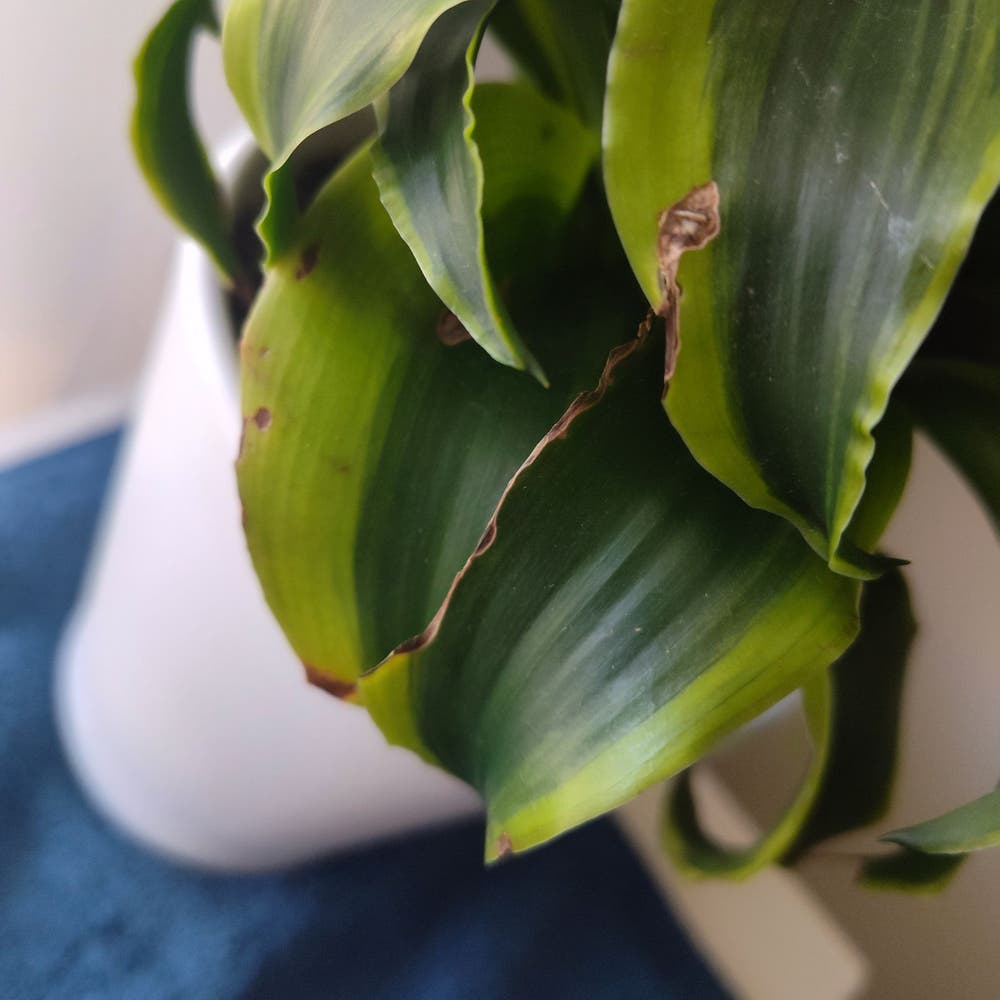
- Yellow leaves might as well be waving flags, declaring, "It's too hot in here!" Conversely, brown spots or edges are your plant's way of whispering, "I'm chilly."
- Wilting is your Dracaena 'Tornado' throwing in the towel on heat. If leaves are dropping faster than your weekend plans, it's a clear distress signal.
🐛 What's Bugging Your Dracaena?
- Temperature swings and drafts are the culprits behind those dark brown or black leaves. It's like your plant is getting caught in a game of thermal tag it never wanted to play.
- Leggy growth? Your Dracaena is probably stretching for a cooler spot, like someone inching away from a campfire. Too much heat, and you might find it looking more parched than a sunbaked tourist.

Keeping Your Cool (or Warmth): Managing Dracaena 'Tornado' Temperatures
🌡️ Tools of the Trade
Thermometers are your go-to gadgets for keeping tabs on the temperature. A digital thermometer is like a security guard for your Dracaena 'Tornado', ensuring the climate stays in the plant's comfort zone. Don't overlook the value of a hygrometer, either; it's crucial for monitoring humidity levels alongside temperature.
🌡️ Making Adjustments
To maintain the right temperature, positioning is everything. Place your Dracaena 'Tornado' away from drafty windows, heat sources, and air conditioners to avoid sudden temperature changes. If your plant's environment feels more like a roller coaster than a serene park, consider moving it to a more stable room. Remember, your plant's well-being hinges on a consistent climate, not a daily game of hot and cold.

A Quick Nod to Humidity
🌿 It's Not All About the Heat
Humidity is the sidekick to temperature, playing a pivotal role in the well-being of your Dracaena 'Tornado'.
High humidity can turn your plant's leaves into a limp handshake, while low levels might crisp them up like autumn leaves underfoot.
🌡️ The Humidity-Temperature Tango
Temperature swings can throw humidity levels out of whack. Remember, warm air holds more moisture than cold air, so as your thermostat climbs, so does the potential for a humidity hike.
📊 Keeping Tabs
A hygrometer is your go-to gadget for tracking humidity. It's not just a fancy thermometer; it's your plant's hydration monitor.
🛠️ Quick Fixes
No need for a rainforest makeover—simple solutions like a pebble tray or occasional misting can keep humidity in check. Just avoid creating a mini monsoon; your Dracaena 'Tornado' isn't a fan of soggy feet.
⚠️ Safety First
This content is for general information and may contain errors, omissions, or outdated details. It is not medical, veterinary advice, or an endorsement of therapeutic claims.
Always consult a qualified healthcare professional before using any plant as food, medicine, or supplement.
Never eat any plant (or feed one to pets) without confirming its identity with at least two trusted sources.
If you suspect poisoning, call Poison Control (800) 222-1222, the Pet Poison Helpline (800) 213-6680, or your local emergency service immediately.
Spotted an error? Please report it here.
Keep your Dracaena 'Tornado' in its happy zone with Greg's environmental tracking, ensuring steady growth 🌡️ without the stress of guessing temperatures and humidity.