How Do I Cure Dieffenbachia 'Panther' Root Rot?
Dieffenbachia 'Panther'
By the Greg Editorial Team
Feb 13, 2024•3 min read
This article was created with the help of AI so we can cover more plants for you. May contain errors. See one? Report it here.
Rescue your leafy friend 🌿 from the dreaded root rot with life-saving tips and tricks!
- Yellow leaves and stench signal Dieffenbachia 'Panther' root rot.
- Prune and repot with sterile tools and well-draining soil for recovery.
- Prevent with proper watering, pot selection, and environmental control.
Spotting the Trouble: Signs of Root Rot
🚨 Yellow Alert: Discolored Leaves and Other Visual Clues
Yellowing leaves on your Dieffenbachia 'Panther' are like the plant's version of waving a white flag. Don't ignore these visual distress signals. If the new growth is turning yellow or brown, it's not just aging gracefully—it's a cry for help. Keep an eye out for stunted growth or a lack of new shoots; these are subtle hints that something's wrong underground.
👃 Sniff Test: Unearthing the Stench
Your nose knows. A foul odor wafting from the soil is the signature scent of root rot. It's the kind of stench that would make a skunk wince. If your plant's soil smells like a forgotten gym locker, it's time to play plant detective and dig a little deeper.
🌱 Root Inspection: Getting Your Hands Dirty
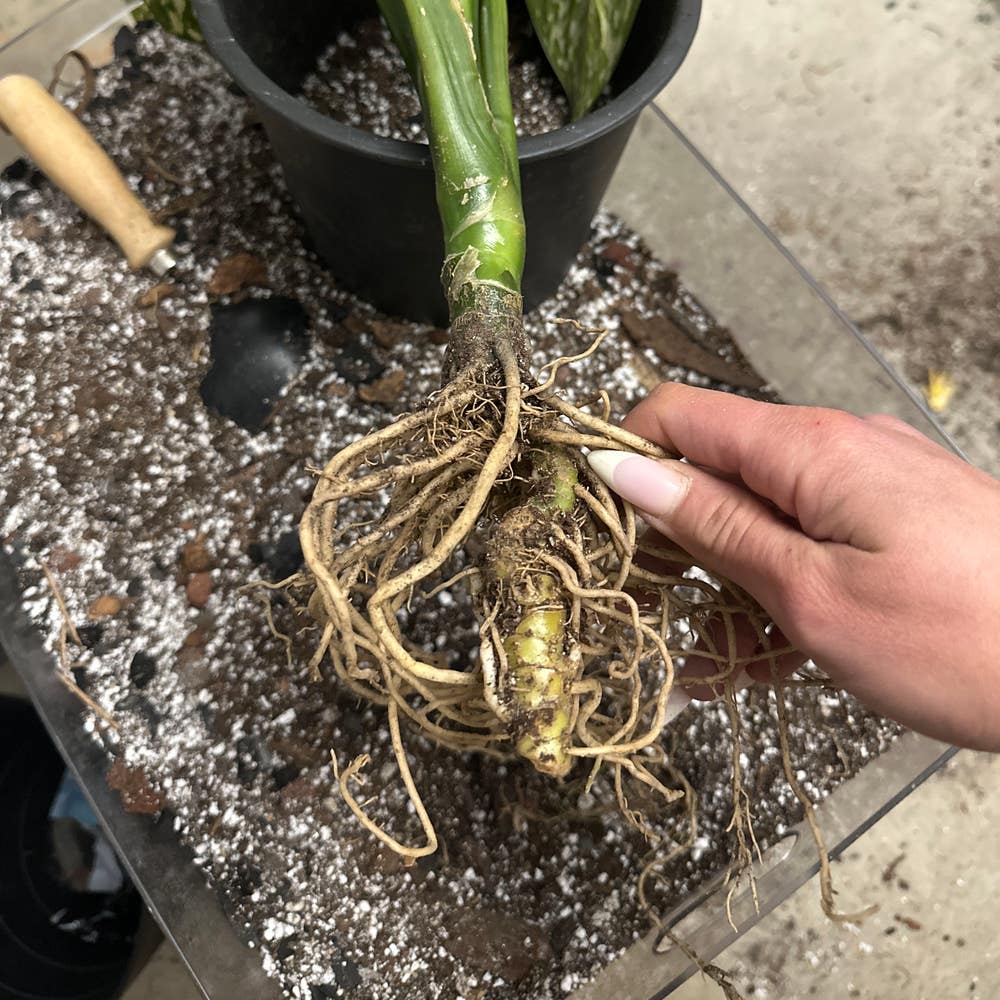
Time to get hands-on. Gently lift your Dieffenbachia 'Panther' from its pot for a root rendezvous. Healthy roots should be firm and white, not soft and the color of over-steeped tea. If they feel like they've been through a blender, you've got a case of root rot. Remember, this is a rescue mission, not a wrestling match—handle with care to avoid further damage.
Emergency Room: Saving Your Dieffenbachia 'Panther'
🏥 Surgical Precision: Pruning Rotten Roots
When your Dieffenbachia 'Panther' succumbs to root rot, grab your shears. It's time to channel your inner plant surgeon. Use sterilized scissors to snip off the rotten parts, aiming for the transition where the mush meets the firm, healthy tissue. Sanitize your tools after each cut to prevent spreading any pathogens.
🌱 Fresh Start: Repotting with Care
After the operation, your plant needs a clean home. Sterilize the old pot or get a new one, and fill it with a peat-based, well-draining potting mix. This environment will discourage future rot and give your Dieffenbachia 'Panther' the fresh start it deserves.
🍄 Fungus Among Us: Dealing with Pathogens
If the rot was extensive, consider an antifungal treatment for the remaining roots. Apply it, wait for a day, and then repot. This step helps ensure that any lingering rot doesn't spoil your plant's recovery. Remember, antifungals are an aid, not a guarantee—prevention is still your best bet.
Prevention is Key: Keeping Root Rot at Bay
💧 Water Wisdom: Finding the Sweet Spot
Watering your Dieffenbachia 'Panther' is like playing Goldilocks—not too much, not too little, but just right. Overzealous watering is the fast track to root rot city. Check the soil's dryness before you water; if the top inch feels like a desert, it's time to hydrate. Consider using a moisture meter to eliminate the guesswork—it's like having a thirst-o-meter for your plant.
🏡 Home Sweet Home: Choosing the Right Pot and Soil
Choosing the right pot is a big deal. Too big, and you're swimming in risky waters; too small, and your plant's roots will feel like they're in a straightjacket. Aim for the Goldilocks zone here too. Drainage holes are your best friends—they're the escape route for any extra water. Pair that with a well-draining soil mix, and you've got yourself a root-friendly habitat.
🌡️ Climate Control: Setting the Scene for Success
Temperature and humidity are the stagehands of your plant's performance. They work behind the scenes to set the perfect environment. Keep your Dieffenbachia 'Panther' in a well-lit spot, but away from the harsh, direct sunlight that could turn it into a crispy critter. Rotate your plant occasionally to ensure even growth and prevent any sneaky diseases from setting up camp. Remember, clean and clear surroundings are like a no-vacancy sign for root rot.
⚠️ Safety First
This content is for general information and may contain errors, omissions, or outdated details. It is not medical, veterinary advice, or an endorsement of therapeutic claims.
Always consult a qualified healthcare professional before using any plant as food, medicine, or supplement.
Never eat any plant (or feed one to pets) without confirming its identity with at least two trusted sources.
If you suspect poisoning, call Poison Control (800) 222-1222, the Pet Poison Helpline (800) 213-6680, or your local emergency service immediately.
Spotted an error? Please report it here.
Ensure your Dieffenbachia 'Panther' thrives after root rot by recovering 🌱 with Greg's tailored watering reminders and environmental tips!