Why Are My Dieffenbachia 'Panther' Leaves Falling Over?
Dieffenbachia 'Panther'
By the Greg Editorial Team
Feb 13, 2024•4 min read
This article was created with the help of AI so we can cover more plants for you. May contain errors. See one? Report it here.
Prevent your Dieffenbachia 'Panther' from wilting away with these pivotal plant care secrets! 🌿
- Yellowing leaves? Check for over-fertilization or inconsistent watering.
- Droopy leaves signal distress; adjust water, light, and temperature promptly.
- Prevent root rot by watering based on plant needs, not a schedule.
Spotting the Signs: Is Your Dieffenbachia 'Panther' in Distress?
💛 Yellowing Leaves: A Cry for Help
Yellow leaves on your Dieffenbachia 'Panther' are not a new trend; they're a distress signal. Over-fertilization or inconsistent watering could be the culprits. Look for mushy spots or lesions—these unwelcome guests could indicate bacterial leaf spot or the dreaded root rot.
🥀 Wilted Ambitions: When Leaves Can't Stand Up
When your Dieffenbachia 'Panther' starts to resemble a weeping willow, it's time to act. Persistent leaf drooping or wilting is a plant's version of a white flag. Check for drafts, excessive sun, or signs of fungal foes like Verticillium wilt. And remember, soggy or shriveled roots spell trouble.
🌱 The Droop: Decoding What Your Plant's Posture Means
A droopy Dieffenbachia 'Panther' isn't just having a bad day—it's sending an SOS. It's not just about water; it could be crying out for more light or suffering from too much love in the watering department. Black spots? That's the red flag of plant distress.
Water Woes: Striking the Right Balance
💧 The Perils of Overwatering: Root Rot and Droopy Leaves
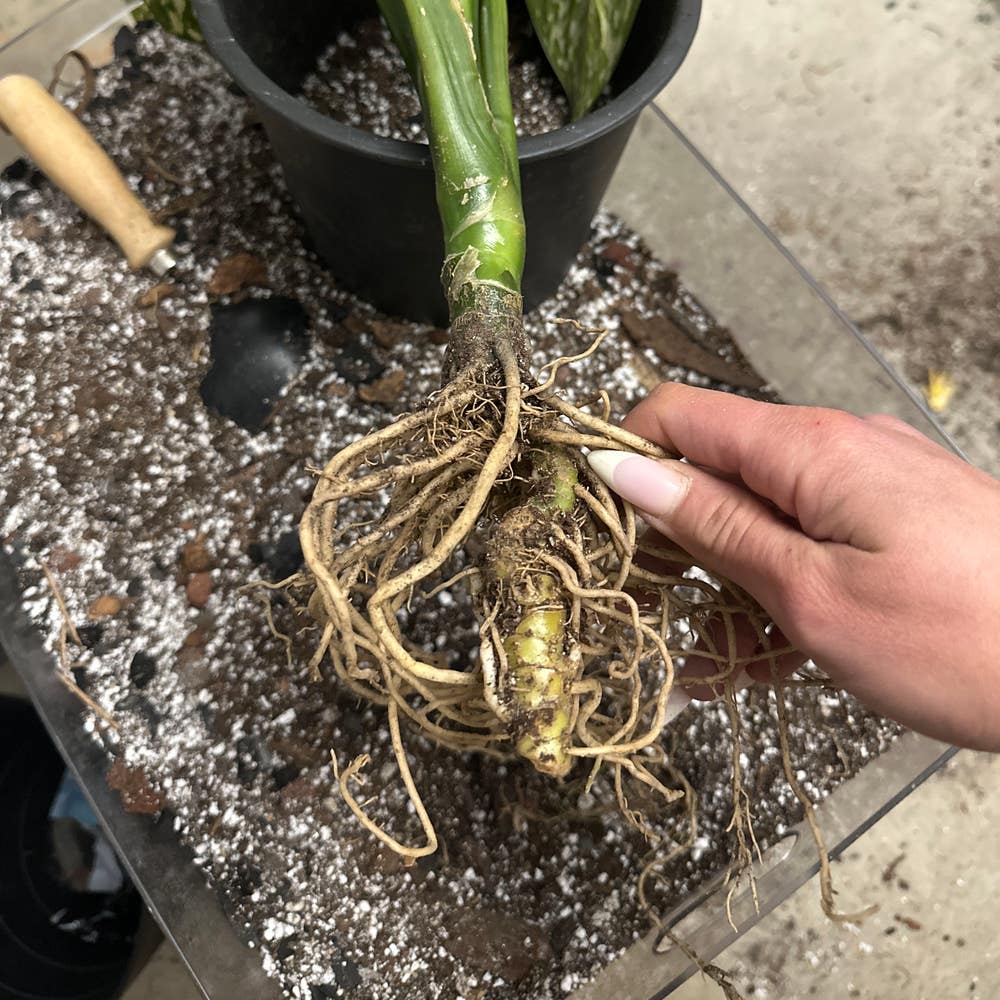
Overwatering is the silent killer of Dieffenbachia 'Panther'. Root rot sets in when the plant's feet are constantly wet. Droopy leaves are the first red flag, signaling an SOS from your green buddy. If the soil feels like a soggy sponge, it's time to cut back on the aqua.
🏜️ Underwatering Blues: How Thirst Leads to Collapse
Underwatering, on the other hand, leaves your plant as parched as a desert wanderer. The leaves will droop, resembling a weary traveler in need of an oasis. Soil that's dry and crumbly to the touch screams for hydration. Don't wait for your plant to look like it's been through a drought; water it before it reaches that point.
Fine-Tuning Your Watering Routine to Keep Leaves Perky
To avoid the extremes of over and underwatering, observe your plant like a hawk. Adjust your watering routine to the plant's response, not the calendar. A terracotta pot can help wick away excess moisture, striking the right balance. Remember, the goal is to keep the soil moist, not drenched or bone-dry. Use tools like a moisture meter or the trusty finger test to check soil moisture. When in doubt, wait it out. Better to underwater than overdo it and drown those roots.
Light and Temperature Tango
🌞 Too Much Sun: When Leaves Can't Handle the Heat
Dieffenbachia 'Panther' leaves can succumb to the sun's intensity. Scorched leaves, with crispy edges or bleach spots, are a plant's distress signal for less light. It's not trying to get a tan; it's getting burned.
❄️ Chilly Drafts and Hot Blasts: Temperature Swings and Leaf Limpness
This tropical native despises the drama of temperature swings. Leaves wilt or stunt in growth when exposed to sudden changes. Keep your plant away from drafty windows and heat sources to avoid these temperature tantrums.
⛅️ Finding the Sweet Spot: Ideal Light and Temperature for Upright Leaves
Strive for a consistent temperature range of 65-80°F. Bright, indirect sunlight is the sweet spot—like a cozy nook that's just bright enough without the glare. Adjust your plant's position with the seasons to maintain this harmony and keep those leaves perky.
The Recovery Room: Nursing Your Dieffenbachia 'Panther' Back to Health
🌧️ Adjusting Care: Immediate Steps to Take When Leaves Fall Over
In the throes of a leafy slump, immediate action is crucial. First, check for overwatering—the root of all evil for many a houseplant. If the soil feels like a wet sponge, it's time to dial back on the H2O. Conversely, if it's drier than a stand-up comedian's wit, give your plant a thorough drink. Next, scrutinize the lighting—too much sun can lead to a sunburned, droopy Dieffenbachia. Aim for that sweet spot of bright, indirect light. A quick temperature check is in order too; keep your plant away from drafts or vents to avoid shocking its system.
🏋️ Long-Term Plant Rehab: Ensuring Your Dieffenbachia Stays Upright
For the long haul, your Dieffenbachia 'Panther' needs a stable environment. Regularly rotate the pot for even growth and prevent your plant from doing the Leaning Tower of Pisa impression. Fertilize with a balanced mix, but don't go all mad scientist with it—overfeeding can harm more than help. If your plant is still sporting a sad lean, consider repotting. Choose a container one size up with fresh, well-draining soil to give those roots room to breathe. And remember, Dieffenbachia sap is as friendly as a cactus hug, so glove up. Keep pests at bay by wiping down leaves—think of it as a spa day for your plant. With these steps, your Dieffenbachia 'Panther' should stand tall and proud, like a plant on a mission.
⚠️ Safety First
This content is for general information and may contain errors, omissions, or outdated details. It is not medical, veterinary advice, or an endorsement of therapeutic claims.
Always consult a qualified healthcare professional before using any plant as food, medicine, or supplement.
Never eat any plant (or feed one to pets) without confirming its identity with at least two trusted sources.
If you suspect poisoning, call Poison Control (800) 222-1222, the Pet Poison Helpline (800) 213-6680, or your local emergency service immediately.
Spotted an error? Please report it here.
Revive your Dieffenbachia 'Panther' and prevent leaf droop 🍃 with Greg's personalized care reminders tailored to your home's unique environment.