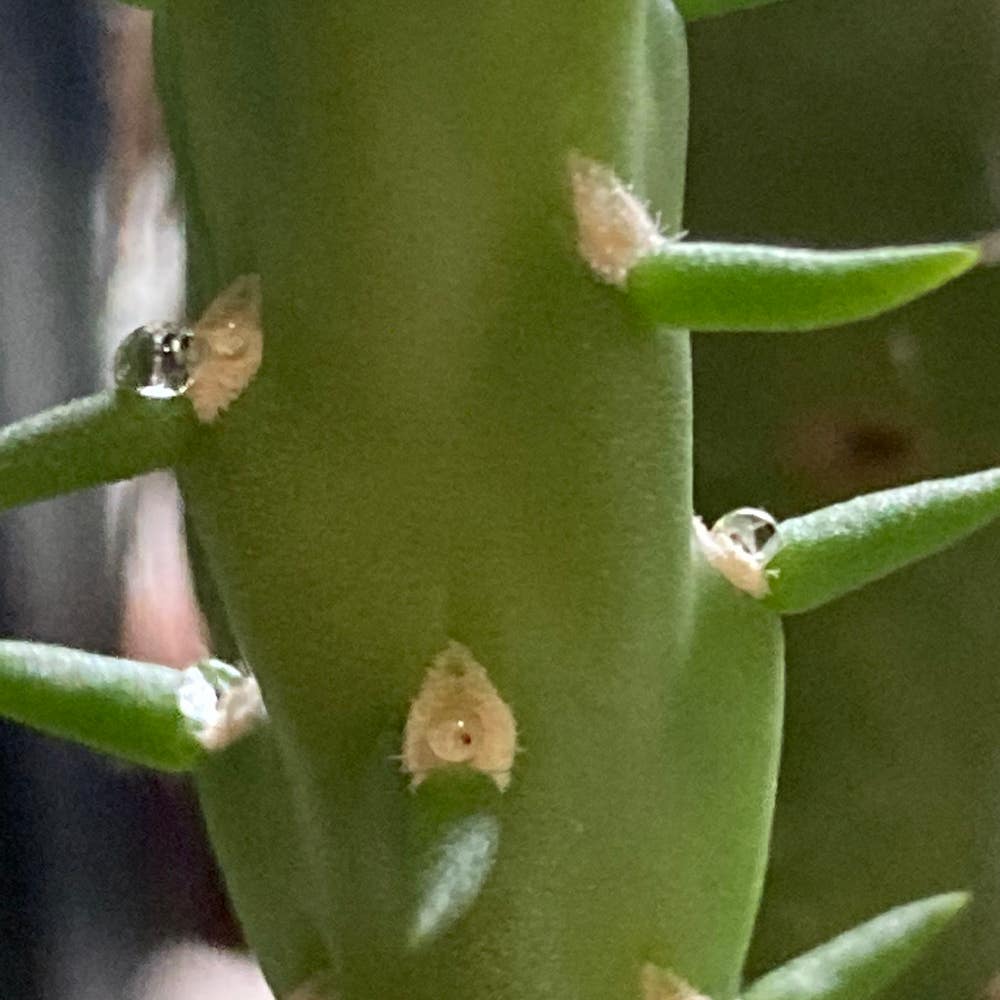
Common Desert Christmas Cactus Problems
Cylindropuntia leptocaulis
By the Greg Editorial Team
Apr 02, 2024•4 min read
This article was created with the help of AI so we can cover more plants for you. May contain errors. See one? Report it here.
Keep your Christmas Cactus merry 🌵 by dodging these typical holiday care blunders!
- Over-watering and under-watering have distinct signs; know what to look for.
- Indirect sunlight and stable temperatures between 65°F to 80°F are ideal.
- Prevent pests and diseases with good airflow, proper watering, and fungicides if needed.
When Watering Gets Tricky
🚰 Spotting the Signs of Water Woes
Watering your Desert Christmas Cactus can feel like a high-stakes game of Goldilocks – too much, and you're in soggy territory; too little, and it's the Sahara for your spiky friend. Over-watering is a common misstep, with symptoms like yellowing leaves, a wilted demeanor, or even a funky smell emanating from the soil. On the flip side, under-watering leaves your cactus with browning tips and a general air of neglect.
🚰 Fine-Tuning Your Watering Routine
Getting the watering right doesn't require a green thumb, just some common sense and observation. Check the soil – if the top inch is dry, it's time for a drink. But remember, your cactus isn't a fan of wet feet, so ensure your pot has drainage holes to avoid root rot. It's not about sticking to a rigid schedule; it's about responding to what your plant tells you. If you're the forgetful type, consider using a soil moisture meter to keep track of hydration levels. It's like having a cheat sheet for perfect watering.
Light and Temperature: The Balancing Act
🍃 Reading the Leaves: Light and Heat Stress Signals
Desert Christmas Cacti are drama queens when it comes to their light and temperature needs. Too much light, and their leaves curl up tighter than a rolled yoga mat. Not enough, and you'll see them reaching for the sun like a kid for candy. Temperature swings? They're as welcome as a phone call during your favorite show.
🌿 Creating the Ideal Environment
Here's the scoop: indirect sunlight is your cactus's best friend. Think of a spot that's bright enough to read a book without squinting. Rotate your plant regularly to avoid lopsided growth—it's all about symmetry. Temperature-wise, keep it between 65°F and 80°F. This isn't a tropical vacation; consistency is key.
Avoid placing your cactus near drafty areas or heating vents. Sudden temperature changes are as harmful as forgetting your phone at home. And remember, your plant doesn't have the luxury of putting on a sweater or taking a dip to cool off. It relies on you to keep its environment as stable as a seasoned yoga instructor's pose.
For those who love gadgets, a thermometer and light meter can be your plant care sidekicks. They take the guesswork out of the equation, letting you know if conditions are just right or if you need to step in and make some adjustments. It's like having a personal assistant for your plant, minus the coffee runs.
The Unseen Enemies: Pests and Diseases
🐜 Uninvited Guests: Identifying Common Pests
Your Desert Christmas Cactus might be under attack by pests that are as stealthy as they are destructive. Spider mites are tiny but terrible, leaving a trail of fine webbing across your plant. Mealybugs prefer to announce their presence with a cotton-like fluff, while aphids are all about that sticky residue on leaves. Flip those leaves and inspect every nook; these critters love to play hide-and-seek.
🍄 Fungal Foes: Tackling Mold and Root Rot
When it comes to mold and root rot, think of them as the silent party crashers. They don't knock; they just show up uninvited. If your cactus is looking a bit off and the soil smells like yesterday's gym socks, it's time for a fungal intervention. Increase airflow, cut back on the watering, and if necessary, bring out the big guns—fungicides. But remember, the best treatment is prevention, so keep the living conditions clean to avoid these uninvited fungal fiestas.
Environmental Factors and Their Impact
🌞 The Perils of Direct Sunlight: Preventing Leaf Scorch
Bright, indirect light is the sweet spot for your Desert Christmas Cactus. Direct sunlight is like a bad tan—too much and you're looking at leaf scorch. To prevent your cactus from turning into a crispy critter, shield it from intense midday rays. If you've recently moved your cactus outdoors, ease it into the new environment to avoid a full-blown sunburn saga.
🌬️ Drafts and Sudden Changes: Keeping Your Cactus Cozy
Drafts are the silent assassins of the temperature world, sneaking up on your cactus and wreaking havoc. Keep your plant away from air vents, open windows, and doors to avoid the cold's stealthy embrace. Your cactus craves consistency—like a good friend, it doesn't appreciate being ghosted by sudden temperature changes. Keep the room temperature steady between 60°F and 80°F to maintain a cactus-friendly microclimate. If your cactus could talk, it would ask for a stable, warm spot with a view—not a front-row seat at a solar flare.
⚠️ Safety First
This content is for general information and may contain errors, omissions, or outdated details. It is not medical, veterinary advice, or an endorsement of therapeutic claims.
Always consult a qualified healthcare professional before using any plant as food, medicine, or supplement.
Never eat any plant (or feed one to pets) without confirming its identity with at least two trusted sources.
If you suspect poisoning, call Poison Control (800) 222-1222, the Pet Poison Helpline (800) 213-6680, or your local emergency service immediately.
Spotted an error? Please report it here.
Ensure your Desert Christmas Cactus is thriving 🌵 with Greg's custom care reminders, tailored to prevent over-watering, pests, and environmental stress, for a stress-free plant parenting experience.