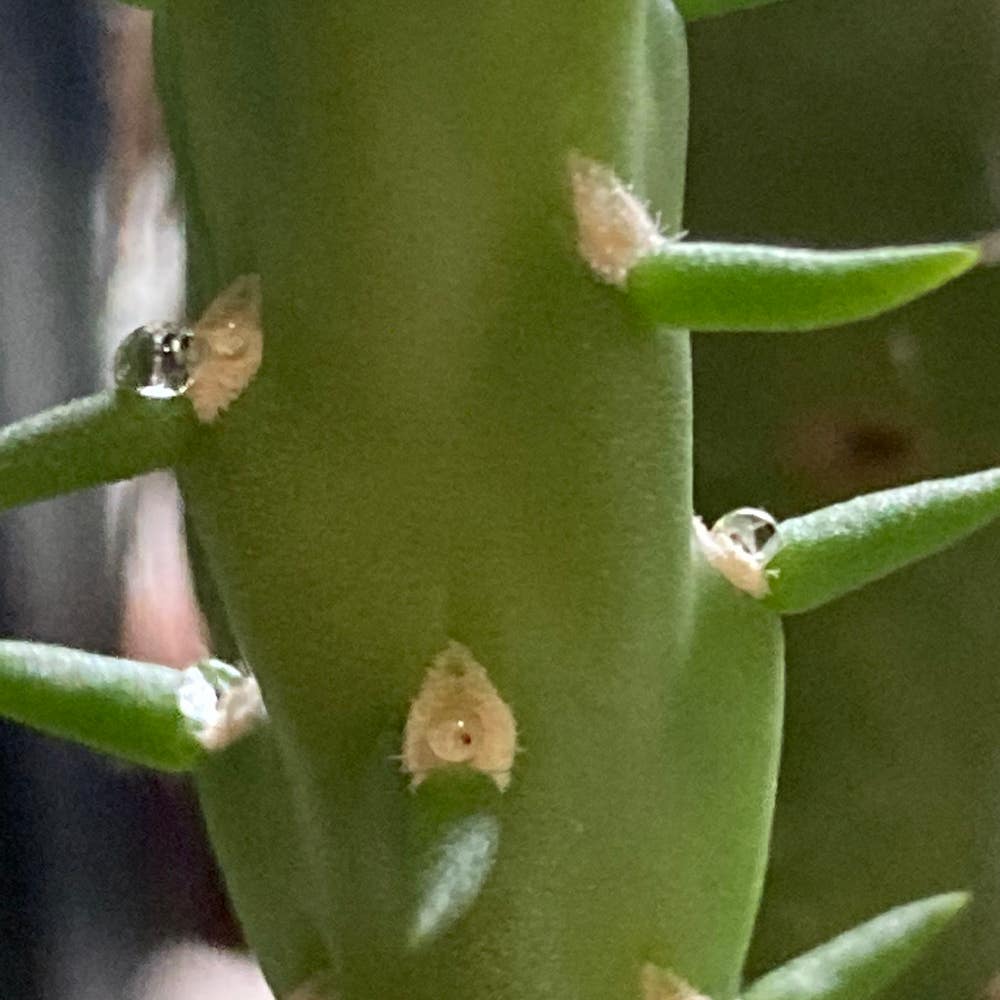
Why Are My Desert Christmas Cactus Leaves Falling Over?
Cylindropuntia leptocaulis
By the Greg Editorial Team
Apr 02, 2024•4 min read
This article was created with the help of AI so we can cover more plants for you. May contain errors. See one? Report it here.
Prevent your Desert Christmas Cactus from wilting 🌵 by mastering the art of perfect plant care.
- Overwatering? Yellow, translucent leaves and soil sticking to fingers.
- Underwatering signs: Crispy leaves, light pot, and soil shrinkage.
- Ideal conditions: Well-draining soil, indirect sunlight, and 50-80°F temperature.
Spotting the Signs of Trouble
🚰 Recognizing Overwatering Symptoms
Yellowing leaves might as well be your Desert Christmas Cactus waving a white flag. If they're swollen or have a translucent look, you've been too generous with the watering can. Leaves that pop off with a gentle poke? That's overwatering's calling card. And if the soil clings to your fingers like a lifeline, it's time to dial back on the H2O.
🏜️ Identifying Underwatering Impact
When your cactus's leaves start to look as crispy as a batch of fresh fries, it's begging for water. If the soil's so dry it's pulling away from the pot's edge, your plant's thirst is real. A pot that feels lighter than your last grocery bag is another red flag. Your cactus isn't trying to be dramatic, but it's definitely sending an SOS for some hydration.
🌞 Detecting Light and Temperature Stress
If your Desert Christmas Cactus is drooping like it's carrying the weight of the world, it might be feeling the heat. Or maybe it's not getting enough of those sweet, sweet rays. Rotate your plant to ensure it gets even light exposure and doesn't start leaning like it's trying to escape. Keep the temperature as steady as a surgeon's hand; your cactus is not a fan of surprises.
Nailing the Watering Balance
💧 Fine-Tuning Your Watering Schedule
Weekly watering is a good starting point, but it's not a one-size-fits-all deal. Your Desert Christmas Cactus might be as finicky as a cat with its food bowl—sometimes it's ravenous, other times it's just picking. Adjust based on the room's humidity and how much your heating system is drying out the air. If the leaves are sagging like a deflated balloon, it's a cry for help—time to switch things up. A moisture meter can be your best friend here, but don't forget to trust your instincts too.
💦 Soil and Drainage: Your Best Allies
The right soil mix is like a good pair of jeans—it needs to fit just right. For your cactus, that means well-draining soil that won't leave its feet wet. Think of it as the difference between a swamp and a desert—your cactus prefers something in the middle. If you're dealing with a case of droopy leaves, it might be time to audit your soil situation. And don't forget, the pot needs drainage holes like a fish needs water—without them, you're setting up camp in soggy town.
Creating the Ideal Environment
💡 Lighting It Right
Your Desert Christmas Cactus craves bright, indirect sunlight to prevent its leaves from becoming as limp as overcooked spaghetti. Too much direct sun can turn your cactus into a crispy critter, so think of it as placing your cactus in the plant equivalent of a shaded hammock. If you're relying on artificial light, make it count—LEDs or fluorescents should do the trick, but keep it as natural as possible.
🌡️ Keeping Temperatures Steady
When it comes to temperature, consistency is your cactus's best friend. Aim for a comfortable 50-80°F (10-27°C) range, avoiding the drama of temperature swings that can make your cactus more dramatic than a reality TV star. Keep it away from drafts and heating vents, because nothing says "I don't care" like exposing your plant to the whims of your HVAC system. Use a thermometer to keep tabs on the temperature, just like you'd keep an eye on a toddler at a playground.
The Potting Predicament
🌵 When to Consider Repotting
Root crowding is a clear sign your Desert Christmas Cactus needs a new pot. If you notice roots poking through drainage holes or circling the pot interior, it's time to act. Slow growth or a cactus that dries out too quickly after watering also suggests a repot is due. Visible stress, like yellowing despite proper care, could be a cry for more space. And if pests or diseases show up, seize the chance to repot and treat your cactus simultaneously.
🏺 Choosing the Right Pot Size
The ideal pot size is about 1 to 2 inches larger in diameter than the current one. Too big, and you risk water retention and overwatering; too small, and the cactus remains cramped. A pot that's just right promotes a stable root system, preventing your cactus from leaning or toppling over. Opt for a pot with drainage holes and consider porous materials like terracotta or ceramic to enhance breathability and moisture management.
⚠️ Safety First
This content is for general information and may contain errors, omissions, or outdated details. It is not medical, veterinary advice, or an endorsement of therapeutic claims.
Always consult a qualified healthcare professional before using any plant as food, medicine, or supplement.
Never eat any plant (or feed one to pets) without confirming its identity with at least two trusted sources.
If you suspect poisoning, call Poison Control (800) 222-1222, the Pet Poison Helpline (800) 213-6680, or your local emergency service immediately.
Spotted an error? Please report it here.
Keep your Desert Christmas Cactus upright 🌵 with Greg's tailored watering plans and environment-specific care alerts, ensuring it never leans into trouble again!