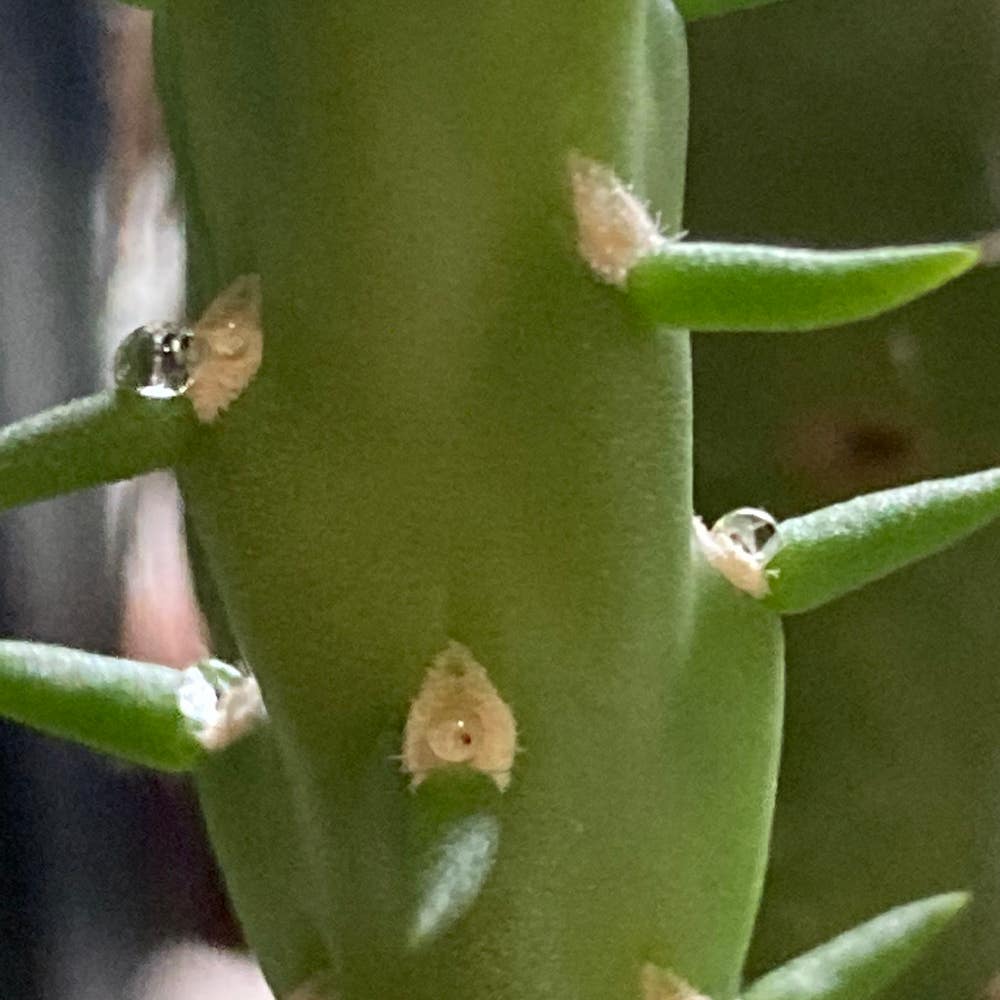
🌵 Why Are My Desert Christmas Cactus Leaves Droopy?
Cylindropuntia leptocaulis
By the Greg Editorial Team
Apr 02, 2024•4 min read
This article was created with the help of AI so we can cover more plants for you. May contain errors. See one? Report it here.
Perk up your droopy Desert Christmas Cactus 🌵—discover the secrets to its lively leaves!
- Droopy leaves signal distress, often due to water or temperature issues.
- 🌵 Under/overwatering and light are major factors in leaf droopiness.
- Consistent care and monitoring prevent and remedy droopy leaves.
Spotting the Telltale Signs of Droopiness
🌵 Visual Cues: The Droop Scoop
A Desert Christmas Cactus in distress often sports sagging leaves, a far cry from its usual perky self. The leaves may bend downwards, and the vibrant green can turn lackluster. It's as if the plant's vitality is seeping away, leaving behind a wilted version of its former glory.
⏰ Timing the Droop: When Leaves Hang Low
Noticing when the leaves begin their descent is crucial. If they droop post-watering, you might be drowning your cactus in love. Conversely, a droop during a heatwave might indicate your plant is thirstier than a tourist in the desert. Keep an eye on the clock and the calendar; the timing of the droop can be as revealing as the droop itself.
Zeroing in on the Culprits
💧 Water Woes
Underwatering can leave your Desert Christmas Cactus as limp as a forgotten lettuce leaf. The plant's plump leaves will start to look deflated, signaling a desperate need for hydration.
Overwatering, on the flip side, turns the soil into a swampy mess. This drowns the roots, leading to a sad, droopy appearance. Check the soil: if it's more waterlogged than a rain-soaked sponge, it's time to cut back on the H2O.
🌡️ Climate Culprits
Heat stress can make a cactus wilt like a marathon runner in a heatwave. If your plant is too close to a heat source, it's begging for a cooler spot.
Conversely, a cold draft can shock your cactus into a droopy despair. Keep it away from chilly windows and doors to avoid a temperature-induced slump.
🌞 Light and Shade
Your Desert Christmas Cactus craves the right amount of light. Too little, and it's a sad shadow of its potential; too much, and it's like a sunbather without sunscreen. Aim for bright, indirect light to keep those leaves perky.
🍽️ Feeding Faux Pas
Nutrient imbalance can lead to a droopy demeanor. Overfeeding is like stuffing your plant with junk food, while underfeeding leaves it starved and sagging. Stick to a balanced fertilizer regimen to maintain leaf vitality.
First Aid for Droopy Leaves
💧 Watering Wisdom
Adjusting your watering routine is essential for a Desert Christmas Cactus showing signs of droopiness. If the soil is bone-dry, it's time to gradually rehydrate your plant. Water should be introduced in stages to prevent root shock. Always allow the soil to dry out completely between waterings to avoid root rot. During warmer months, your cactus may need weekly watering, but in cooler times, only water when the soil is dry to the touch.
🌱 Soil and Roots Rehab
For a Desert Christmas Cactus, the right soil mix is non-negotiable. It should be loose and airy, promoting excellent drainage. To achieve this, opt for a cactus-specific mix and consider adding perlite or vermiculite. When repotting, choose a container with drainage holes to prevent water from pooling at the bottom. This will give your plant's roots the equivalent of a breathable living space.
🌞 Light and Temperature Tweaks
Bright, indirect sunlight is the sweet spot for your Desert Christmas Cactus. Too much direct sunlight can cause stress and leaf burn, while too little light can lead to etiolation. Rotate the plant occasionally to ensure even growth. Maintain a stable temperature, avoiding sudden changes that can stress the plant. If your cactus is exposed to temperature extremes, find a more temperate spot to encourage recovery.
Keeping Leaves Lively and Lifted
🌵 Consistency is Key
Crafting a care schedule is the backbone of vibrant Desert Christmas Cactus leaves. Like clockwork, your plant craves regularity. Watering should sync with the plant's natural rhythms, taking into account seasonal shifts in growth and rest periods.
👀 Vigilant Monitoring
Staying ahead of droop means keeping your eyes peeled. Regular check-ups can catch early signs of distress, like a detective sniffing out clues. Adjust your care tactics on the fly—think of it as a plant's personal life coach, nudging it back on track.
- Soil moisture checks: Don't just guess; get your fingers dirty. The top inch of soil will tell tales of thirst.
- Pest patrols: Insects love to party on your plant's dime. Inspect leaves, evict freeloaders, and keep the foliage pristine.
- Environmental tweaks: Your plant's not a fan of change. Keep light and temperature more consistent than your favorite diner's coffee.
- Feeding finesse: Stick to a fertilizing schedule that avoids the highs and lows of a roller coaster diet.
Remember, a droop-free cactus is a testament to the tender loving care you dish out daily.
⚠️ Safety First
This content is for general information and may contain errors, omissions, or outdated details. It is not medical, veterinary advice, or an endorsement of therapeutic claims.
Always consult a qualified healthcare professional before using any plant as food, medicine, or supplement.
Never eat any plant (or feed one to pets) without confirming its identity with at least two trusted sources.
If you suspect poisoning, call Poison Control (800) 222-1222, the Pet Poison Helpline (800) 213-6680, or your local emergency service immediately.
Spotted an error? Please report it here.
Ensure your Desert Christmas Cactus stays vibrant and droop-free 🌵 with Greg's personalized care reminders tailored to your home's unique environment.