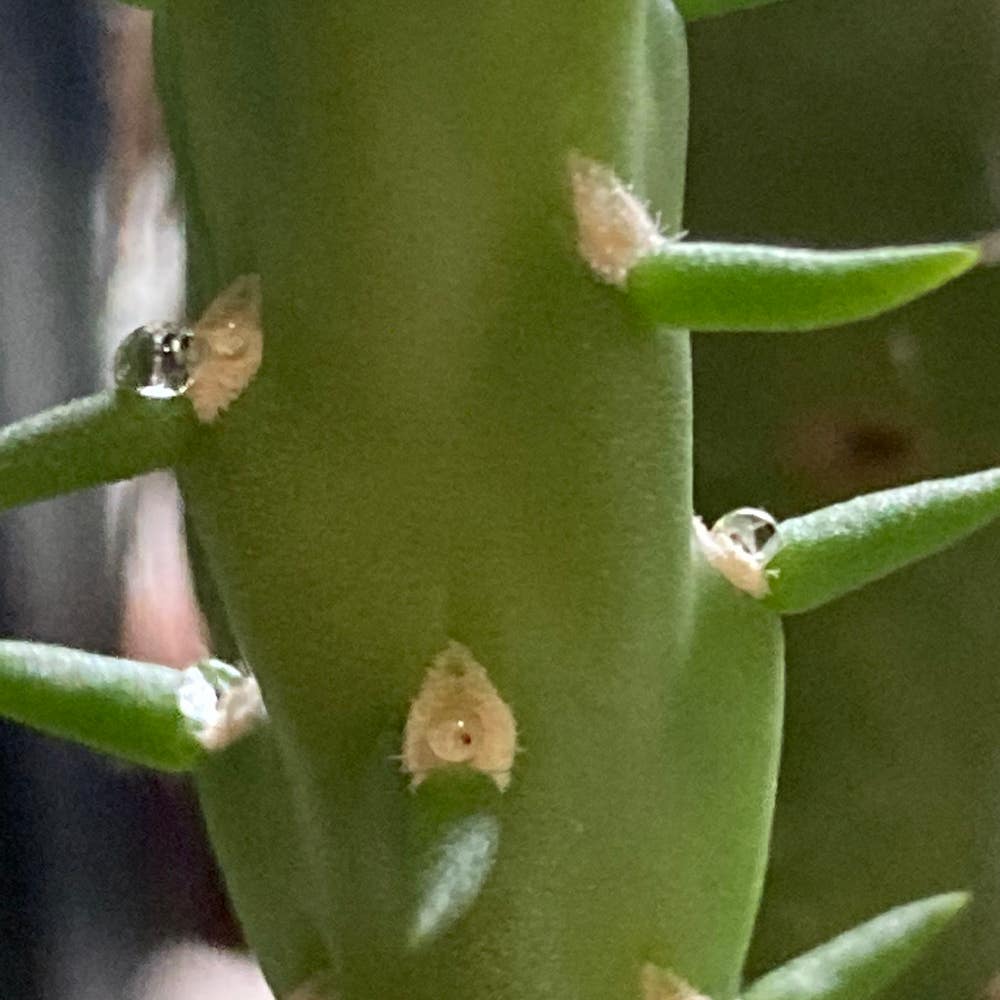
🌵 Why Is My Desert Christmas Cactus Dropping Leaves?
Cylindropuntia leptocaulis
By the Greg Editorial Team
Apr 02, 2024•4 min read
This article was created with the help of AI so we can cover more plants for you. May contain errors. See one? Report it here.
Prevent unwanted 🌵 leaf drop and keep your cactus thriving with these crucial care insights! 🌟
- Over/underwatering and light issues cause leaf drop; check soil and light exposure.
- Temperature and humidity swings can lead to leaf loss; maintain stable environment.
- Immediate action and long-term care are key; adjust watering, light, and monitor roots.
Spotting the Signs of Trouble
🌵 Identifying Leaf Drop: What to Look for When Your Cactus Is in Distress
Brown spots or wilting stems are your cactus crying out for help. If the leaves of your Desert Christmas Cactus are looking more like a deflated balloon than a festive plant, it's time to spring into action. Droopy leaves that lack their usual perkiness are a clear distress signal.
⏰ Timing and Patterns: Understanding When Leaf Drop Is a Sign of a Problem
Leaf drop can be as normal as a Tuesday, but when your cactus starts shedding like it's in a race to go bald, that's a red flag. Balance is key; if new growth isn't keeping up with the leaf loss, it's time to investigate. A sudden leaf landslide should have you on high alert, while a gradual decline might suggest a more chronic issue.
Nailing Down the Cause
💧 Water Woes: Too Much or Too Little?
Overwatering turns your Desert Christmas Cactus into a soggy mess, leading to root rot and a cascade of falling leaves. Underwatering, however, leaves your plant gasping for moisture, causing it to drop leaves in a desperate survival tactic.
Signs of Improper Watering
- Overwatering: Leaves become yellow and mushy.
- Underwatering: Leaves appear wrinkled and dry.
Correcting Watering Issues
- Check soil moisture one inch deep; it should be dry before you water again.
- Water deeply but infrequently, allowing the soil to dry between waterings.
🌡 Feeling the Heat: Temperature and Humidity Factors
Temperature extremes and incorrect humidity levels can trigger a leaf-dropping spree in your Desert Christmas Cactus.
Temperature and Humidity Stress
- High temperatures can cause leaves to wilt and drop.
- Low humidity makes leaves crispy and prone to falling.
Stabilizing Plant Environment
- Keep temperatures consistent, avoiding fluctuations.
- Maintain humidity with a tray of water nearby or a humidifier.
🌞 Let There Be Light (But Not Too Much)
Light is crucial for your cactus, but too much or too little can lead to leaf loss.
Light-Related Stress Indicators
- Too much light: Leaves show signs of burning or bleaching.
- Too little light: Leaves become pale and weak.
Optimizing Light Exposure
- Provide bright, indirect sunlight.
- Shield the plant from direct, intense sun to prevent scorching.
Turning Things Around
🚨 Immediate Interventions
When your Desert Christmas Cactus starts shedding leaves like a tree in autumn, act fast. First, check the soil moisture. If it's the Sahara down there, water your plant deeply but don't drown it. If it's more like a swamp, let it dry out. Next, assess the lighting. Too much sun can cause a cactus to wilt like forgotten lettuce in the fridge. Find a spot with bright, indirect light. And if the leaves are drooping, give them a gentle lift with a stake or trellis for support.
Long-Term Adjustments
Long-term care is about consistency. Think of it as the daily multivitamin for your cactus. Adjust your watering to match the seasons—more in the summer, less in the winter. Ensure your plant's pot and soil allow for proper drainage; terracotta pots and a mix with perlite are your best bets. Keep an eye on temperature and humidity; your cactus likes it as stable as your favorite barista's latte art. Lastly, introduce a monthly dose of liquid fertilizer during growth periods, but take a break when your cactus is dormant. With these tweaks, your cactus will be more resilient against leaf drop.
Keeping Your Cactus Happy
🕵️ Monitoring and Maintenance
Regular check-ups are essential for a thriving Desert Christmas Cactus. Like a health-conscious individual tracking their vitals, keeping tabs on your cactus ensures it stays robust. Inspect for pests, prune with sterilized tools, and ensure the soil's texture remains airy. A balanced, low-nitrogen fertilizer is beneficial during growth phases, but remember, moderation is key.
🌱 The Root of the Problem
Root health is the foundation of your cactus's well-being. Peek at the roots occasionally for early signs of rot or distress. Consider a root-promoting supplement as a preventive measure, akin to a vitamin boost. With attentive care, your cactus will continue to flaunt its festive foliage.
⚠️ Safety First
This content is for general information and may contain errors, omissions, or outdated details. It is not medical, veterinary advice, or an endorsement of therapeutic claims.
Always consult a qualified healthcare professional before using any plant as food, medicine, or supplement.
Never eat any plant (or feed one to pets) without confirming its identity with at least two trusted sources.
If you suspect poisoning, call Poison Control (800) 222-1222, the Pet Poison Helpline (800) 213-6680, or your local emergency service immediately.
Spotted an error? Please report it here.
Combat leaf drop and revive 🌵 your Desert Christmas Cactus with Greg's tailored watering schedules and environmental tips based on your home's unique conditions.