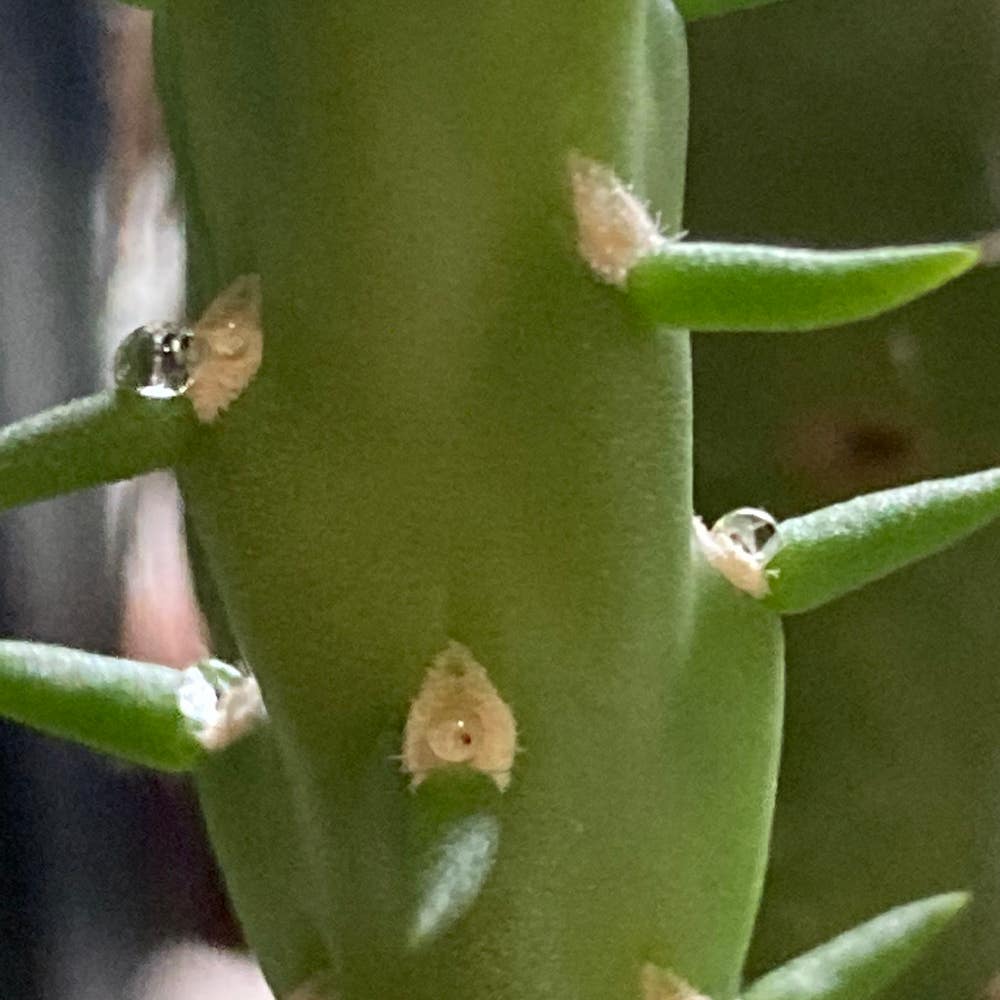
🐛 What To Do About Bugs on My Desert Christmas Cactus?
Cylindropuntia leptocaulis
By the Greg Editorial Team
Apr 02, 2024•4 min read
This article was created with the help of AI so we can cover more plants for you. May contain errors. See one? Report it here.
Banish bugs 🐛 from your Desert Christmas Cactus for a happier, healthier plant life! 🌵
- 🕷️ Spider mites and mealybugs - look for webs, speckles, and cottony spots.
- 🍸 Alcohol, neem oil, soap - your arsenal against cactus pests.
- 💧🔍 Water wisely and inspect regularly to prevent infestations.
Spot the Invaders: Identifying Common Pests
🕷️ Spider Mites
Spotting the signs: Webbing and leaf damage
Fine webs under leaves and a speckled look on foliage are the calling cards of spider mites. These pests are nearly invisible but their handiwork is not.
Close-up on the critters: What spider mites look like
Spider mites are tiny, but with a magnifying glass, you can spot these reddish or pale pests. They're the vampires of the plant world, minus the charm.
🐞 Scale Insects
The stealthy shell game: Recognizing scale on your cactus
Look for immobile bumps on stems and leaves. These are scale insects in their protective shells, sapping the vitality from your cactus.
Scale tell-tales: Bumps and sticky residue
Scale insects leave behind a sticky residue, known as honeydew. This can lead to sooty mold, another sign these freeloaders are overstaying their welcome.
🦟 Fungus Gnats and Fruit Flies
The flying frenzy: How to tell if it's fungus gnats or fruit flies
Fungus gnats are drawn to moist soil, while fruit flies prefer ripe fruit. Both can be seen in a buzzing frenzy around your plant.
Larvae and adults: Identifying the whole life cycle
Fungus gnat larvae reside in the soil, resembling tiny white worms. Adults are small, dark, and have a distinct Y-shaped pattern on their wings.
🐛 Mealybugs
The white fluff alarm: Spotting mealybugs before they spread
Mealybugs look like tiny cotton balls nestled in the nooks of your cactus. Catch these fluff monsters early to prevent a full-blown infestation.
Mealybug hideouts: Checking the nooks and crannies
Inspect the hidden spots on your cactus. Mealybugs love to hide where leaves meet stems, plotting their next move in secret.
Bug Off: Remedies for Each Pest
🕷️ Spider Mites
The Mist and the Mite
Neem oil and insecticidal soap are your dynamic duo against the dreaded spider mites. Apply with gusto, ensuring you infiltrate their secret hideouts.
The Wash-Down
A thorough cleaning of your cactus can dislodge these pesky critters. Use a gentle stream of water, and follow up with a targeted spray of your chosen insecticide.
🦠 Scale Insects
The Alcohol Rub-Down
Rubbing alcohol is not just for your medicine cabinet; it's a scale insect's worst nightmare. Dab it on with a cotton swab for a precise strike.
Oil Them Out
Horticultural oil isn't just a fancy term; it's an effective way to smother scale insects. Coat them thoroughly, but don't drown your plant in the process.
🦟 Fungus Gnats and Fruit Flies
Trap and Zap
Yellow sticky traps are like flypaper for the 21st century. Place them strategically, and watch the gnats and flies stick like gossip.
Soil Solutions
Introduce nematodes to the soil to attack larvae, or let the soil dry out between waterings. It's like turning their breeding ground into a desert.
🐞 Mealybugs
The Alcohol Swab
A Q-tip dipped in alcohol can be a mealybug's undoing. Apply directly and watch them wither.
Soap and Water
Insecticidal soap and water is the old-school, gentle yet effective approach. It's like giving your cactus a bubble bath that banishes bugs.
Prevention: Keeping Your Cactus Pest-Free
🌵 The Right Environment
Watering and humidity control are pivotal in creating an inhospitable environment for pests. Overwatering is a no-no; it's the equivalent of rolling out the red carpet for gnats and other moisture-loving nuisances. Ensure the soil is dry before giving your cactus another drink.
🔍 Inspection Routines
Regular checks are your secret weapon. Flip those leaves, peek into crevices, and stay on the lookout for any signs of pest parties. Early detection is like catching a typo in a tweet before it goes viral—saves you a headache later.
🚫 Quarantine New Plants
New plants should be treated like potential Trojan horses. Isolate them for at least two weeks to ensure they're not smuggling in any critters. It's not being paranoid; it's being proactive.
Remember, prevention isn't just a one-off task; it's a lifestyle for the committed cactus custodian.
⚠️ Safety First
This content is for general information and may contain errors, omissions, or outdated details. It is not medical, veterinary advice, or an endorsement of therapeutic claims.
Always consult a qualified healthcare professional before using any plant as food, medicine, or supplement.
Never eat any plant (or feed one to pets) without confirming its identity with at least two trusted sources.
If you suspect poisoning, call Poison Control (800) 222-1222, the Pet Poison Helpline (800) 213-6680, or your local emergency service immediately.
Spotted an error? Please report it here.
Detect and defeat pesky invaders on your Desert Christmas Cactus with ease, and rely on Greg's 🌵 custom care reminders to keep those bugs at bay for good.