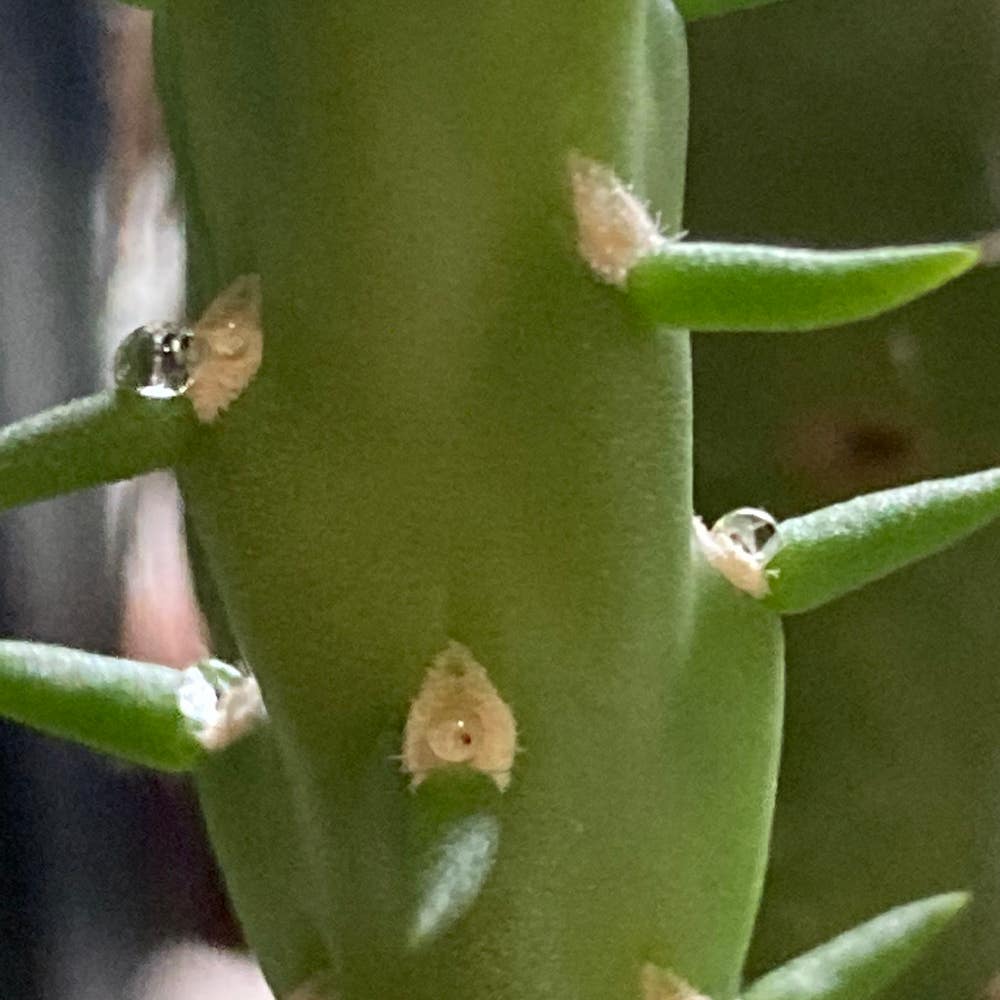
Why Are My Desert Christmas Cactus Leaves Curling?
Cylindropuntia leptocaulis
By the Greg Editorial Team
Apr 02, 2024•7 min read
This article was created with the help of AI so we can cover more plants for you. May contain errors. See one? Report it here.
Unravel the mystery of curling cactus leaves 🌵 and bring back your plant's holiday cheer!
- Leaf curling signals distress, often due to water, light, or pests.
- 🌵 Balance watering and climate to prevent and fix curling leaves.
- Consistent care and observation are crucial for long-term cactus health.
Spotting the Signs of Trouble
🚨 Recognizing Leaf Curling and Related Symptoms
Leaf curling in your Desert Christmas Cactus is like a red flag in a sea of green: it demands attention. Curling can manifest as leaves taking on a twisted or rolled appearance, often starting at the tips and moving inward. It's not a plant's attempt at origami; it's a sign that something's off.
🕵️ Quick Tips for Assessing Severity
To gauge how bad it is, look for companions to the curl: yellowing leaves, brown edges, or a generally unhappy demeanor in your plant's posture. If the leaves feel mushy or thinner than usual, it's not just a bad leaf day; it's a cry for help. Stickiness or fine webbing? You've got pests RSVPing to a party they weren't invited to.
🐜 Spotting and Stopping Pests
Pests are like uninvited guests who crash your cactus's pad and refuse to leave. Aphids, mealybugs, and spider mites are the usual suspects. They're not just annoying; they're harmful. Regular leaf inspections can catch these freeloaders early, so you can kick them out before they do real damage.
🌡️ Environmental Stress Signals
Your cactus isn't just being dramatic; environmental stress from improper light or temperature can cause leaves to curl. If they're reaching for the sky or ducking for cover, it's time to reassess their living situation. Too much direct sunlight or a drafty window can turn your cactus into a hot (or cold) mess.
💧 Watering Woes: Too Much or Too Little
Watering is like walking a tightrope; it's all about balance. Leaves that are curling, yellowing, or browning at the tips might be your cactus's way of saying it's either drowning or parched. Keep a consistent watering schedule, but stay flexible and adjust to your plant's feedback.
🍽️ Nutrient Deficiencies: Spotting and Solving
Nutrient deficiencies can leave your cactus looking washed out and weary. If the leaves are losing their vibrant green and taking on a more faded wardrobe, it's time to consider whether your feeding routine is up to scratch. A balanced diet can prevent your cactus from becoming nutrient-starved.
🚰 Ensuring Proper Drainage
Cacti hate wet feet. Make sure your potting mix isn't holding an after-party for water. Good drainage keeps the roots from rotting, which can cause leaves to curl in despair. Check that your pot has drainage holes and that the soil isn't compacted like last year's festival grounds.
Remember, spotting the signs early can make all the difference. Keep a watchful eye on your cactus, and it'll thank you by staying as straight-laced as a desert sentinel.
Unraveling the Causes of Curling Leaves
💧 Water Woes: Too Much or Too Little
Curling leaves on your Desert Christmas Cactus can scream overwatering. If the soil feels like a swamp, you've gone overboard. Leaves droop, roots rot, and the whole plant is begging for a life raft. Conversely, underwatering leaves your cactus as parched as a desert wanderer, leaves curling upwards in a desperate attempt to conserve water. Check the soil; if it's bone dry, it's time to hydrate.
🌡️ Feeling the Heat: Temperature and Light Stress
Temperature and light are like the stage managers for your cactus's well-being. Too much heat and your cactus's leaves curl to avoid a scorch, while too little light has them reaching for any ray they can find. Aim for bright, indirect light and a consistent climate. If your cactus is showing signs of a sunburn or stretching out for light, adjust its position to find that sweet spot.
🐜 Uninvited Guests: Pest Infestations
Pests are the uninvited guests at your cactus's party, causing leaves to curl as they munch away. Look out for webbing or leaves that resemble a shredded document. Early detection is key. If you spot these freeloaders, it's time for natural pest control measures to reclaim your plant's health.
Turning Over a New Leaf: Remedies and Prevention
💧 Fine-Tuning Watering Techniques
Watering your Desert Christmas Cactus isn't a set-it-and-forget-it deal. It's about getting in tune with your plant's needs. Terracotta pots are the unsung heroes here, helping to avoid overwatering by wicking away excess moisture. Use your finger as a natural sensor; if the top inch of soil is dry, it's time to water. But don't just sprinkle like you're afraid to commit—go for a thorough soak and then let it dry out completely.
🌵 Creating the Ideal Cactus Climate
Your cactus isn't trying to get a tan, so bright, indirect light is the way to go. Avoid the sunburn of too much direct sunlight. Temperature-wise, think comfortable room temp, with a slight dip at night to mimic desert conditions. If your home's climate is more chaotic than a reality TV show, consider DIY microclimate hacks like a pebble tray for humidity or a sheer curtain to diffuse light.
🐜 Keeping Pests at Bay
Pests are the uninvited guests that never bring good housewarming gifts. Regularly wipe down leaves and check for freeloaders. If you spot trouble, show pests the door with insecticidal soap or introduce some predator insects to handle your dirty work. And remember, cleanliness isn't just about aesthetics—it's pest prevention. Keep your cactus's living space tidy, and you'll keep most bugs from thinking it's a free-for-all buffet.
Cultivating Consistency: Long-Term Care for Your Cactus
In the realm of Desert Christmas Cactus care, consistency is your secret weapon.
📅 Crafting a Care Calendar
Mark your calendar: watering dates are non-negotiable. Your cactus craves routine, much like your need for morning coffee. In summer, it's all about quenching thirst; come winter, it's about moderation. Adjust your watering schedule with the seasons, always letting the soil dry out before the next soak.
🕰️ The Power of Patience and Observation
Patience isn't just a virtue; it's a necessity. Your cactus won't sprint to the finish line—it's more of a leisurely stroll. Observe its growth and behavior. New sprouts? You're on track. Yellowing leaves? Time to reassess your care strategy. Keep a detailed log; it's like a diary for your plant's health.
🌱 Long-Term Soil and Light Management
Your cactus's soil and light conditions are like a long-term relationship: they need attention and adjustments. Ensure the soil mix is well-draining to avoid soggy roots. Light-wise, think bright but indirect. Too much sun can lead to a cactus sunburn, too little, and it's stretching out for more.
🍂 Seasonal Adjustments
As the seasons shift, so should your care. Dial back the watering in cooler months; be more generous when it's hot. It's akin to swapping out your wardrobe for the season—your cactus needs that same consideration.
🌱 Fertilizing: Less Is More
When it comes to fertilizer, less is more. A light feeding during the growing season will do. Overdo it, and you risk sending your cactus into an unwanted growth spurt.
🌸 Patience with Flowering
Flowering can be as unpredictable as a weather forecast. Sometimes it takes years; other times, it's an overnight surprise. Keep at it, and eventually, your cactus will reward you with blooms.
🌿 Repotting: A Room to Grow
As your cactus grows, it'll need space. Repotting gives it room to stretch its roots. Remember, it's not a race; it's about providing a stable home for long-term growth.
By sticking to these guidelines, you're not just growing a plant; you're nurturing a living, breathing piece of the desert in your home.
⚠️ Safety First
This content is for general information and may contain errors, omissions, or outdated details. It is not medical, veterinary advice, or an endorsement of therapeutic claims.
Always consult a qualified healthcare professional before using any plant as food, medicine, or supplement.
Never eat any plant (or feed one to pets) without confirming its identity with at least two trusted sources.
If you suspect poisoning, call Poison Control (800) 222-1222, the Pet Poison Helpline (800) 213-6680, or your local emergency service immediately.
Spotted an error? Please report it here.
Fine-tune your Desert Christmas Cactus care to prevent leaf curling with Greg's tailored watering reminders and pest control tips 🌵.