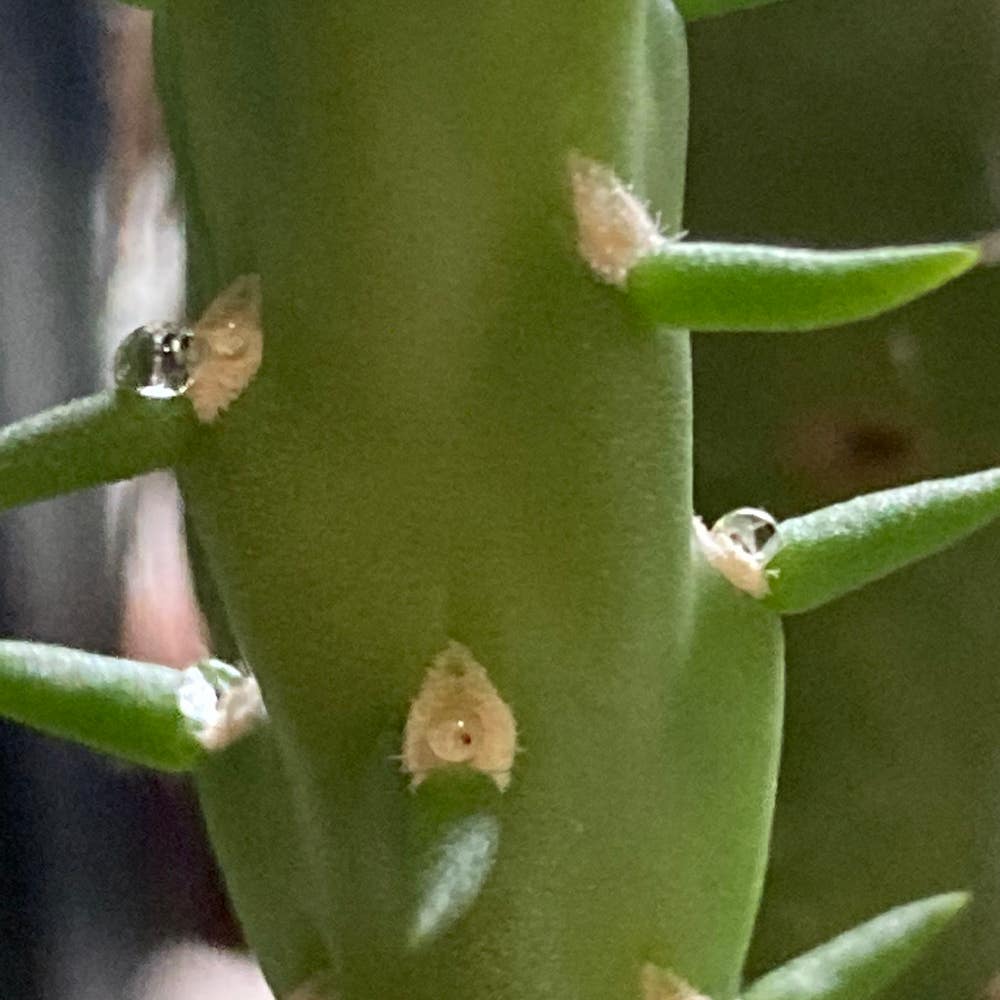
Why Are There Brown Spots on My Desert Christmas Cactus?
Cylindropuntia leptocaulis
By the Greg Editorial Team
Apr 02, 2024•4 min read
This article was created with the help of AI so we can cover more plants for you. May contain errors. See one? Report it here.
Solve the mystery of your cactus's brown spots 🕵️♂️ and keep it thriving with our expert care guide!
- Overwatering and sunburn cause brown spots; adjust water and light.
- High humidity and poor air circulation invite infections; enhance airflow.
- Prune and monitor regularly to prevent and treat brown spots.
Pinpointing the Culprits Behind Brown Spots
💧 Overwatering and Root Rot
Overwatering turns your cactus's roots into a soggy mess, leading to brown spots that feel as soft as overripe fruit. Root rot is the silent killer here, creeping up from the bottom and turning vibrant green into a muddled brown.
☀️ Sunburn: The Scorching Truth
Sunburn slaps your cactus with flat, crispy brown patches, a result of too much love from the sun. Light intensity and duration are the culprits; imagine your cactus frying under a magnifying glass.
🦠 Infection Invasion
Fungal and bacterial infections throw a party on your cactus, leaving a mess of lesions, sometimes with a dramatic yellow halo. High humidity and poor air circulation roll out the red carpet for these uninvited guests.
Step-by-Step Diagnosis of Brown Spots
🔍 Visual Inspection
Start with a thorough leaf check. Brown spots can be tan to dark brown, varying in appearance from dry and crispy to water-soaked. Look for spots with distinct edges or yellowish halos, signs that may point to disease.
📋 Assessing Plant Care History
Review your watering and lighting routines. Overwatering can lead to root rot, while improper lighting can cause sunburn or etiolation. A care log is your best friend here; it's not just a diary, it's a historical record of your plant's life.
🌿 Environmental Evaluation
Check the humidity and airflow around your plant. Stagnant air and high humidity are invitations for fungal and bacterial parties. Use a hygrometer to measure humidity levels and ensure your plant isn't in a drafty spot or basking in excessive heat.
Crafting the Cure: Remedies and Prevention
💧 Watering Wisdom
Adjusting your cactus's watering schedule is crucial. During growth, water when the top inch of soil is dry. In winter, dial it back. Your cactus isn't thirsty for a flood; it craves a drink tailored to its environment and season.
Quality of water matters. Tap water's chlorine can be the bad guy for sensitive cactus roots. If possible, use filtered or rainwater to avoid buildup of unwanted chemicals.
🌞 Light and Location
Finding the sweet spot for light exposure is like hitting the jackpot for your cactus. Bright, indirect sunlight is the gold standard. If your cactus is getting a sunburn, it's time to move it to a shadier spot.
When to move your cactus? When it starts to throw shade by showing brown spots. It's telling you it's had enough of the current setup. Relocate to maintain the perfect balance of light and avoid the crispy critter syndrome.
🦠 Fungal and Bacterial Defense
Good air circulation is like giving your cactus room to breathe. It's essential in keeping moisture-related issues at bay. Ensure your cactus isn't suffocating in stagnant air by choosing an open space or using a fan if needed.
Humidity control is not just a buzzword; it's a lifeline. Too much humidity invites unwanted fungal guests. Keep the air around your cactus as dry as its natural desert habitat. If you're living in a moisture-rich environment, consider a dehumidifier to keep things in check.
Aftercare: Ensuring a Spotless Future
🌱 Pruning the Problem
When brown spots invade, it's time for a trim. Prune affected leaves as soon as you spot them. Use sterilized shears to cut close to the stem, avoiding damage. This isn't just a touch-up; it's a crucial step in halting the spread of disease.
🕵️ Ongoing Vigilance
Routine checks are the backbone of plant health. Inspect your cactus frequently, looking for any signs of distress. Keep a care log; it's not just notes, it's the biography of your plant's well-being. Adjust care routines as needed, based on what you observe.
🛡️ Preventative measures are your plant's armor against future outbreaks. Ensure cleanliness around your cactus, removing debris and fallen leaves promptly. This isn't just tidying; it's denying diseases a place to thrive. Maintain a well-draining soil mix and keep those tools clean—because when it comes to plant care, cleanliness is next to godliness.
⚠️ Safety First
This content is for general information and may contain errors, omissions, or outdated details. It is not medical, veterinary advice, or an endorsement of therapeutic claims.
Always consult a qualified healthcare professional before using any plant as food, medicine, or supplement.
Never eat any plant (or feed one to pets) without confirming its identity with at least two trusted sources.
If you suspect poisoning, call Poison Control (800) 222-1222, the Pet Poison Helpline (800) 213-6680, or your local emergency service immediately.
Spotted an error? Please report it here.
Keep your Desert Christmas Cactus spotless 🌵 by letting Greg fine-tune your watering and lighting routines to prevent those pesky brown spots.