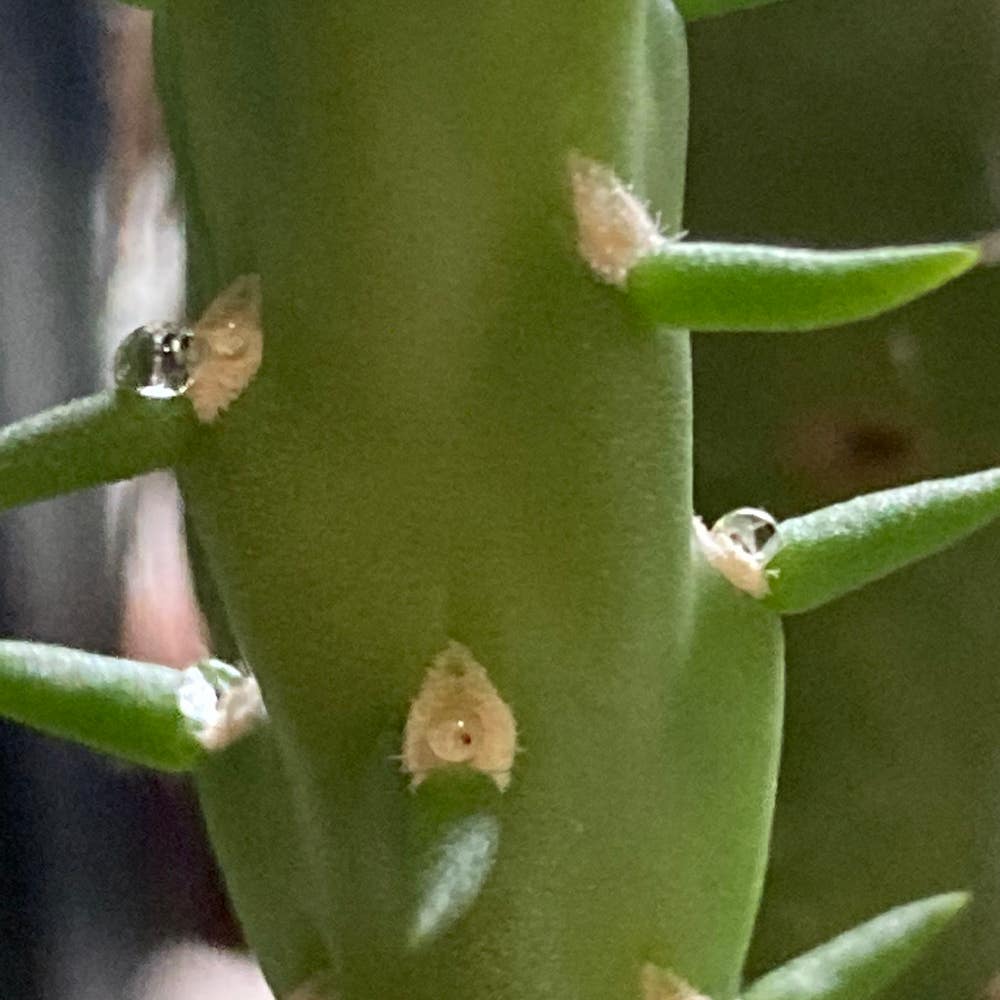
🌵 Why Are My Desert Christmas Cactus Leaves Mushy?
Cylindropuntia leptocaulis
By the Greg Editorial Team
Apr 02, 2024•4 min read
This article was created with the help of AI so we can cover more plants for you. May contain errors. See one? Report it here.
Revive your squishy cactus 🌵 to firm perfection with these crucial, easy-to-follow care tips!
- Overwatering and underwatering both lead to mushy cactus leaves.
- 🌵 Firm leaves indicate health; discoloration and wilting signal distress.
- Proper soil, pot, and drainage are key to preventing mushiness.
Spotting the Trouble: Signs Your Cactus is Too Squishy
🚨 Visual Cues: Identifying Mushiness in Leaves
Discoloration is your cactus waving a red flag. If you spot leaves turning yellow, brown, or a pale green, it's a cry for help. Leaf collapse or wilting? Another visual cue of distress. Keep an eye out for these symptoms—they're as subtle as a fire alarm.
👉 Tactile Red Flags: What Does a Healthy Cactus Feel Like?
A healthy cactus leaf should be as firm as your resolve to keep it alive. Gentle pressure should meet resistance, not collapse like a poorly constructed cake. If the leaves of your cactus give in to pressure like a politician at a fundraiser, it's time to take action. Remember, squishiness is to cacti what kryptonite is to Superman—potentially devastating.
The Usual Suspects: Pinpointing the Causes of Mushiness
💦 Overwatering Woes
Overwatering is like a love that smothers. Your Desert Christmas Cactus can't breathe underwater, and its leaves turn into mushy messes when drenched. Heavy pots and persistently wet soil are tell-tale signs you've gone overboard with the watering can.
🏜️ Underwatering Uh-ohs
Conversely, underwatering your cactus makes it look like a shriveled relic. Shriveled leaves and slow growth are your cactus's way of saying it's parched. Touch the soil; if it's bone-dry, it's time to give your plant a long-overdue drink.
🚰 Drainage Disasters
Poor drainage is a silent killer. It's crucial for your cactus's pot to have drainage holes to prevent water from pooling at the bottom. If your pot is more like a sealed container, it's a red flag. Check if water sits at the bottom after watering – that's a no-go for cactus health.
First Aid for Your Squishy Cactus
💧 Watering 101: Striking the Right Balance
Dialing back the waterworks is crucial. Forget the calendar; use a moisture meter or the finger test. If the top two inches of soil feel like a dry desert, it's time to water. Otherwise, your cactus can wait. Remember, these plants are more camel than goldfish; they store water like a survivalist hoards canned goods.
🌵 When to Water: Understanding Your Cactus's Thirst
Cacti have a seasonal rhythm; they drink less in cooler months. Watering should mimic rare desert downpours—thoroughly soak the soil, then let it dry completely. Think of it as a feast-or-famine approach. And always water in the morning to let the plant dry out during the day, avoiding a fungal fiesta.
🌪 The Great Escape: Improving Drainage and Repotting
Choosing the right soil and pot is like setting up a good foundation for a house. Mix your soil with perlite or coarse sand for that fast-draining magic. Ensure your pot has drainage holes—no holes, no cactus. It's that simple.
Step-by-step Guide to Repotting Your Mushy Cactus
- Gently remove your cactus from its current pot, being mindful of its spines.
- Inspect the roots; trim any rotten parts with sterile scissors.
- Fill the new pot with a well-draining soil mix—a blend of potting soil, sand, and perlite or pumice.
- Place your cactus in the new pot and fill in around it with more soil mix.
- Water lightly to settle the soil, then let it be. Your cactus needs time to acclimate to its new digs.
Keeping Your Cactus Firm and Happy
💧 Mastering the Art of Cactus Hydration
Crafting the perfect watering schedule is less about sticking to a calendar and more about syncing with your cactus's needs. In the summer, your cactus craves more frequent drinks, letting the top two-thirds of the soil dry out between waterings. Winter is a different beast; let the soil go bone dry before even thinking about rewatering. This isn't just about hydration—it's about mimicking the natural wet-dry cycles of their desert origins.
To avoid the guesswork, consider investing in a soil moisture meter. Think of it as a thirst-o-meter for your cactus. If you're more old school, the classic finger test—poke it in the soil—still works wonders.
🏡 The Perfect Home: Soil and Pot Selection
Mixing up the ideal soil blend for your cactus is like crafting a bespoke suit—it needs to fit just right. Aim for a mix that's one part sand, one part perlite, and a dash of regular cactus mix. This concoction ensures quick drainage and keeps the roots from getting soggy.
When it comes to pots, think drainage holes. They're not just a nice-to-have; they're a must to prevent your cactus from sitting in a swamp. Your cactus's pot is its castle—choose wisely to keep it healthy. Remember, a cactus prefers to live on the edge, basking in almost too much sun, rather than with wet feet.
⚠️ Safety First
This content is for general information and may contain errors, omissions, or outdated details. It is not medical, veterinary advice, or an endorsement of therapeutic claims.
Always consult a qualified healthcare professional before using any plant as food, medicine, or supplement.
Never eat any plant (or feed one to pets) without confirming its identity with at least two trusted sources.
If you suspect poisoning, call Poison Control (800) 222-1222, the Pet Poison Helpline (800) 213-6680, or your local emergency service immediately.
Spotted an error? Please report it here.
Ensure your Christmas Cactus stands tall and firm 🌵 with Greg's personalized care reminders, perfectly timing waterings to avoid the mushy leaf blues.