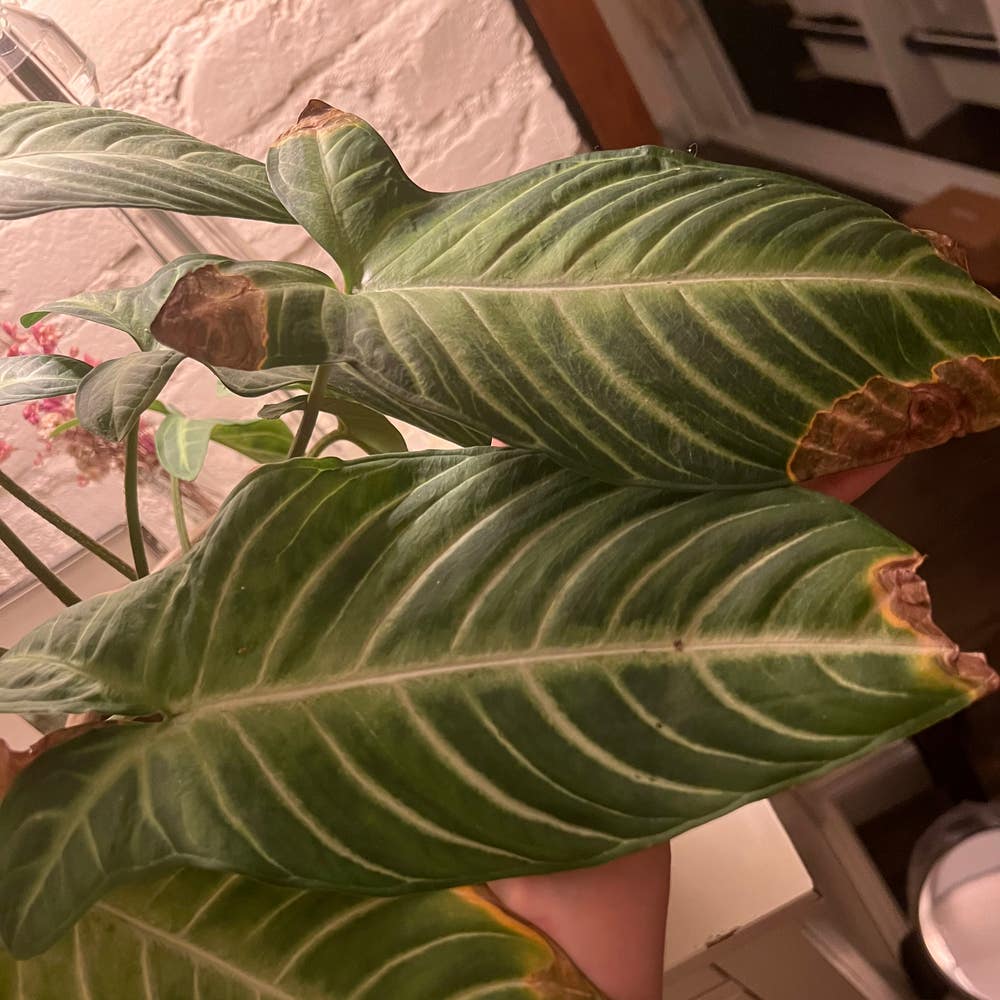
❄️ Top 5 Signs Your Caladium 'Magnificum' is Stressed in Winter
Caladium lindenii 'Magnificum'
By the Greg Editorial Team
Sep 29, 2024•4 min read
This article was created with the help of AI so we can cover more plants for you. May contain errors. See one? Report it here.
- 🍂 Leaf discoloration and drop signal winter stress in Caladium 'Magnificum'.
- 💧 Wilting leaves indicate overwatering or underwatering; adjust your care routine.
- ❄️ Protect from frost and maintain humidity for optimal winter health.
Signs of Stress in Winter
Leaf discoloration and drop 🌿
One of the first signs your Caladium 'Magnificum' is stressed during winter is leaf discoloration. Look for yellowing leaves or browning edges, which often indicate low temperatures or inadequate light.
Wilting and drooping leaves 😩
Another clear symptom is wilting or drooping leaves. This usually happens when the plant is either overwatered or underwatered during its dormancy phase, causing the leaves to lose turgor.
Root rot indicators 🦠
Root rot can be a serious issue for your Caladium. Signs include mushy roots and a foul odor, which indicate that the plant is struggling.
To prevent root rot, ensure your plant has well-draining soil and that you’re watering appropriately. Keeping an eye on these stress indicators can help you maintain a healthy Caladium throughout the winter months.
As you monitor these signs, it’s essential to understand the winter care requirements to support your plant's recovery.
Winter Care Requirements
Adjusting Watering Schedules for Winter 🌊
During winter, it's crucial to adjust your watering routine for your Caladium 'Magnificum.' Reduce watering frequency to every 2-3 weeks to prevent over-saturation.
Watch for signs of overwatering, such as soggy soil and leaf drop. These indicators can lead to stress and potential root rot if not addressed promptly.
Fertilizing Needs During Dormancy 🥦
When it comes to fertilizing during dormancy, less is more. Aim for minimal to no fertilization, as your Caladium doesn't require much nutrition while it rests.
If you feel it's necessary to fertilize, opt for low-nitrogen options. This approach ensures your plant remains healthy without overwhelming it.
Importance of Humidity Levels 💧
Humidity plays a vital role in keeping your Caladium thriving through winter. Aim for ideal humidity levels between 50-70% to mimic its natural environment.
To maintain these levels, consider using humidifiers, pebble trays, or regular misting. These methods can help create a cozy atmosphere for your plant, promoting its overall health.
As you care for your Caladium this winter, remember that proper watering, minimal fertilization, and adequate humidity are key. With these practices in place, your plant will be well-prepared for the upcoming spring growth.
Protection from Frost
Best Practices for Outdoor Frost Protection ❄️
Frost can be a silent killer for your Caladium 'Magnificum.' To shield your plants, cover them with frost cloth or blankets, which provide a protective barrier against the cold.
Mulching is another effective strategy. Apply a layer of mulch around the base of your plants to insulate the roots and retain warmth.
Timing is crucial; protect your Caladium when temperatures drop below 32°F (0°C). Being proactive can make all the difference in keeping your plants healthy.
Indoor Care to Prevent Frost Damage 🏠
When nighttime temperatures dip, consider bringing your Caladium indoors. This simple step can prevent frost damage and keep your plants thriving.
Placement matters too. Position your plants near bright, indirect light sources to ensure they receive adequate light while staying warm.
Regular monitoring is essential. Keep an eye out for signs of stress, such as wilting or discoloration, to address any issues before they escalate.
By following these protective measures, you can help your Caladium 'Magnificum' survive the winter chill and emerge ready for spring. Next, let’s explore how to prepare your plant for the upcoming growth season.
Spring Preparation and Recovery
🌱 Signs of Recovery from Winter Stress
As winter fades, your Caladium 'Magnificum' will start showing signs of recovery. Look for new leaf growth and vibrant colors returning, typically within 2-4 weeks after temperatures warm up.
🌼 Preparing Caladium for Spring Growth
To help your plant thrive, gradually reintroduce it to outdoor conditions. This acclimatization process should take about 1-2 weeks.
Soil Preparation
Refreshing the potting mix is essential for providing nutrients. A nutrient-rich soil will support healthy growth as your Caladium emerges from dormancy.
🌞 Tips for Transitioning Back to Outdoor Conditions
Timing is crucial when transitioning your Caladium outdoors. Wait until nighttime temperatures consistently exceed 50°F (10°C) to ensure a smooth adjustment.
Placement
Start by placing your plant in a shaded area before exposing it to full sunlight. This gradual exposure helps prevent shock.
Monitoring
Keep an eye out for any signs of stress during this transition. Early detection can make all the difference in your plant's recovery.
As you prepare your Caladium for spring, remember that patience and careful observation are key. With the right care, your plant will flourish and bring vibrant life back to your space.
⚠️ Safety First
This content is for general information and may contain errors, omissions, or outdated details. It is not medical, veterinary advice, or an endorsement of therapeutic claims.
Always consult a qualified healthcare professional before using any plant as food, medicine, or supplement.
Never eat any plant (or feed one to pets) without confirming its identity with at least two trusted sources.
If you suspect poisoning, call Poison Control (800) 222-1222, the Pet Poison Helpline (800) 213-6680, or your local emergency service immediately.
Spotted an error? Please report it here.
Keep your Caladium 'Magnificum' thriving this winter ❄️ by using Greg's tailored reminders to spot stress early and adjust care for a vibrant spring revival!