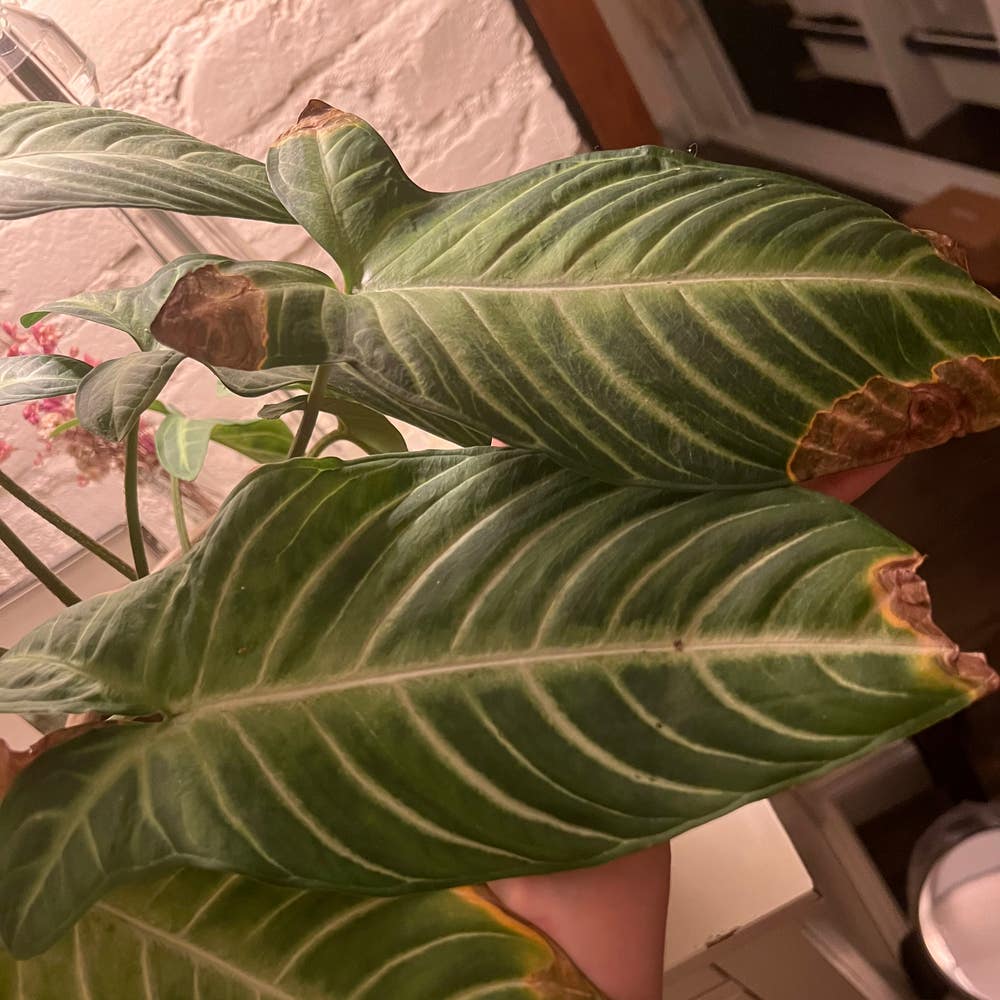
Brown Spots On Caladium Lindenii 'Magnificum' Leaves
Caladium lindenii 'Magnificum'
By the Greg Editorial Team
Jun 18, 2024•3 min read
This article was created with the help of AI so we can cover more plants for you. May contain errors. See one? Report it here.
- Brown spots signal distress, evolving from yellow to brown with texture changes.
- Overwatering and sunburn are common causes; adjust water and light exposure.
- Fungal vs. bacterial spots: look for halos or water-soaked lesions, then treat.
Spotting Trouble: Recognizing Brown Spots on Your Plant
🚨 Symptoms of Distress
Early signs of brown spots on Caladium lindenii 'Magnificum' can be subtle. Look for small, rusty discolorations or yellow spots that evolve into brown.
The progression of leaf spotting is like a bad plot twist; it starts small and can spiral out of control, leading to larger, merged patches. Texture changes or color shifts are your plant's way of waving a red flag.
🧪 Diagnosis: Is It Just a Bad Tan or Something More Serious?
Differentiating between environmental and disease-related brown spots is crucial. Sunburn spots often have a distinct pattern, while nutrient deficiencies create a more diffuse appearance.
Fungal infections might present with a colorful halo, whereas bacterial issues can look like water-soaked lesions. Don't overlook the context clues—sticky residue could mean pests are the culprits, not just an innocent case of bad lighting.

The Usual Suspects: What's Causing the Brown Spots?
💧 Too Much Love: The Overwatering Connection
Overwatering can turn your Caladium lindenii 'Magnificum' into a soggy mess. This excessive TLC leads to soft, dark brown spots on the leaves, a classic cry for help.
Roots need oxygen to thrive, and waterlogged soil suffocates them, causing distress that manifests as unsightly spots on your plant's foliage.
🌞 Sunbathing Gone Wrong: Sunburn and Light Exposure
Leaves with crispy brown spots, especially on the side facing the sun, are throwing shade at your light management. It's a clear sign of sunburn.
Finding the light sweet spot is key; bright, indirect light will keep your Caladium lindenii 'Magnificum' basking without baking.
🦠 Unwanted Guests: Fungal and Bacterial Culprits
Fungal and bacterial infections are the party crashers no one invited. Look for concentric rings or a black/brown halo around the spots for a fungal giveaway.
Bacterial spots, on the other hand, often appear as water-soaked lesions. Knowing the difference is crucial for targeted treatment.

Turning Over a New Leaf: Fixing and Preventing Brown Spots
💧 Drying Out: Adjusting Your Watering Routine
Overwatering is the equivalent of giving your plant an endless water buffet, and trust me, it's not a fan. To stop the feast:
- Check soil moisture before watering; the top inch should be dry.
- Switch to well-draining soil to avoid soggy conditions.
🕶 Shady Solutions: Protecting from Harsh Sunlight
Your Caladium lindenii 'Magnificum' didn't sign up for a sunbathing competition. To protect it:
- Provide filtered light; direct sun is a no-go.
- Relocate to a spot with dappled shade for that just-right tan.
🦠 Clean and Quarantine: Dealing with Infections
When it comes to fungal and bacterial infections, think of yourself as the plant's personal bodyguard.
- Remove infected leaves promptly—think surgical precision.
- Isolate the patient to prevent an epidemic.
- Apply fungicides if necessary, but always as a last resort.

⚠️ Safety First
This content is for general information and may contain errors, omissions, or outdated details. It is not medical, veterinary advice, or an endorsement of therapeutic claims.
Always consult a qualified healthcare professional before using any plant as food, medicine, or supplement.
Never eat any plant (or feed one to pets) without confirming its identity with at least two trusted sources.
If you suspect poisoning, call Poison Control (800) 222-1222, the Pet Poison Helpline (800) 213-6680, or your local emergency service immediately.
Spotted an error? Please report it here.
Keep your Caladium Lindenii 'Magnificum' spot-free 🍃 with Greg's personalized care plans that prevent brown spots by optimizing watering and light conditions.