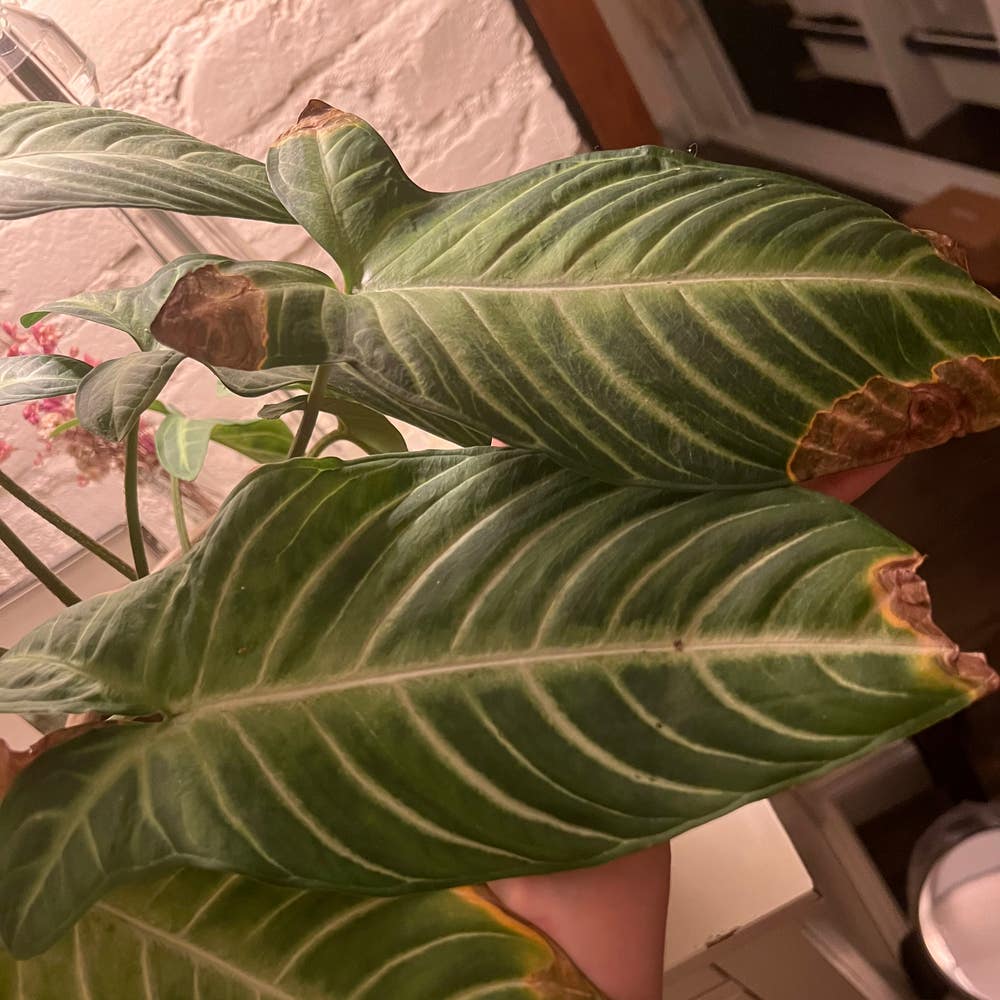
Black Spots on My Caladium lindenii 'Magnificum' Leaves
Caladium lindenii 'Magnificum'
By the Greg Editorial Team
Jun 18, 2024•5 min read
This article was created with the help of AI so we can cover more plants for you. May contain errors. See one? Report it here.
- Fungal and bacterial diseases cause black spots; stress factors like light also contribute.
- Proper hydration and drainage are key to preventing black spots on Caladium leaves.
- Use appropriate fungicides and bactericides for treatment, and maintain plant hygiene.
Spotting the Culprit: Identifying Black Spots
🕵️ What do black spots look like on your Caladium?
Black spots on Caladium lindenii 'Magnificum' leaves can be as subtle as a whisper or as blatant as a shout. Typically, these spots are dark lesions, sometimes ringed with a lighter color, or they may have a feathery edge. If you notice tiny black dots within the spots, these could be fungal fruiting bodies, a clear sign of a fungal invasion.
📍 Pinpointing the Problem
Determining whether the issue is fungal, bacterial, or stress-related requires a bit of sleuthing. Fungal spots often expand into larger blotches, while bacterial spots can be more dramatic with water-soaked lesions and sometimes a yellow halo. Stress-related spots, however, might not follow these patterns and could be linked to environmental factors like overwatering or sunburn.
🍄 Fungal or Bacterial?
Fungi are the opportunists of the plant world, thriving in moist, stagnant conditions. Bacterial spots, meanwhile, are the sneak thieves, slipping in through wounds or natural openings in the plant tissue. If the black spots on your Caladium have a slimy texture, it's time to suspect bacteria.
🚦 Stress Signals
Don't overlook the simple explanations. If your Caladium is throwing shade with its leaf spots, it might be reacting to too much light or a sudden change in temperature. Overwatering can also cause stress spots, so check if your watering schedule is more of a deluge than a drink.
Remember, healthy plants are resilient. By identifying the cause of black spots early, you can take swift action to restore your Caladium lindenii 'Magnificum' to its full glory.

Unraveling the Mystery: Common Causes of Black Spots
🍄 Fungal Foes
Anthracnose and Botrytis are like the Bonnie and Clyde of the fungal world, notorious for leaving their mark on your Caladium lindenii 'Magnificum'. Anthracnose manifests as dark, sunken spots, while Botrytis prefers a fuzzy, gray appearance. Both thrive in moist conditions, so if you're overdoing the hydration, you're rolling out the red carpet for these uninvited guests.
🦠 Bacterial Bullies
Bacterial leaf spot diseases are the silent invaders, often going unnoticed until the damage is done. You'll know they've crashed the party when you see water-soaked lesions, sometimes with a yellow halo. These pathogens are opportunistic, exploiting any chance they get to enter through wounds or natural openings in your plant's armor.
🚨 Stress Signals
When your Caladium starts showing black spots, it's not just throwing a tantrum; it's signaling distress. Overwatering, poor drainage, and high humidity are the main culprits, creating a breeding ground for pathogens. On the flip side, too much light or extreme temperatures can also cause your plant to break out in spots. It's a delicate balance, and your plant is the Goldilocks trying to find conditions that are just right.

The Battle Plan: Treating Black Spots
🍄 Fungicide to the Rescue
Choosing the right fungicide is like picking your battles. Go organic with neem oil or a baking soda concoction for mild cases. For tougher fungal foes, copper-based or thiophanate-methyl fungicides are your heavy artillery. Use them as directed—overdoing it can cause more harm than good.
Lifestyle changes for your plant can be a game-changer. Boost air circulation around your Caladium by spacing out your plants. Keep moisture levels in check—think of it as setting the humidity to 'comfortable', not 'tropical rainforest'.
💉 Bacteria Busters
Selecting the right bactericide is crucial when bacteria are the bullies. Copper-based options can act like antibiotics for your plant. Remember, the label is your bible here; follow it to avoid any plant-health heresy.
Cleanliness is your shield against reinfection. Sterilize your tools as if you're prepping for surgery, and keep the fallen leaves off the battlefield to prevent bacterial reinforcements.
🌧 Easing Environmental Stress
Watering is an art form—aim for moist, but not waterlogged. Think of it as making a perfect cocktail; the balance is key. Ensure drainage is on point by using well-draining soil and pots with drainage holes.
Creating the ideal Caladium comfort zone means no extreme temperatures or lighting. It's like setting the mood for a relaxing evening—keep it cozy and consistent to keep your plant stress-free.

Shielding Your Green: Preventative Measures
🌱 Cultural Commandments
Watering wisdom is not just about quantity; it's about timing and technique. Your Caladium lindenii 'Magnificum' craves consistency. Adjust your watering schedule to match the plant's needs, which can change with the seasons. Overwatering is a no-no; soggy soil is a silent killer.
Airflow and humidity are the yin and yang of plant health. Keep the air moving but not too dry. It's like a dance—find the rhythm that keeps your Caladium happy. Humidity should be just right, not a tropical storm or a desert draught.
🌞 Environmental Equilibrium
Perfecting light and temperature is like tuning a guitar; it has to be just right. Your Caladium wants bright, indirect light—think of it as a cozy sunbath without the burn. Direct sunlight? That's a recipe for leaf burn.
Stress-proofing your plant's surroundings is about avoiding extremes. No dramatic temperature drops or scorching heat waves. It's about creating a stable, comfortable environment where your Caladium can thrive without throwing a tantrum. Stability is key.
⚠️ Safety First
This content is for general information and may contain errors, omissions, or outdated details. It is not medical, veterinary advice, or an endorsement of therapeutic claims.
Always consult a qualified healthcare professional before using any plant as food, medicine, or supplement.
Never eat any plant (or feed one to pets) without confirming its identity with at least two trusted sources.
If you suspect poisoning, call Poison Control (800) 222-1222, the Pet Poison Helpline (800) 213-6680, or your local emergency service immediately.
Spotted an error? Please report it here.
Banish those pesky black spots 🍂 with Greg's personalized watering and light schedules, ensuring your Caladium lindenii 'Magnificum' stays as magnificent as its name suggests.