Common Caladium lindenii 'Magnificum' Problems
Caladium lindenii 'Magnificum'
By the Greg Editorial Team
Jun 18, 2024•5 min read
This article was created with the help of AI so we can cover more plants for you. May contain errors. See one? Report it here.
- Yellow or drooping leaves? Adjust watering to prevent over/under-watering issues.
- Sun and shade balance is key to avoiding leaf scorch and promoting healthy growth.
- Combat pests and root rot with proper care and immediate action when spotted.
When Water Works Against You
💦 Over-Watering Woes
Yellowing leaves and a wilting demeanor aren't always a plant's plea for more water; sometimes, they're gasping for air because they've had too much. If the soil feels like a swamp, it's time to back off the watering.
Steps to Rescue an Over-Watered Plant
- Stop watering and let the soil dry out to the consistency of a stale cracker.
- If the pot feels like a waterlogged boot, consider repotting with fresh, dry soil.
- Keep leaves dry to avoid mold, which thrives in wet conditions like a mushroom at a damp campsite.
🏜️ Under-Watering Mishaps
Drooping leaves and soil dry as a comedian's humor signal a thirsty Caladium lindenii 'Magnificum'. It's craving a drink, not a deluge.
How to Rehydrate Without Overdoing It
- Water the plant slowly, as if you're sipping a fine tea, not chugging a sports drink.
- Allow the water to reach the roots, giving them a spa-like soak without turning the pot into a pool.
- Check the soil's top inch; if it's dry, it's time to water. If not, give it a breather.

Light: Finding the Sweet Spot
🌞 Too Much Sun
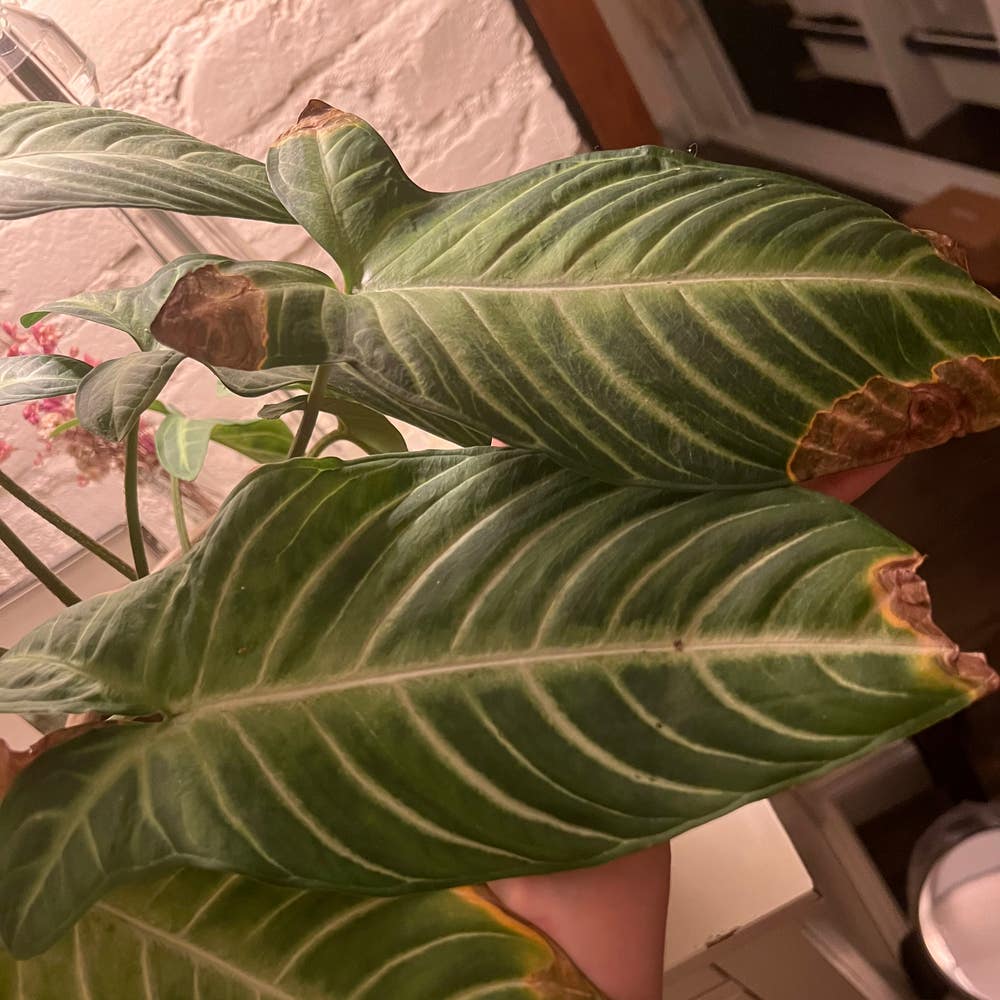
Leaf scorch is your Caladium lindenii 'Magnificum' waving a white flag at excessive sunlight. You'll see discoloration—leaves turning a sad shade of brown or sporting unsightly blotches.
Move it to a shadier spot pronto. Think of it as relocating your plant to the VIP section, away from the harsh spotlight.
💡 Not Enough Glow
When your plant starts resembling a stretch Armstrong toy, it's leggy and desperate for more light. Pale leaves are another SOS signal.
Bright, indirect light is the spa treatment your plant craves. Find a cozy nook that's well-lit but shielded from the sun's full fury. Rotate the plant occasionally to ensure even growth—no one likes doing the same workout every day, right?

Temperature Tantrums
Caladium lindenii 'Magnificum', with its lush foliage, is sensitive to temperature changes. Here's how to keep it from throwing a fit.
🌡️ Chilly Shocks and Heat Waves: Spotting Temperature Stress
Crispy leaf edges or a plant bolting are distress flares. They signal your plant's discomfort with the current temperature. If your plant's leaves look like they've seen a ghost—pale and wilting—it might be too cold. Conversely, if they're looking sunburnt, it's probably too hot.
🌡️ Climate Control: Stabilizing Your Plant's Environment
To prevent your plant from experiencing the botanical equivalent of a rollercoaster ride, maintain a stable temperature between 60-85°F (15-29°C). Think of your plant as a VIP that needs the best seat in the house, away from drafty windows and scorching radiators. If your home's temperature swings more than your mood on a Monday morning, it's time to invest in a reliable thermostat. During cold snaps, bubble wrap or plant cloches can act as a cozy blanket for your green buddy. Remember, consistency is key—your plant didn't sign up for an Arctic expedition or a desert trek.

Bug Battles
🐜 Unwanted Guests
Spider mites and aphids are the party crashers of the plant world, often arriving unannounced and overstaying their welcome. To spot these pests, look for webbing or clusters of tiny bugs on the undersides of leaves.
Isolation is key—move the infested plant away from its neighbors to prevent a full-blown infestation. A soapy water solution or isopropyl alcohol spray can be effective first strikes in your bug-busting arsenal.
For a more strategic approach, consider introducing predatory mites or ladybugs to turn the tables on these pests. These biological hitmen can help maintain the balance without resorting to harsh chemicals.
🍄 Fungal Frustrations
When your plant's leaves start sporting unsightly spots or a powdery substance, it's time to suspect a fungal attack. High humidity and poor air circulation are the usual suspects, creating a rave for spores.
To clear the air, reduce moisture around your plant and improve airflow. If the situation calls for it, a fungicide containing mefenoxam might just be your best defense.
Remember, cleanliness is your ally. Regularly sterilize your tools and pots to prevent these microscopic party poopers from gatecrashing again. Keep an eye out for fungus gnats—a telltale sign that your soil is too damp.
Root Rot: The Silent Killer
🦠 Soggy Soil and Slimy Roots: Early Detection of Root Rot
Root rot is the stealthy assassin of Caladium lindenii 'Magnificum'. Its presence is a serious red flag, often mistaken for other issues like under-watering. Vigilance is your ally here. Check for soil that feels more like a swamp and roots that have turned into a squishy, dark mess. If the roots remind you of overcooked pasta, it's time to act fast.
🌱 The Root Revival: How to Save Your Plant from the Ground Up
First, evict your plant from its pot with care. Inspect the damage. Healthy roots? Firm and white. Rotten roots? They're the bad apples—soft, dark, and smelly. With sterilized scissors, cut away the rot, showing no mercy but plenty of precision. Only the good roots get to stay.
Next, consider the pot's drainage. It should be less of a bathtub and more of a well-functioning sink. Repot your plant in fresh, well-draining soil, and choose a pot that won't trap water like a dam. This isn't just a transplant; it's a fresh start in a better home.
Monitor your watering habits like a hawk. Your plant doesn't need a pool party; it craves a balanced sip. Keep the soil moist but never waterlogged, and remember, the right amount of water is a lifeline, not a floodgate.
⚠️ Safety First
This content is for general information and may contain errors, omissions, or outdated details. It is not medical, veterinary advice, or an endorsement of therapeutic claims.
Always consult a qualified healthcare professional before using any plant as food, medicine, or supplement.
Never eat any plant (or feed one to pets) without confirming its identity with at least two trusted sources.
If you suspect poisoning, call Poison Control (800) 222-1222, the Pet Poison Helpline (800) 213-6680, or your local emergency service immediately.
Spotted an error? Please report it here.
Prevent over and under-watering woes with your Caladium lindenii 'Magnificum' by letting Greg craft a custom watering plan 💧 that keeps your plant perfectly hydrated and happy.