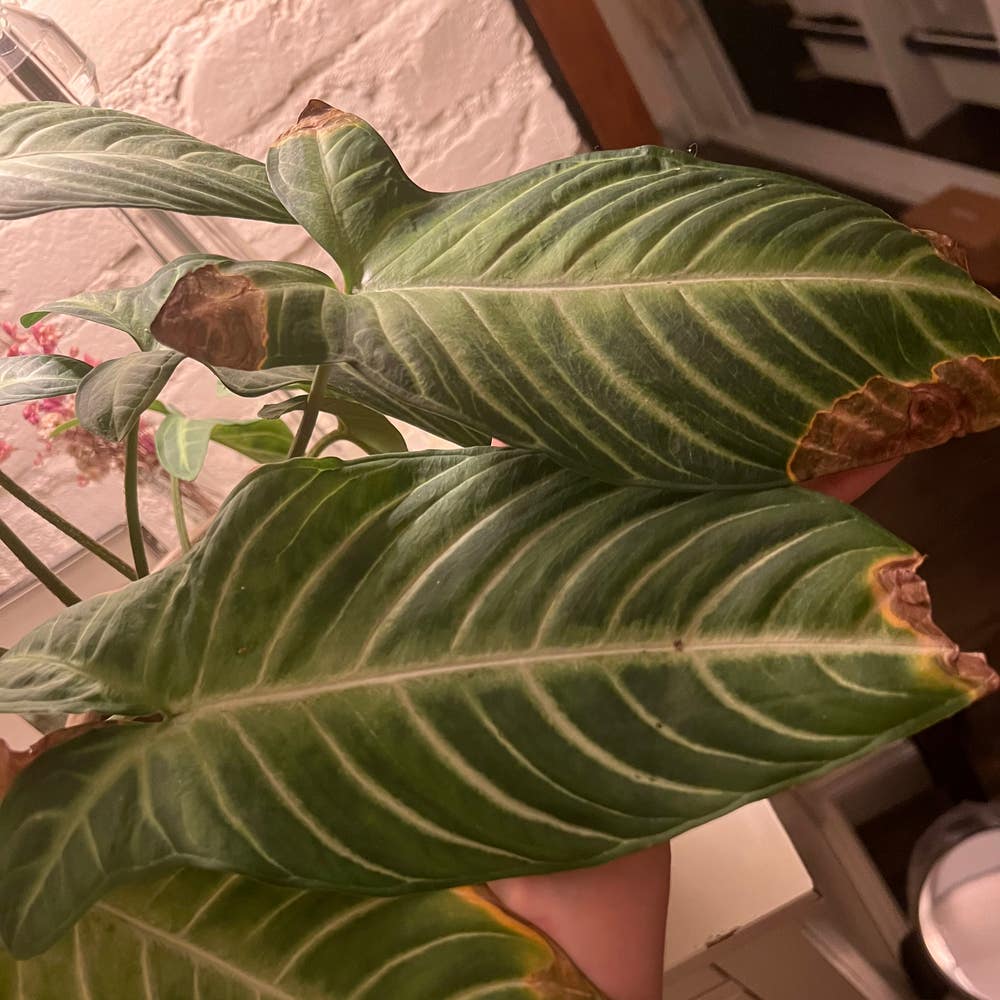
🌀 Why Are My Caladium lindenii 'Magnificum' Leaves Curling?
Caladium lindenii 'Magnificum'
By the Greg Editorial Team
Jun 18, 2024•3 min read
This article was created with the help of AI so we can cover more plants for you. May contain errors. See one? Report it here.
- 🌱 Early detection of curling prevents further plant distress.
- 💧 Balance watering; avoid extremes in moisture and temperature.
- 🕵️♂️ Inspect for pests regularly, treat with insecticidal soap or neem oil.
Spotting the Signs of Leaf Curling
🍃 Recognizing Curling vs. Natural Leaf Shapes
When your Caladium lindenii 'Magnificum' starts resembling a rolled-up scroll, it's not just showing off its gymnastic abilities. True leaf curling is distinct from the plant's natural leaf shape, manifesting as crispy edges and tight rolling that screams botanical distress.
🕵️ Early Detection
Catching leaf curl early is like snagging the last slice of pizza – absolutely crucial. Look for subtle signs like slight leaf tightening or a faint crispness to the touch. These early whispers can help you prevent a full-blown plant meltdown. Regularly inspect your Caladium, and if you suspect something's off, trust your gut – it's probably not just being dramatic.

Unraveling the Causes of Leaf Curling
💧 Thirsty Roots or Drowning Plants?
When your Caladium lindenii 'Magnificum' starts to look more like a crumpled piece of paper than a plant, watering habits need a check. Underwatering will have your plant's leaves curling up tighter than a miser's fist, trying to save every drop. But, flip the script and overdo the agua, and you'll witness a sad, soggy curl downward. It's like walking a tightrope; balance is everything.
🌡️ It's Getting Hot in Here
If your plant's leaves are curling like they're trying to escape the pot, consider the thermostat. Caladiums aren't fans of the sauna treatment. Too hot and they'll curl up; too cold and they'll do the same. It's a clear sign your leafy friend is throwing a temperature tantrum. Keep it comfortable, not too hot, not too cold, just right.
🐛 Bug Battles
Now, if you've nailed the watering and your thermostat isn't to blame, it's time to play detective. Tiny, uninvited guests could be throwing a party. Pests like aphids, spider mites, or thrips love to feast on your plant's tender leaves, causing them to curl and crinkle in distress. Get up close and personal with a magnifying glass if you have to; these critters are masters of hide and seek.

Turning Over a New Leaf: Solutions for Curling
💧 Watering Wisdom
Timing is critical when it comes to watering your Caladium lindenii 'Magnificum'. Let the soil approach dryness before quenching your plant's thirst. Overwatering is as harmful as neglect, so aim for a balanced routine. Use the touch test: soil should feel like a wrung-out sponge—moist, not drenched.
🌡️ Climate Control
Caladiums dislike extremes. They prefer a Goldilocks zone—not too hot, not too cold. Shield them from direct sunlight and maintain a consistent indoor temperature. Mulching helps regulate soil temperature and moisture, creating a stable environment for your plant's roots.
🐜 Pest Patrol
Keep an eye out for uninvited guests. Pests like spider mites and aphids are notorious for causing leaf curl. Inspect regularly and treat any infestations with insecticidal soap or neem oil. Prevention is key, so maintain good air circulation and avoid wetting the leaves to discourage pest parties.

Keeping Your Caladium lindenii 'Magnificum' Happy
🕵️♂️ Routine Checks
Consistency is key. Like checking your phone for notifications, make it a habit to inspect your Caladium lindenii 'Magnificum' regularly. Look for early signs of distress, such as slight color changes or a slowdown in growth. These can be the plant's subtle SOS signals.
🥦 The Right Nutrition
Your plant's diet matters. Use a balanced fertilizer to feed your Caladium lindenii 'Magnificum', but remember, moderation is crucial. Over-fertilizing is the equivalent of binge-eating junk food—tempting but terrible in the long run. Stick to the recommended dosage and observe your plant's response, adjusting as necessary.
⚠️ Safety First
This content is for general information and may contain errors, omissions, or outdated details. It is not medical, veterinary advice, or an endorsement of therapeutic claims.
Always consult a qualified healthcare professional before using any plant as food, medicine, or supplement.
Never eat any plant (or feed one to pets) without confirming its identity with at least two trusted sources.
If you suspect poisoning, call Poison Control (800) 222-1222, the Pet Poison Helpline (800) 213-6680, or your local emergency service immediately.
Spotted an error? Please report it here.
Prevent your Caladium lindenii 'Magnificum' from the distress of curling leaves 🍃 by letting Greg tailor a watering schedule and environment alerts to keep your plant thriving.