What Do I Do About Caladium Lindenii 'Magnificum' Root Rot?
Caladium lindenii 'Magnificum'
By the Greg Editorial Team
Jun 18, 2024•4 min read
This article was created with the help of AI so we can cover more plants for you. May contain errors. See one? Report it here.
- Yellow leaves and mushy roots signal root rot; stop watering immediately.
- Prune damaged roots and repot in well-draining soil with drainage holes.
- Use a moisture meter to perfect watering routine and prevent future rot.
Spotting the Trouble: Recognizing Root Rot Symptoms
🚨 Visual Red Flags
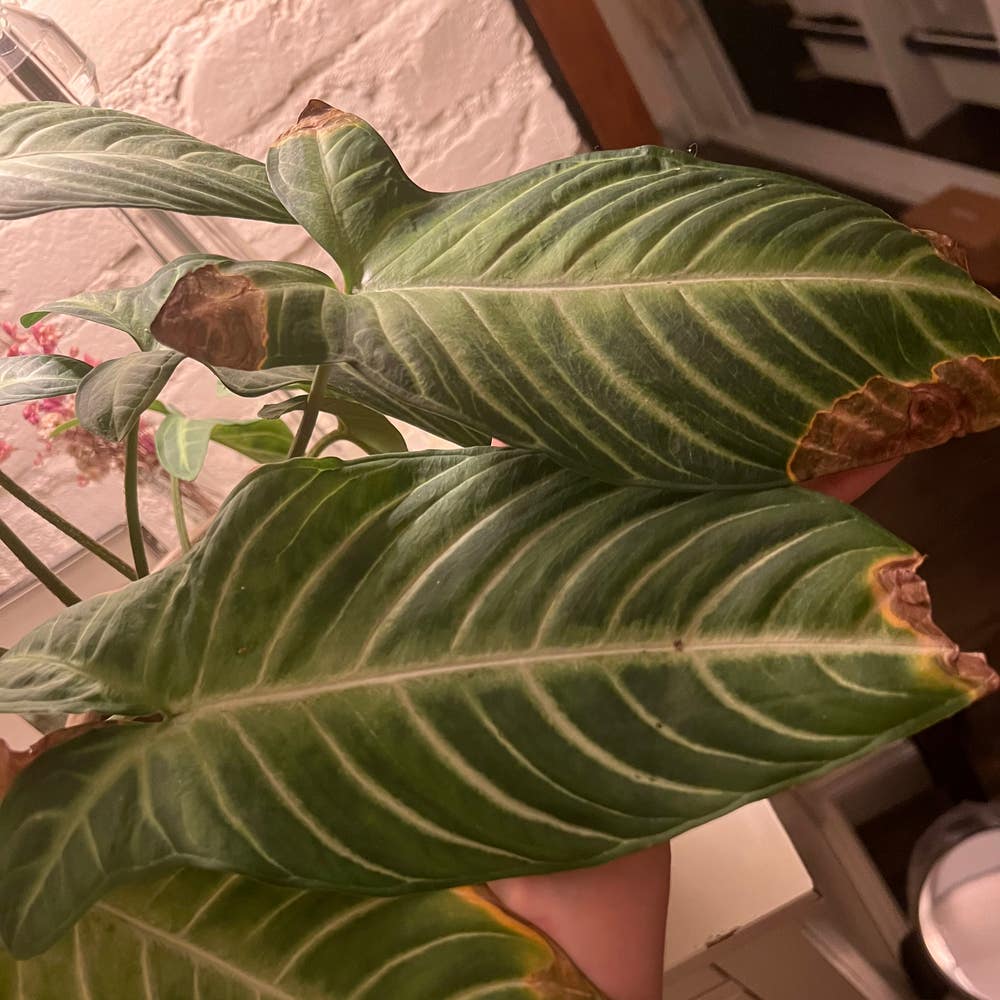
Yellowing leaves and wilting are the sirens of plant distress. If your Caladium lindenii 'Magnificum' is looking more like a wilted salad than a vibrant houseplant, take note. Mushy roots, though hidden, are a death knell for plants if not addressed.
🕵️ The Sniff and Lift Test
Gently inspect your plant's roots and soil for decay. A foul odor or a soil texture that's reminiscent of a wet sponge are clear indicators of trouble. Trust your nose; if it smells like something died in the pot, it's time for a root intervention.

First Response: Immediate Actions to Combat Root Rot
🌱 Drying Out: Soil and Root TLC
When root rot strikes your Caladium lindenii 'Magnificum', it's time for some tough love. Start by halting all watering—let the soil go bone-dry. Think of it as a drought intervention. If the plant is potted, remove it from any saucer that could hold excess water, and if possible, increase air circulation around the plant to speed up drying.
Aeration is next on the agenda. Gently loosen the soil around the roots to let them breathe. This isn't a full-blown excavation; just a little fluffing up to get air to the roots.
🏥 Root Surgery: Pruning the Damage
Now, for the surgery. Carefully remove the plant from its pot and shake off the soil to expose the roots. Healthy roots are firm and white, while rotten ones are mushy and dark. Snip the bad parts away with sterilized scissors or shears. Remember, it's better to cut too much than too little—rot spreads like gossip.
After the amputation, clean your tools with alcohol or bleach solution to prevent any fungal fashion from spreading. It's like washing your hands after you sneeze—basic hygiene.

The Comeback: Repotting and Recovery
🌱 Fresh Start: Choosing the Right Soil and Pot
When your Caladium lindenii 'Magnificum' is on the mend from root rot, repotting is like hitting the reset button. Choose a pot with drainage holes that's just the right size—not too big, not too small. An oversized pot is a soggy soil's best friend, and that's a friendship you want to break up.
Well-draining soil is your plant's new bestie. Mixes with peat, perlite, and sand are the life vests for your previously drowning plant. Forget about using garden soil; it's like inviting pests and diseases to a housewarming party.
💧 Aftercare: Watering Wisely
Post-repotting, your watering routine needs a makeover. Water thoroughly once, then channel your inner desert, letting the top inch of soil dry out before the next watering. Overwatering is the helicopter parent of plant care—too much attention can smother.
Adjust your watering schedule with the seasons, like you'd adjust your wardrobe. Use a moisture meter if you're the type who can't resist a daily water; it's like a plant's way of saying, "I'm good, thanks." Remember, underwatering is the lesser of two evils; it's easier to quench thirst than to fix a flood.

Keeping It Dry: Long-Term Prevention Strategies
💧 Watering Wisdom: Finding the Balance
To prevent root rot, it's crucial to establish a watering routine that's just right for your Caladium lindenii 'Magnificum'. The soil should feel dry to the touch before you even think about watering again. To cut out the guesswork, invest in a soil moisture meter. It's like having a secret agent that tells you exactly when your plant is thirsty.
🌡️ Environmental Harmony: Temperature and Humidity
Your plant's environment needs to be as stable as a well-anchored ship. Sudden changes in temperature or humidity are like icebergs to the Titanic. Aim for a consistent environment that doesn't swing between extremes. Air circulation is key; it's like giving your plant room to breathe in a crowded elevator. This keeps the humidity in check and discourages rot from setting up shop in your plant's roots.
⚠️ Safety First
This content is for general information and may contain errors, omissions, or outdated details. It is not medical, veterinary advice, or an endorsement of therapeutic claims.
Always consult a qualified healthcare professional before using any plant as food, medicine, or supplement.
Never eat any plant (or feed one to pets) without confirming its identity with at least two trusted sources.
If you suspect poisoning, call Poison Control (800) 222-1222, the Pet Poison Helpline (800) 213-6680, or your local emergency service immediately.
Spotted an error? Please report it here.
Ensure your caladium lindenii 'magnificum' thrives 🌱 with Greg's tailored watering reminders that keep root rot at bay from these life-saving tips!