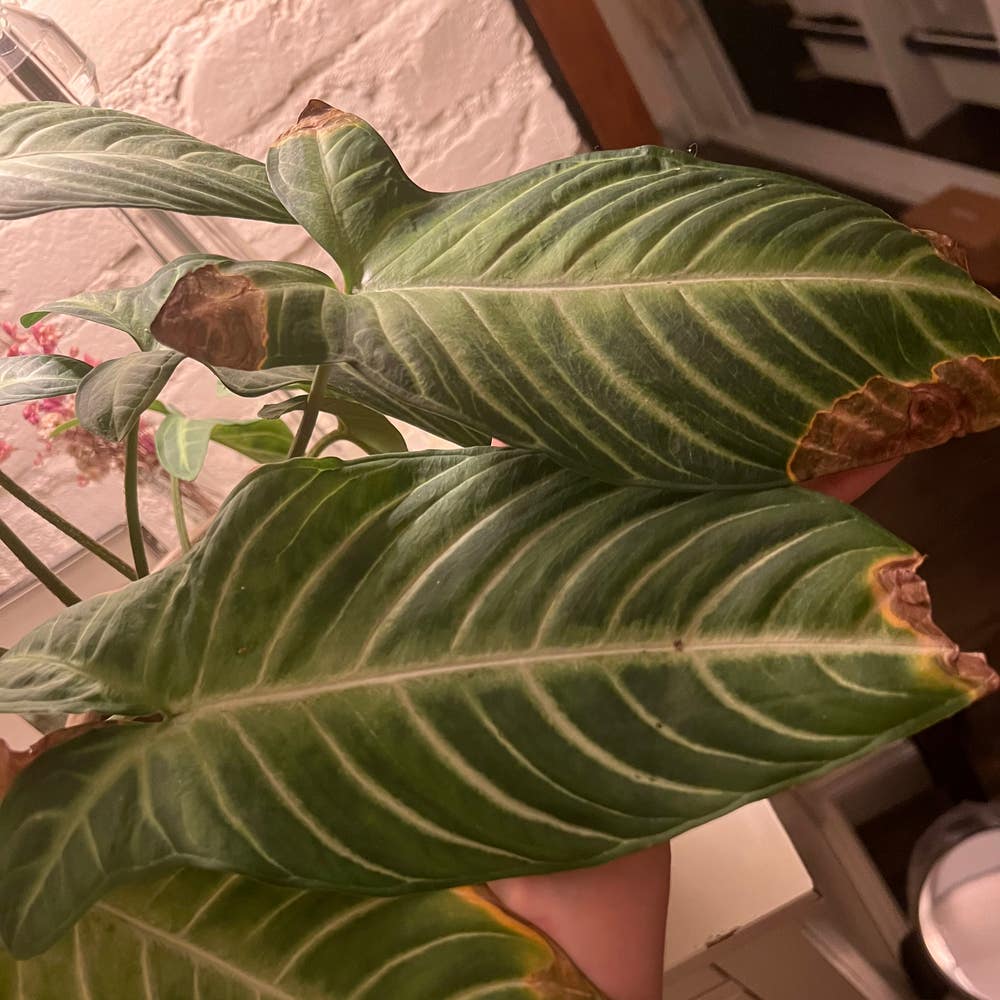
💧 Why Are My Caladium lindenii 'Magnificum' Leaves Droopy?
Caladium lindenii 'Magnificum'
By the Greg Editorial Team
Jun 18, 2024•4 min read
This article was created with the help of AI so we can cover more plants for you. May contain errors. See one? Report it here.
- Over/underwatering, light, temp, humidity cause droopiness in Caladium lindenii 'Magnificum'.
- Timing of droopiness offers clues—after watering, cooler days/seasons.
- Adjust care routine: Check soil moisture, provide indirect light, maintain 22–28°C, boost humidity.
Spotting the Signs of Droopy Leaves
🌿 Visual Clues
In the lush world of Caladium lindenii 'Magnificum', droopy leaves are the plant's white flag of surrender. Look for leaves that have lost their usual upright stance, appearing more like a weary traveler than a perky tourist. If the stems are bending or the leaves seem less firm, it's a clear sign that your green companion is in distress.
🕰 Timing and Patterns
Timing is everything when it comes to diagnosing droopiness. Observe when the leaves tend to sag—is it after a watering session, or does it correlate with a change in the environment? Patterns can be revealing; for instance, if droopiness occurs during the cooler parts of the day or year, it might hint at temperature stress. Keep an eye out for seasonal changes too, as Caladiums naturally enter a dormancy period where droopiness is just part of the cycle.

Getting to the Root: Common Causes of Droopiness
💧 Too Much Love: Overwatering Woes
Overwatering can turn your Caladium's home into a soggy mess, leading to a sad, droopy display. Mushy stems or leaves are tell-tale signs you've crossed the line from attentive to overbearing. If the soil feels like a drenched sponge rather than a moist piece of cake, it's time to ease up on the hydration.
🏜️ Thirsty Roots: The Underwatering Problem
Conversely, underwatering leaves your plant as parched as a desert wanderer. When the top inch of soil is bone dry, your Caladium is likely screaming for a drink. Compacted soil from too little water can strangle the life out of those tubers, leaving you with a wilted mess.
🌞 Feeling the Heat: Light and Temperature Issues
Your plant's not a sunbather; too much direct light can lead to a crispy, droopy Caladium. And if the temperature dips below 65°F, you're basically giving your plant the cold shoulder. Temperature stress is a silent killer, often overlooked but always impactful.
💦 Craving Moisture: Humidity's Role
Humidity, or the lack thereof, can make or break your Caladium's spirit. Low humidity levels can leave your plant as deflated as a popped balloon. It's all about creating that tropical vibe—without it, droopiness is inevitable as your plant loses its turgidity, the botanical equivalent of a well-hydrated skin.

First Aid for Droopy Leaves: Quick Fixes
💧 Fine-Tuning Watering Habits
Check the soil before you water. If the top inch is dry, it's time to water; think of it as a thirst quencher, not a flood. Use room-temperature water to avoid shock to the roots. If you've been overzealous with watering, ease up and let the soil dry out a bit before the next round.
🌿 Creating the Ideal Environment
Bright, indirect light is your Caladium's best friend. Direct sunlight is like a bad tan — too much and you risk damage. Keep the temperature steady, between 22–28°C, to avoid leaf drama. If your plant is near a draft or a heater, move it to a more stable spot. Remember, your plant hates change more than a cat hates baths.

Long-Term Care Strategies
💦 Humidity Boosting Techniques
Maintaining optimal humidity is crucial for the health of your Caladium lindenii 'Magnificum'. To avoid the common pitfalls of temporary fixes, consider investing in a humidifier. It's the set-it-and-forget-it solution that keeps the air around your plant consistently moist.
Grouping plants together is another savvy move. It's like creating a mini rainforest on your windowsill, where each plant contributes to the collective humidity. Just remember, while your plants are throwing a moisture party, you're the bouncer—check the levels with a hygrometer to ensure things don't get too wild.
🌱 Soil and Repotting Tips
When it comes to soil, think of it as your plant's mattress. It needs to be comfortable and supportive, but not suffocating. Use a mix that's airy enough for roots to breathe yet retains just the right amount of moisture.
Repotting is like moving to a better neighborhood for your plant. Do it when the roots start to look cramped, and choose a pot that's the next size up—not too big, not too small. Ensure it has drainage holes because nobody likes wet feet, especially not your Caladium.
Regularly check the soil's pH and nutrient levels. It's like giving your plant a regular health check-up—preventative care beats emergency surgery. And remember, consistency is key. Keep your plant's environment as stable as a rock, because plants are creatures of habit, just like us.
⚠️ Safety First
This content is for general information and may contain errors, omissions, or outdated details. It is not medical, veterinary advice, or an endorsement of therapeutic claims.
Always consult a qualified healthcare professional before using any plant as food, medicine, or supplement.
Never eat any plant (or feed one to pets) without confirming its identity with at least two trusted sources.
If you suspect poisoning, call Poison Control (800) 222-1222, the Pet Poison Helpline (800) 213-6680, or your local emergency service immediately.
Spotted an error? Please report it here.
Banish droopy leaves and ensure your Caladium lindenii 'Magnificum' is perky and hydrated 💧 with Greg's custom watering schedule and habitat tips.