Understanding Why Your Caladium 'Magnificum' Is Wiling 🌺
Caladium lindenii 'Magnificum'
By the Greg Editorial Team
Sep 29, 2024•6 min read
This article was created with the help of AI so we can cover more plants for you. May contain errors. See one? Report it here.
- 💧 Wilting in Caladium 'Magnificum' often signals water stress from over or underwatering.
- 🌡️ Heat stress and sudden temperature changes can also cause wilting and leaf damage.
- 🌿 Monitor humidity and light to keep your plant thriving and prevent wilting.
Common Causes of Wilting Leaves
💧 Water Stress
Wilting leaves often signal water stress, which can manifest as drooping foliage and dry soil.
- Underwatering: When the soil dries out too much, the plant struggles to maintain its structure, leading to wilting.
- Overwatering: Conversely, if the roots rot from excessive moisture, the plant may still wilt, despite the soil being wet.
🔥 Heat Stress
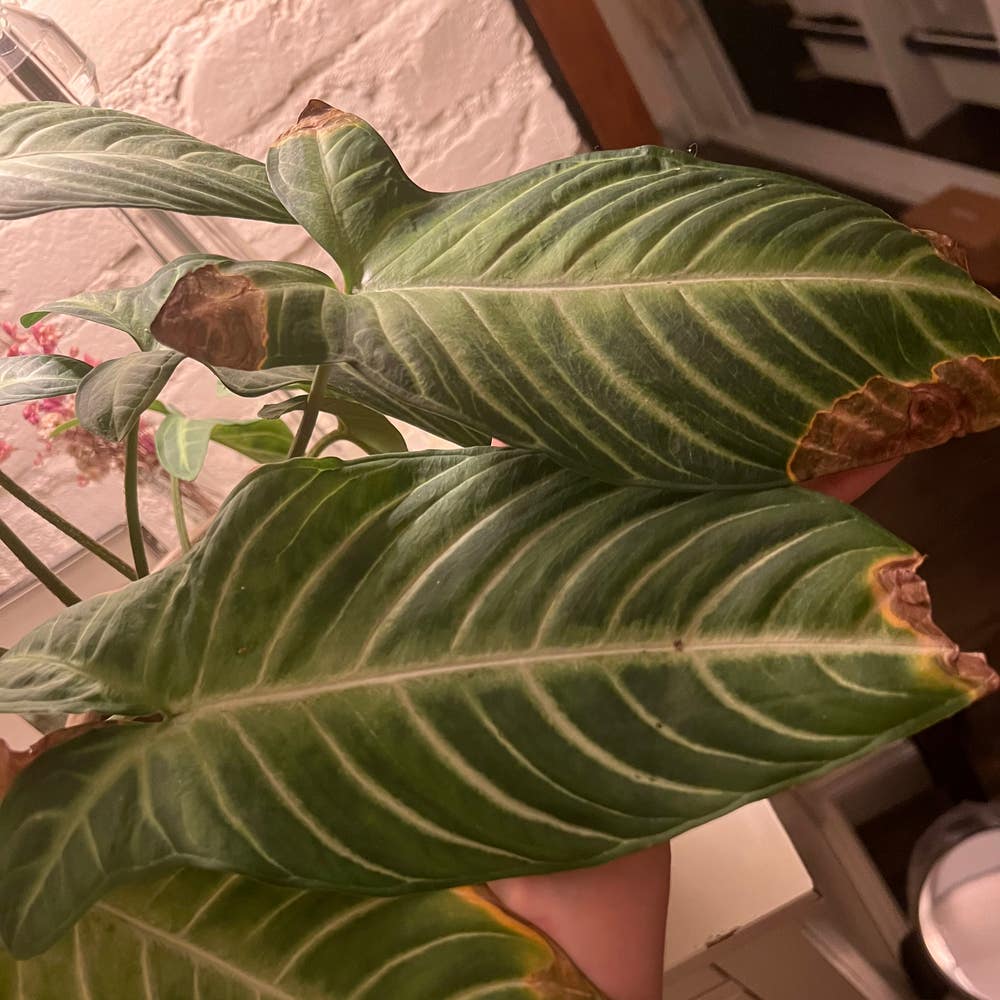
Heat stress is another common culprit behind wilting leaves, with symptoms like curling or browning edges.
- Excessive Heat Exposure: Direct sunlight or high temperatures can rapidly deplete moisture, leaving your plant vulnerable.
- Sudden Temperature Fluctuations: Moving your Caladium 'Magnificum' from one extreme temperature to another can shock it, resulting in wilting.
🦠 Disease-Related Wilting
While less common, disease-related wilting can occur, often accompanied by discoloration or spots on the leaves.
- Uncommon Pathogenic Wilt: This is rare in Caladium 'Magnificum' but can happen under specific conditions.
- Environmental Factors: It's crucial to recognize that most wilting issues stem from environmental stress rather than diseases.
Understanding these causes is the first step in addressing wilting leaves effectively. Next, we'll explore how to diagnose the specific issues affecting your plant.
Diagnosing Wilting
🌱 Step-by-Step Guide to Diagnose Wilting
Check Soil Moisture:
Insert your finger into the soil up to 2 inches. If it feels dry, your plant may be underwatered.Assess Environmental Conditions:
Evaluate the light exposure and temperature around your plant. Look for drafts or sudden changes in humidity that could stress it.Inspect Leaves:
Examine the leaves for any signs of disease or pests, such as discoloration or spots. These can indicate underlying issues that need addressing.Monitor Recent Care Changes:
Take note of any recent changes in watering, fertilization, or relocation. These factors can significantly impact your plant's health.
🔍 Signs to Look for in Environmental Conditions
Humidity Levels:
Aim for a humidity range of 60-80%. This is crucial for keeping your Caladium 'Magnificum' thriving.Temperature:
The optimal temperature range is between 65°F to 85°F (18°C to 29°C). Keeping your plant within this range helps prevent stress.Light Conditions:
Ensure your plant receives indirect light for at least 6 hours daily. Too much direct sunlight can lead to wilting.
By following these diagnostic steps, you can pinpoint the cause of your Caladium's wilting. This understanding will set you on the path to effective solutions and a healthier plant.
Solutions for Wilting Leaves
💧 Actionable Advice for Water Stress
Underwatering
If your Caladium 'Magnificum' is wilting due to underwatering, the solution is straightforward. Water thoroughly until you see excess draining from the bottom of the pot.
To ensure even moisture distribution, consider using bottom watering techniques. This method allows the roots to absorb water gradually, promoting healthier growth.
Overwatering
On the flip side, if overwatering is the issue, let the soil dry out before watering again.
If you suspect root rot, repot the plant into fresh, well-draining soil to give it a fighting chance.
☀️ Actionable Advice for Heat Stress
Relocate the Plant
Heat stress can be a sneaky culprit behind wilting leaves. If your plant is getting too much direct sunlight, move it to a shadier spot or use sheer curtains to diffuse the light.
Increase Humidity
Increasing humidity can also help combat heat stress. Use a humidity tray or mist the leaves regularly to create a more favorable environment.
🦠 Addressing Disease-Related Wilting
If you suspect disease is the cause of wilting, act quickly. Remove any affected leaves to improve air circulation around the plant.
In some cases, using fungicides may be necessary. However, it’s wise to consult a professional before taking this step to ensure you’re making the right choice for your plant's health.
By addressing these issues promptly, you can help your Caladium 'Magnificum' bounce back and thrive. Next, let’s explore preventive measures to minimize future wilting episodes.
Preventive Measures
Tips to Minimize Future Wilting Episodes 🌱
To keep your Caladium 'Magnificum' thriving, regularly monitor soil moisture. Adjust your watering schedule based on the plant's needs to prevent both underwatering and overwatering.
Maintaining consistent humidity levels is crucial, especially during dry seasons. Aim for a humidity range of 60-80% to create a comfortable environment for your plant.
Avoid sudden changes in light or temperature. Gradual adjustments help your plant acclimate without stress, reducing the risk of wilting.
Importance of Monitoring Environmental Conditions 🔍
Keeping an eye on temperature and humidity fluctuations can make a significant difference. Regular checks help you catch any issues before they escalate.
Using a hygrometer is a smart move. It allows you to measure humidity accurately and adjust your care routine as needed, ensuring your Caladium stays healthy and vibrant.
By implementing these preventive measures, you can enjoy a flourishing plant and minimize the chances of wilting in the future. Now, let's explore how to revive a wilted plant if the need arises.
Reviving a Wilted Plant
🌊 Techniques for Bottom Watering
Bottom watering is a gentle way to revive your Caladium 'Magnificum'. Simply fill a shallow tray with water and place the pot in it, allowing the plant to absorb moisture from the bottom for about 30 minutes to an hour.
🏡 Relocating the Plant for Optimal Conditions
Finding the right spot for your plant can make all the difference. Move it to a location with stable temperatures and indirect light, steering clear of heating vents or drafty windows that can stress the plant further.
✂️ Pruning Damaged Leaves
Sometimes, a little snip is all it takes to encourage new growth. Use clean, sharp scissors to remove any wilted or damaged leaves; this not only improves the plant's appearance but also helps it focus its energy on healthier foliage.
Reviving a wilted plant can be a rewarding experience. With the right techniques and care, your Caladium 'Magnificum' can bounce back and thrive once again. Next, let’s explore when it might be time to seek expert help for your plant care challenges.
When to Seek Help
🚨 Signs That Indicate the Need for Expert Assistance
If your Caladium 'Magnificum' continues to wilt despite your best care efforts, it might be time to seek help. Persistent wilting can signal underlying issues that go beyond simple environmental factors.
Look for signs of disease that don't improve with basic interventions. If you notice discoloration, unusual spots, or any other concerning symptoms, it's crucial to act quickly.
📚 Resources for Assistance
Consulting local nurseries can provide tailored advice specific to your region. Experts there can offer insights based on local climate and plant care practices.
Engaging with online communities, like Greg, can also be beneficial. These platforms allow you to connect with fellow plant enthusiasts who can share their experiences and tips for reviving your plant.
By leveraging these resources, you can gain the knowledge needed to help your Caladium thrive once again.
⚠️ Safety First
This content is for general information and may contain errors, omissions, or outdated details. It is not medical, veterinary advice, or an endorsement of therapeutic claims.
Always consult a qualified healthcare professional before using any plant as food, medicine, or supplement.
Never eat any plant (or feed one to pets) without confirming its identity with at least two trusted sources.
If you suspect poisoning, call Poison Control (800) 222-1222, the Pet Poison Helpline (800) 213-6680, or your local emergency service immediately.
Spotted an error? Please report it here.
Revive your wilting Caladium 'Magnificum' with smart watering tips 💧 from Greg, ensuring it thrives in the perfect environment tailored just for you!