Why Are There Brown Spots on My Wandering Heath?
Erica vagans
By the Greg Editorial Team
Apr 08, 2024•4 min read
This article was created with the help of AI so we can cover more plants for you. May contain errors. See one? Report it here.
Banish brown spots 🍂 on your Wandering Heath with these expert plant care secrets!
- Identify brown spots by their uniform shape and surrounding yellow halo.
- Overwatering? Let soil dry out. Underwatering? Water thoroughly.
- Fungal rings or pests? Use fungicides or insecticidal soaps respectively.
Spotting the Trouble: Identifying Brown Spots
🕵️♂️ Visual Clues
To distinguish brown spots from other leaf issues, scrutinize the patterns and consistency. Uniform spots suggest a problem, while random blemishes may be benign. A yellow halo around a spot is a distress signal, not a fashion statement.
🛠️ Troubleshooting the Spots
Texture is telling: dry and crispy could mean too much sun, while soft and mushy might scream overwatering. Progression is also a clue; if spots are on the move, growing or multiplying, it's time for intervention. Remember, your plant's health won't improve with neglect—it's a proactive partnership.
When Water Goes Wrong: Overwatering and Underwatering
💧 Overwatering Signs and Solutions
Overwatering can turn your Wandering Heath into a soggy, sad spectacle. Leaves may feel too soft or look bloated, like they've had one too many sips. If the soil sticks to your fingers, it's time to cut back on the H2O. To rescue your plant, stop watering immediately and let the soil dry out. Check the pot's weight; if it feels like you're lifting weights, consider repotting with a well-draining mix to prevent future waterlogging.
🏜️ Underwatering Signs and Solutions
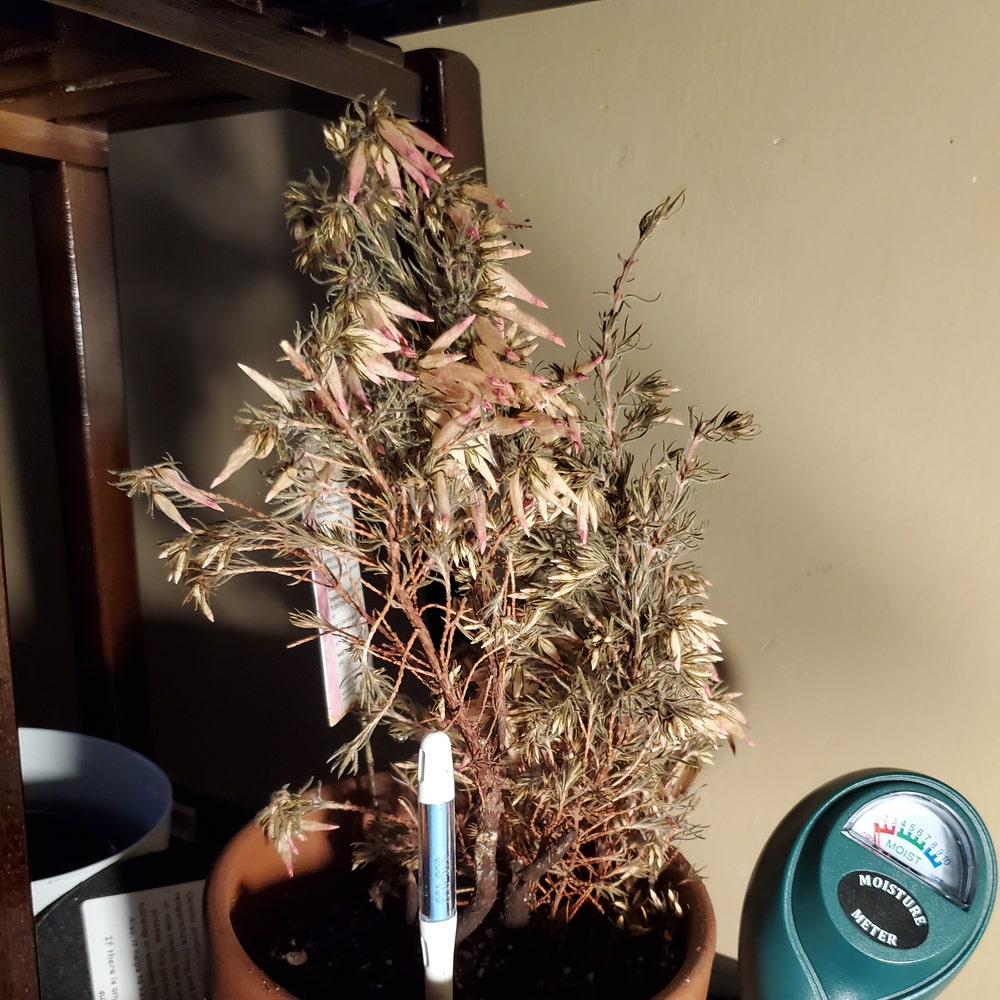
On the flip side, underwatering leaves your Wandering Heath parched and pleading for moisture. Leaves might wrinkle or appear deflated, signaling a serious thirst. If the soil has shrunken away from the pot's edge, it's a clear cry for water. To remedy this, give your plant a thorough drink, allowing the water to reach deep into the soil. Then, let the topsoil dry before the next watering session. Consistency is key; establish a routine to keep your plant's hydration levels just right. Use a soil moisture meter if you're unsure—it's like a cheat sheet for plant care.
Battling Brown Spots: Fungal and Pest Problems
🍄 Fungal Foes
Fungus can be a silent saboteur of your Wandering Heath, masquerading as mere brown spots. Concentric rings or spots with a halo are telltale signs of a fungal invasion. To combat these, fungicides are your go-to, but use them wisely. Overuse is a no-no; instead, rotate products to prevent resistance and always follow the label's instructions to the letter.
Cultural changes can also fortify your plant's defenses. Boost air circulation and remove affected leaves to prevent the spread. Keep your plant's environment clean, akin to maintaining a sterile operating room, to nip fungal issues in the bud.
🐜 Pesty Predicaments
Pests are the uninvited guests that can wreak havoc on your Wandering Heath. If you spot tiny flies or bugs, it's eviction time. Insecticidal soaps and neem oil are your allies in this fight, serving as your plant's personal bodyguards. Apply these treatments with precision, targeting only the affected areas to avoid collateral damage to your plant.
Remember, pests are persistent. You'll need to maintain a consistent treatment schedule to keep them at bay. And don't forget to prune with care—sterilize your tools to prevent spreading any unwanted guests. It's like playing whack-a-mole with bugs; stay vigilant and keep swinging.
Nurturing Your Wandering Heath Back to Health
💊 Healing and Recovery
In the quest to heal brown spots on your Wandering Heath, precision is your ally. Prune affected leaves during the plant's growth phase to encourage the emergence of healthy, spot-free foliage. Think of it as a targeted strike against damage, setting the stage for a robust comeback.
For those spots born of fungal spite, reach for fungicides with the precision of a sniper. Read labels like they're top-secret documents, and apply with the care of a bomb technician. If you're leaning towards the organic arsenal, neem oil could be your eco-friendly grenade.
🚫 Prevention is Key
Now, let's talk defense. Regular check-ups are your plant's shield against the return of those dreaded brown spots. Keep your watering can on a tight leash; overzealous hydration is a common misstep. Let the soil's top layer dry out before the next watering round – it's about finding that sweet spot.
Airflow is your plant's lungs – ensure it's not gasping for breath. Stagnant air is a playground for fungal fiends and pest plagues. Keep the air moving like a soft symphony that dances around your plant.
Lastly, embrace the role of a plant detective. Keep an eye out for any new or expanding spots, and be ready to pivot your care strategy like a pro basketball player dodging a defense. With these tactics, your Wandering Heath's path to recovery should be as clear as a freshly cleaned window.
⚠️ Safety First
This content is for general information and may contain errors, omissions, or outdated details. It is not medical, veterinary advice, or an endorsement of therapeutic claims.
Always consult a qualified healthcare professional before using any plant as food, medicine, or supplement.
Never eat any plant (or feed one to pets) without confirming its identity with at least two trusted sources.
If you suspect poisoning, call Poison Control (800) 222-1222, the Pet Poison Helpline (800) 213-6680, or your local emergency service immediately.
Spotted an error? Please report it here.
Banish those brown spots 🍂 on your Wandering Heath with Greg's tailored care alerts, ensuring your plant thrives with just the right touch of TLC!