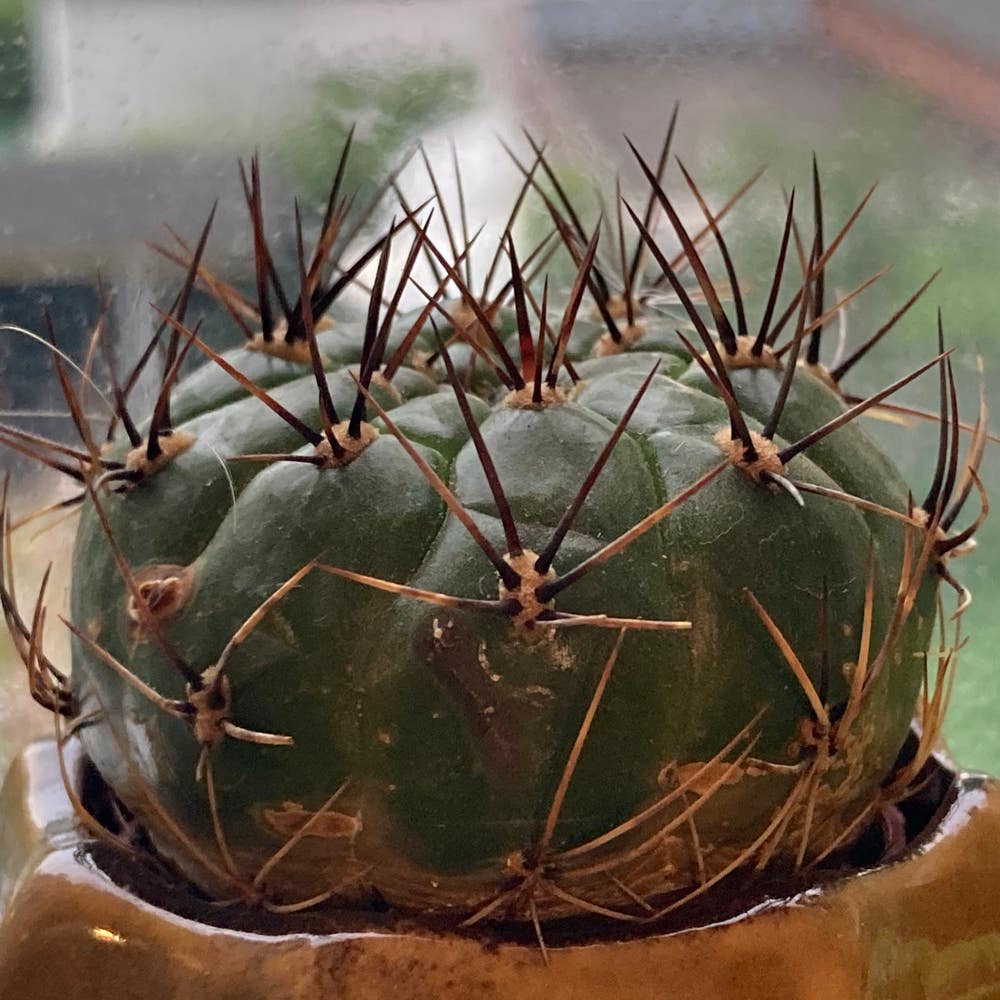
🌞 Does My Submatucana aureiflora Need Direct Sunlight?
Matucana aureiflora
By the Greg Editorial Team
Apr 09, 2024•4 min read
This article was created with the help of AI so we can cover more plants for you. May contain errors. See one? Report it here.
Nurture your Submatucana aureiflora to perfection 🌟 by decoding its sunlight needs and dodging overexposure woes. 🌤️
- 🌤️ Prefers bright light, not direct sun, to avoid leaf damage.
- Morning light is ideal; use sheer curtains for midday sun.
- Rotate and reposition to ensure even exposure and prevent scorching.
Basking or Baking? Submatucana aureiflora's Sunlight Needs
🌞 Direct vs. Indirect Sunlight: A Kid-Friendly Explanation
Imagine a hot summer day at the beach with the sun beating down on you; that's direct sunlight. Now, picture yourself under a beach umbrella, still bright but not as intense; that's indirect sunlight. It's all about whether there's anything between you and the sun.
Submatucana aureiflora's Sunlight Preferences
Submatucana aureiflora loves the sun, but not too much of it. Think of it as a sunbather who doesn't want to turn into a lobster. This plant's natural high-altitude habitat gives us a hint: it's used to bright light, but the intensity is buffered by the atmosphere.
In its mountainous home, Submatucana aureiflora gets plenty of light without the harshness at lower elevations. So, while it enjoys a good dose of sunshine, it doesn't want to be in the spotlight during the midday heat. Keep it in a place where it can soak up the morning or late afternoon rays without getting scorched.
The Window Compass: Navigating Sunlight for Your Submatucana aureiflora
🌞 The Direction Dilemma: Which Windows Work Wonders?
Your Submatucana aureiflora's happiness hinges on window direction. In the Northern Hemisphere, south-facing windows are the sun's megaphones, amplifying light for your plant's pleasure. Conversely, if you're chilling in the Southern Hemisphere, north-facing windows snag the most sun. East-facing windows offer your plant a gentle morning wake-up call, while west-facing ones deliver a stronger afternoon tea of sunlight.
🌍 Hemisphere Highlights: Seasonal Sunlight Shifts
The Earth's tilt isn't just for science nerds—it's a big deal for your Submatucana aureiflora. As the seasons shift, so does the sun's arc, tweaking the light's quality and duration. Observe and adjust; your plant's spot might be perfect in winter but a solar oven come summer. Use your compass app; it's not just for hikes—it's your plant's best friend for finding that sunlight sweet spot, no matter where on the globe you've planted your roots.
Sun-Kissed or Sun-Scorched? Monitoring Your Plant's Sun Exposure
🌞 Spotting the Signs of Too Much Sun
Leaves don't mince words; they show distress like a bad poker face. For Submatucana aureiflora, too much sun turns leaves into crispy critters with brown or white spots. If they're looking bleached, like a favorite shirt washed one too many times, that's your cue. They're crying out for less light, begging for a break from the solar beatdown.
🌓 The Shade Shuffle: Balancing Light and Shadow
Your Submatucana aureiflora isn't super glued to its spot. Move it. If it's baking in the sun, shuffle it to a shadier nook. Think of sheer curtains as the SPF 50 for your plant, filtering out the harshness. Rotate your green buddy regularly to give it an even tan, avoiding the botanical equivalent of a trucker's arm. If the sun's playing hardball, consider a strategic shade—a plant umbrella, if you will. It's about keeping your plant sun-kissed, not sun-slapped.
Sunlight Savvy: Tips for Tailoring Your Care
⏰ Timing is Everything: When to Let the Sun Shine
For your Submatucana aureiflora, timing isn't just a suggestion—it's a rule. Morning light is your plant's best friend, offering the gentle rays it craves. Aim for the soft glow of dawn until mid-morning; this is when your plant can soak up the sun without the risk of a nasty burn.
🛡️ Sun Shields and Sun Spots: Tools and Tricks
Sheer curtains are the unsung heroes in the plant world, diffusing that intense midday light into a soft caress your Submatucana aureiflora can handle. No curtains? No sweat. A shade cloth can also do the trick, acting like a parasol for your photosynthesizing friend.
Remember, the sun's position isn't static, and neither should your plant be. Rotate your Submatucana aureiflora regularly to ensure it gets even exposure and to avoid the botanical equivalent of a farmer's tan. And don't be afraid to reposition your plant throughout the day or year; it's all about adapting to the sun's ever-changing angles, especially as seasons shift.
Lastly, if you're dealing with a scorching climate, consider placing your plant in a spot that gets afternoon shade. It's like giving your plant a little siesta from the sun's most intense hours, preventing it from turning into a crispy critter.
⚠️ Safety First
This content is for general information and may contain errors, omissions, or outdated details. It is not medical, veterinary advice, or an endorsement of therapeutic claims.
Always consult a qualified healthcare professional before using any plant as food, medicine, or supplement.
Never eat any plant (or feed one to pets) without confirming its identity with at least two trusted sources.
If you suspect poisoning, call Poison Control (800) 222-1222, the Pet Poison Helpline (800) 213-6680, or your local emergency service immediately.
Spotted an error? Please report it here.
Keep your Submatucana aureiflora happy and healthy 🌤 by using Greg to monitor sunlight exposure and remind you to adjust its spot, ensuring it gets just the right amount of light without the burn.