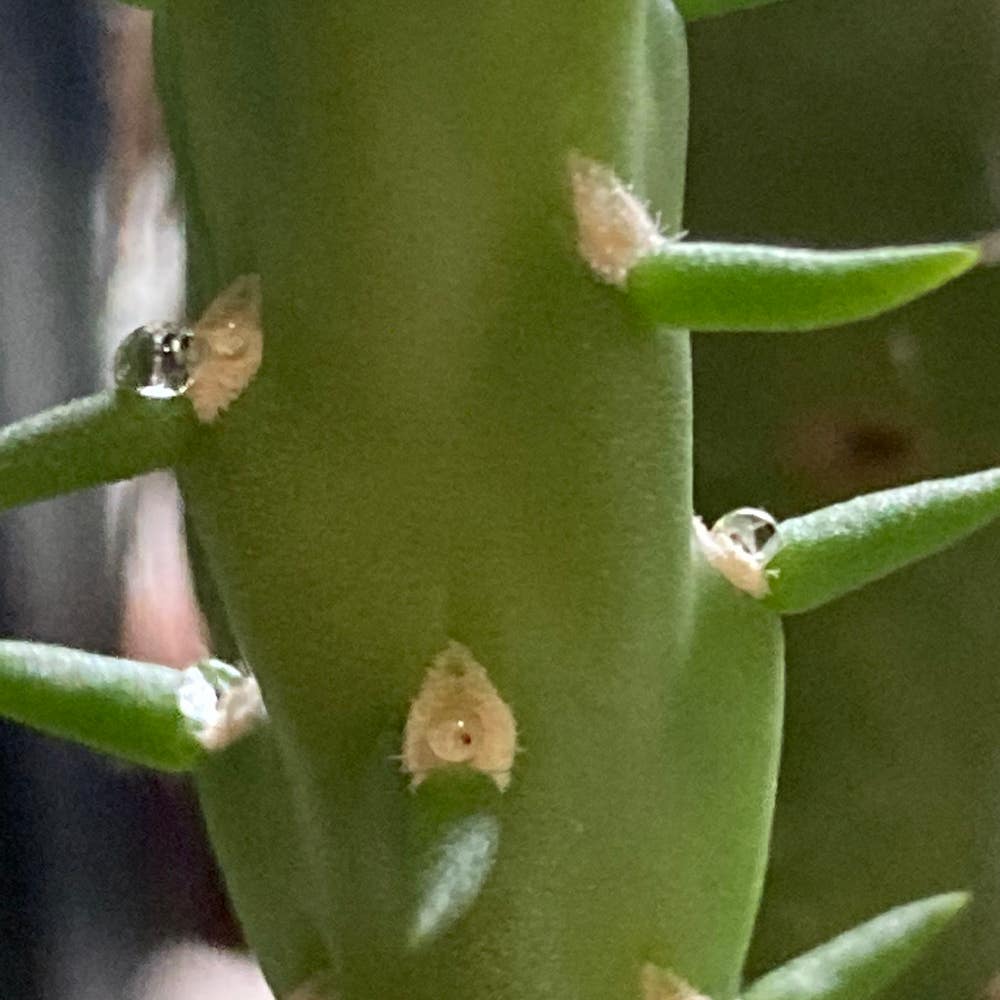
🌵 Why Are the Leaves on My Staghorn Cholla Turning Yellow?
Cylindropuntia versicolor
By the Greg Editorial Team
Apr 24, 2024•3 min read
This article was created with the help of AI so we can cover more plants for you. May contain errors. See one? Report it here.
Prevent yellowing and ensure your Staghorn Cholla thrives with this essential care guide. 🌵🛡️
- Over/underwatering causes yellow leaves; check soil moisture before watering.
- Bright, indirect light and warmth are crucial for Staghorn Cholla health.
- Pests and diseases can yellow leaves; use insecticidal soap or neem oil for treatment.
Pinpointing the Culprits Behind Yellow Leaves
💧 Water Woes
Overwatering turns Staghorn Cholla's soil into a swamp, leading to yellow, soggy leaves. If the soil feels like a wet sponge, it's time to cut back on the H2O. Conversely, underwatering leaves the plant parched, with leaves as dry and crispy as autumn leaves. The soil should be dry to the touch about an inch down before you water again.
🌞 Light and Temperature Troubles
Staghorn Cholla can throw a fit if the light's not right. Too much sun scorches leaves to a yellow crisp, while too little leaves them languishing in the shade. Aim for a spot with bright, indirect light and stable temperatures to keep your cactus content.
🍽️ Nutrient Shortfalls
Yellow leaves can also scream "feed me!" signaling a nutrient deficiency. A balanced fertilizer can perk up your plant without overfeeding, which risks nutrient burn and more yellowing. Remember, moderation is key – think of fertilizer as a vitamin, not a meal replacement shake.
Battling Pests and Diseases
🐜 Common Invaders
Pests love a good cactus feast, and Staghorn Cholla is no exception. Aphids, mealybugs, and spider mites are the usual suspects, turning leaves yellow as they drain the plant's vigor. Flip those leaves and get up close; these tiny vampires often hide out of sight.
🦠 Disease Dilemmas
Yellow leaves might also scream "fungal infection!" Black or brown spots with a yellow halo are your clue here. Overwatering is often an accomplice, creating a soggy playground for fungi. Keep the soil on the drier side and ensure your Cholla isn't stewing in moisture.
💉 Treatment Tactics
Caught some pests red-handed? Show them the door with insecticidal soap or neem oil. For fungal foes, consider a fungicide, but don't forget about airflow—good circulation is like a breath of fresh air, literally. Prevention beats cure, so keep that Cholla clean and quarantined when needed.
Reviving Your Staghorn Cholla
💧 Watering Wisdom
Check the soil before watering—Staghorn Cholla isn't a fan of soggy feet. If the soil an inch deep feels dry, it's time to water. Otherwise, let it be.
Moderation is key. Water deeply but infrequently, allowing the soil to dry out completely between sessions. This mimics the natural desert climate the Cholla loves.
🌞 Environmental Engineering
Light is life for your Staghorn Cholla. Ensure it gets plenty of bright, indirect sunlight. Too much direct sun can scorch the leaves, while too little leaves it languishing.
Temperature matters. Keep your Cholla in a warm environment, away from drafts or sudden temperature changes. Think cozy, not tropical.
🍽️ Nutritional Know-How
Fertilize with care. Use a balanced, water-soluble fertilizer during the growing season, but dilute it more than you would for other plants. Overfeeding can be just as harmful as underfeeding.
Observe and adjust. Watch for signs of nutrient excess or deficiency, and tweak your feeding regimen accordingly. Your Cholla's color and growth will guide you.
Keeping Yellow at Bay
🌱 Routine Care Rundown
Establishing a care schedule is like setting an alarm for plant health—it's essential. Regularly check soil moisture, leaf appearance, and overall plant vigor. Adjust your care practices based on these observations to keep your Staghorn Cholla thriving.
🕵️ Vigilant Monitoring
Keep your eyes peeled for early signs of distress. A slight yellow tinge? Time to spring into action. Adjust watering, tweak light exposure, or consider a nutrient boost. Remember, early detection and intervention are key to maintaining that lush green foliage.
⚠️ Safety First
This content is for general information and may contain errors, omissions, or outdated details. It is not medical, veterinary advice, or an endorsement of therapeutic claims.
Always consult a qualified healthcare professional before using any plant as food, medicine, or supplement.
Never eat any plant (or feed one to pets) without confirming its identity with at least two trusted sources.
If you suspect poisoning, call Poison Control (800) 222-1222, the Pet Poison Helpline (800) 213-6680, or your local emergency service immediately.
Spotted an error? Please report it here.
Keep your Staghorn Cholla thriving 🌵 with Greg's custom watering plans and pest detection, ensuring those yellow leaves are a thing of the past.