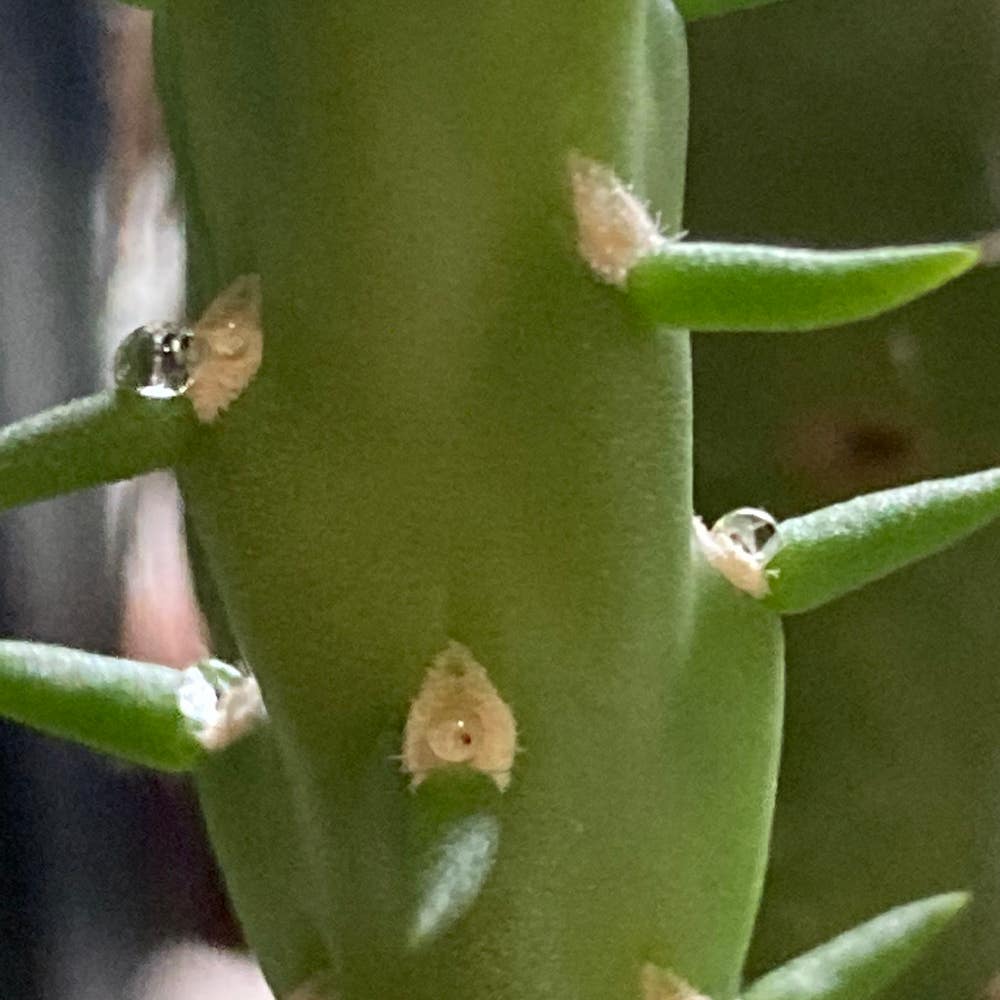
Why Are My Staghorn Cholla Leaves Falling Over?
Cylindropuntia versicolor
By the Greg Editorial Team
Apr 24, 2024•5 min read
This article was created with the help of AI so we can cover more plants for you. May contain errors. See one? Report it here.
Revive your drooping Staghorn Cholla 🌵 with proven tips for a vibrant, healthy cactus!
- Overwatering and underwatering cause yellowing and crispy leaves, respectively.
- Temperature stability and indirect light are key to preventing leaf droop.
- Good drainage and soil health essential to avoid root rot and leaf instability.
Spotting the Signs: When Your Staghorn Cholla is in Distress
🚰 Identifying Overwatering and Underwatering Symptoms
Yellowing leaves? Your Staghorn Cholla might be getting more water than it can handle. Wilting and mushy stems scream overwatering, while crispy, dry leaves hint at a thirst that's not being quenched. Before you water, do the finger test—poke the soil and only water if it's dry.
🌞 Recognizing Environmental Stress Factors
Staghorn Cholla is no fan of the dramatics, especially in temperature. Fluctuations can cause leaves to droop as if in a faint. Dry winds or drought? They can stress your plant out, leaving it looking more defeated than a sun-dried tomato. Keep an eye on the light too; too much sun can turn your Cholla into a crispy critter.
👩🌾 Checking for Physical Damage or Disease
Discoloration or texture changes in stems and roots are your first clues of root rot. If it looks like your Cholla's been through a battle and lost, it's time to act. And remember, while young leaves might lean as they grow, excessive drooping in mature leaves is a red flag waving high and clear.
Getting to the Root: Causes of Leaf Droop in Staghorn Cholla
💧 The Impact of Watering Habits on Leaf Stability
Overwatering is a common misstep, leading to yellowing, wilting, and mushy stems. On the flip side, underwatering can leave your Staghorn Cholla with crispy, dry leaves. It's a delicate dance – water when the soil's dry, not on a schedule.
During the summer blaze, your plant's thirst spikes, necessitating frequent watering, but come winter, it's more about the occasional sip. Always ensure good drainage to prevent root rot; soggy soil is a death sentence for those roots.
🌞 How Light and Temperature Affect Staghorn Cholla Leaves
Too much sun can turn your Staghorn Cholla into a crispy critter, while too little leaves it languishing. Aim for that Goldilocks zone of bright, indirect light. Temperature swings are like a slap in the face to your plant – keep it stable to avoid a droopy disaster.
If your indoor air is drier than a comedian's humor, consider a pebble tray to up the humidity. Your Staghorn Cholla will thank you, and you'll avoid the sad spectacle of leaf drop.
🌱 The Role of Soil Conditions and Root Health
The right soil mix is like a good bed – it's foundational. Your plant's roots need a mix that's just right: well-draining yet moisture-retaining. If your Staghorn Cholla's pot is tighter than a pair of skinny jeans, it's time to size up. Cramped roots can't absorb water and nutrients, leading to a droopy demeanor.
Nutritional deficiencies are the silent killers of leaf stability. It's like your plant is running on empty – without proper nutrients, those leaves will flop faster than a house of cards. Keep the soil nutrient-rich, and you'll have a Staghorn Cholla that stands tall and proud.
Turning Over a New Leaf: Solutions to Prevent Drooping
💧 Fine-Tuning Your Watering Technique
Watering is more art than science. Check the soil moisture before you water—stick a finger in; if it's dry an inch down, it's time to hydrate. Seasonal shifts mean changing habits; water less in winter when your Staghorn Cholla is more dormant than a bear in hibernation.
🌞 Creating the Ideal Light and Temperature Environment
Your Staghorn Cholla craves consistency like a cat demands attention. Bright, indirect light is its jam, and stable temperatures keep it from throwing a fit. Rotate the plant regularly to avoid lopsided growth—it's not trying to win a limbo contest.
🌱 Ensuring Proper Soil and Root Care
Root health is the unsung hero here. Ensure your pot has drainage holes; roots drowning in water is a no-go. Mix in perlite or pumice to keep the soil aerated like a good bottle of wine. And don't forget, repotting is not a one-size-fits-all; upsizing gradually prevents the dreaded root rot.
Proactive Plant Parenting: Long-Term Strategies
💧 Establishing a Watering Schedule That Works
Consistency is your Staghorn Cholla's best friend when it comes to watering. Tailor your schedule to its needs, factoring in the seasonal changes—less is more during the cooler months, and a bit extra during the heat of summer. Use technology to your advantage; set reminders or use a smart irrigation system to avoid the "Oops, I forgot to water the plant" moments.
🌡️ Monitoring and Adjusting Environmental Conditions
Your plant doesn't appreciate surprises. Keep its environment as predictable as your morning coffee routine. Light and temperature shifts should be gradual, not sudden. If your home transforms from a tropical paradise to a polar vortex overnight, don't expect your Staghorn Cholla to throw you a thank-you party. Adjust its spot in your home as needed, always aiming for that sweet spot of indirect, bright light.
🕵️ Regular Health Checks and Maintenance Tips
Act like a plant detective; regular check-ups can prevent a minor issue from becoming a full-blown plant crisis. Inspect the leaves for pests or disease—catching these early can save you a lot of trouble down the line. Dive into the soil occasionally; if it feels as compacted as a packed elevator, it's time to aerate. And don't forget to fertilize, but think of it like seasoning food—just enough to enhance, not overpower.
⚠️ Safety First
This content is for general information and may contain errors, omissions, or outdated details. It is not medical, veterinary advice, or an endorsement of therapeutic claims.
Always consult a qualified healthcare professional before using any plant as food, medicine, or supplement.
Never eat any plant (or feed one to pets) without confirming its identity with at least two trusted sources.
If you suspect poisoning, call Poison Control (800) 222-1222, the Pet Poison Helpline (800) 213-6680, or your local emergency service immediately.
Spotted an error? Please report it here.
Ensure your Staghorn Cholla thrives with perfectly-timed watering 💧 reminders from Greg, tailored to your plant's needs and home environment for peak health and stability.