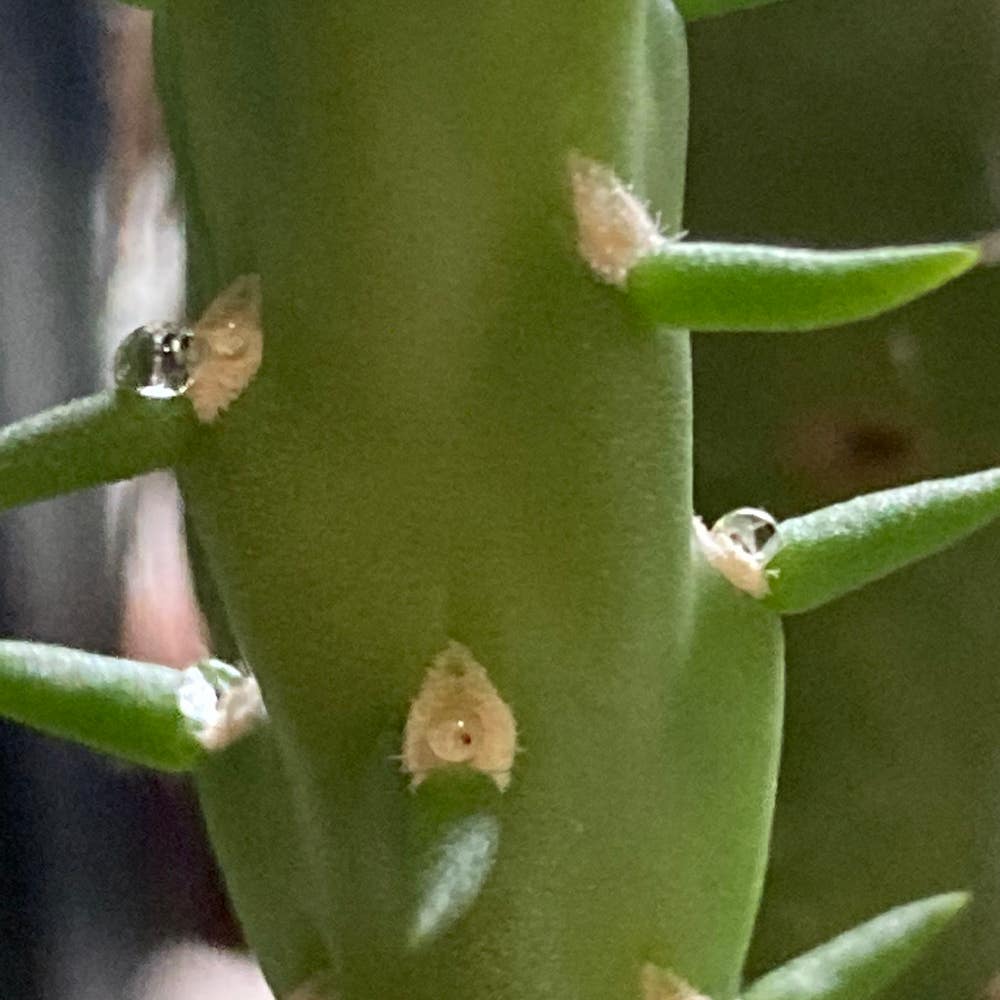
Why Are My Staghorn Cholla Leaves Curling?
Cylindropuntia versicolor
By the Greg Editorial Team
Apr 24, 2024•3 min read
This article was created with the help of AI so we can cover more plants for you. May contain errors. See one? Report it here.
Unravel the mystery of curling Staghorn Cholla leaves and safeguard your desert beauty 🌵.
- 🌵 Tight coils and discoloration signal Staghorn Cholla distress.
- ☀️💧 Balance sunlight and water to prevent leaf curling.
- 🕵️♂️ Regular checks for pests and diseases are essential for plant health.
Spotting the Signs of Trouble
🍃 Visual Clues of Leaf Curling
Staghorn Cholla leaves curling inwards are a visual heads-up, signaling all's not well. These leaves may resemble tight scrolls, a far cry from their natural open form. Look for discoloration or crispy edges, which further indicate stress.
🚩 When to Worry
It's normal for young leaves to exhibit some curl as they grow, but mature leaves spiraling into tight coils are a red flag. A shift from vibrant green to dull hues should raise your alert level. If the leaves feel softer or show spots, it's time to investigate.
Pinpointing the Culprits
🌞 Too Much Sun or Not Enough?
Sunlight is crucial for Staghorn Cholla, but balance is key. Too much sun leads to sunburn, causing leaves to curl as a defense mechanism. Conversely, insufficient light makes leaves reach out and curl, a desperate attempt for more rays. Adjust your plant's location to ensure it receives bright, indirect light, avoiding the harsh midday sun.
🚰 Thirsty or Drowning?
Watering is a delicate dance for Staghorn Cholla. Underwatering makes leaves curl and crisp, a sign they're thirstier than a desert traveler. Overwatering, however, can be just as damaging. Leaves may turn yellow and feel mushy, signaling root rot. Ensure your watering schedule meets the plant's needs and that your potting mix has excellent drainage.
🐜 Uninvited Guests
Pests and diseases love to crash the party. Spider mites and aphids leave leaves curled and damaged. Regular inspections help catch these critters early. If you spot them, isolate the plant and treat with appropriate methods. Diseases can also cause curling; remove affected foliage and improve air circulation to prevent future issues. Remember, a healthy plant is the best deterrent.
First Aid for Curly Leaves
🌞 Adjusting the Cholla's Sun Hat and Blanket
Staghorn Cholla thrives in bright light with warm daytime temperatures and cooler nights. To prevent leaf curling, ensure your plant experiences this natural rhythm. If the leaves are curling due to too much direct sunlight, consider providing filtered light or shade during the hottest parts of the day.
💧 Quenching Thirst the Right Way
Watering is a delicate dance for the Staghorn Cholla. Deep watering is key when the soil's top inch feels dry. Then, patience—wait for the soil to dry out completely before the next watering session. This mimics the desert's boom-and-bust rainfall patterns, keeping roots healthy and leaves flat.
🐜 Evicting Pests and Battling Diseases
Pests and diseases can turn leaves into curly messes. At the first sign of trouble, use neem oil or insecticidal soap to evict pests. For fungal foes, snip off affected areas and consider a copper fungicide, but follow the label closely. Always isolate the plant to stop the spread to your other green friends.
Keeping Leaves Flat and Happy
🌵 Crafting the Perfect Environment
Consistency is your Staghorn Cholla's best friend. To prevent leaf curling, it's crucial to mimic its natural desert habitat. This means providing bright, indirect light and maintaining stable temperatures. Avoid placing your Cholla in locations where temperature fluctuations are common, like near drafty windows or heating vents.
👀 Monitoring and Maintenance
Regular check-ups are the backbone of your cactus's health. Keep an eye out for early signs of distress, such as discoloration or pests. Adjust your care based on what you observe. If you notice leaves starting to curl, consider whether you've strayed from the ideal watering schedule or if the plant is getting too much direct sunlight. Rotate your Cholla periodically to ensure even growth and exposure. Remember, a quick, regular glance can tell you a lot about your plant's well-being.
⚠️ Safety First
This content is for general information and may contain errors, omissions, or outdated details. It is not medical, veterinary advice, or an endorsement of therapeutic claims.
Always consult a qualified healthcare professional before using any plant as food, medicine, or supplement.
Never eat any plant (or feed one to pets) without confirming its identity with at least two trusted sources.
If you suspect poisoning, call Poison Control (800) 222-1222, the Pet Poison Helpline (800) 213-6680, or your local emergency service immediately.
Spotted an error? Please report it here.
Keep your Staghorn Cholla thriving 🌵 by using Greg to monitor sunlight and water, ensuring your plant's leaves stay uncurled and healthy.