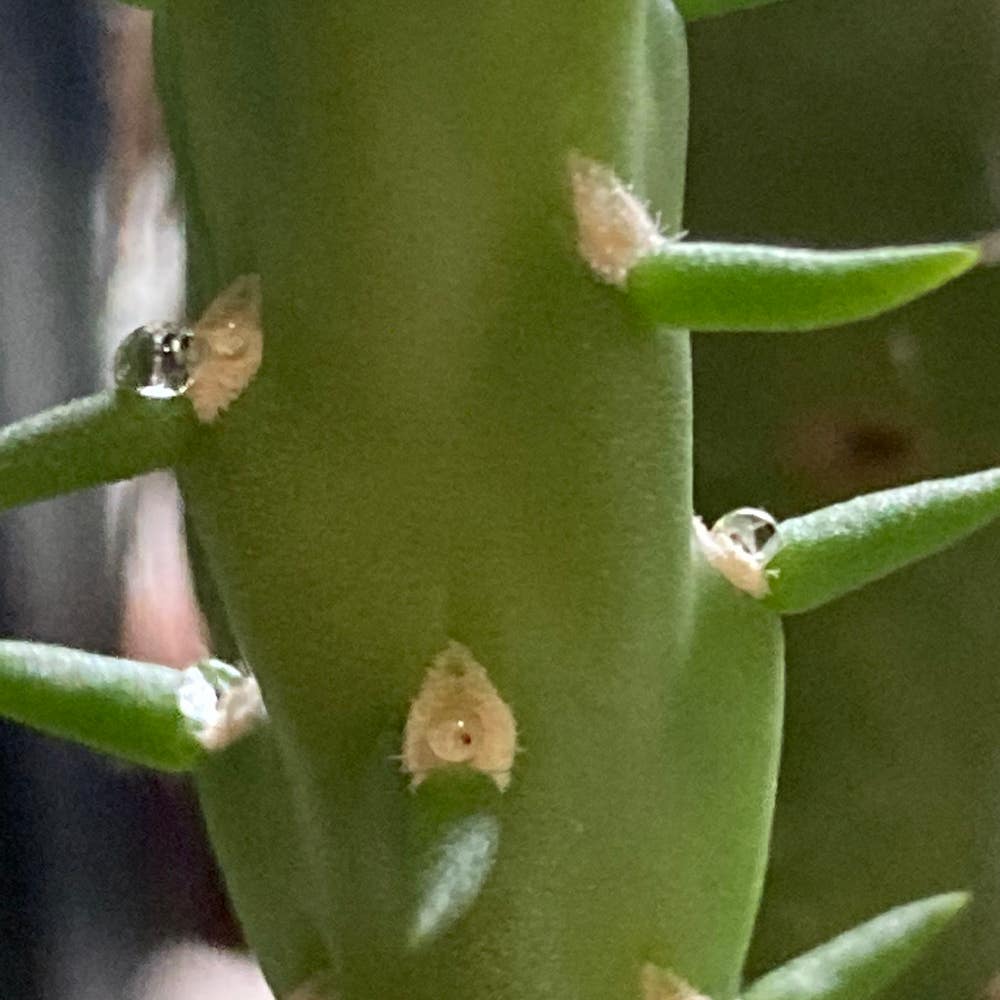
6 Tips for Light Requirements for Your Staghorn Cholla
Cylindropuntia versicolor
By the Greg Editorial Team
Jul 21, 2024•4 min read
This article was created with the help of AI so we can cover more plants for you. May contain errors. See one? Report it here.
Master the art of sunlight for Staghorn Cholla 🌞, and watch your desert beauty bloom indoors and out!
- 🌞 Full sun exposure is key for Staghorn Cholla, with 6-8 hours daily recommended.
- 🌼 Light affects flowering: Ensure proper conditions for Staghorn Cholla to bloom.
- 💡 Use grow lights if needed; full-spectrum LEDs with timers can supplement sunlight.
Optimal Outdoor Lighting
🌞 Sunlight Intensity
Staghorn Cholla, a desert native, demands a light environment that mirrors its natural habitat. Here's what you need to know about the sunlight intensity for these resilient plants:
- Full sun exposure is generally the rule, with these cacti thriving in bright, unfiltered sunlight for most of the day.
- However, in regions with particularly intense sun, especially during summer, some afternoon shade can prevent stress and sunburn.
⏰ Duration and Timing
Timing and duration of light exposure can make a significant difference in the health of your Staghorn Cholla. Keep these pointers in mind:
- Aim for around 6 to 8 hours of direct sunlight daily to maintain robust growth.
- Morning sunlight is ideal as it is less intense than the midday sun, reducing the risk of overheating and dehydration.
- During the hottest parts of the year, consider providing light shade during the afternoon to protect the plant from excessive heat stress.
Indoor Lighting Strategy
Assessing Light Levels 🌞
Determining if your indoor Staghorn Cholla is soaking up enough sun is crucial for its desert spirit to thrive. Start by observing your plant's demeanor. A vibrant, upright posture means it's getting its light fix, while a dull, droopy appearance screams for more. Tools like light meters or smartphone apps can quantify light levels, helping you hit that sweet spot between a sunbath and a shade retreat.
- Look for signs of distress such as leggy growth or faded colors.
- Use a light meter or smartphone app to measure light intensity.
Window Placement 🪟
The right window placement is like prime real estate for your Staghorn Cholla; it can make or break its indoor success. South-facing windows are typically the jackpot, offering ample sunlight without the harsh midday glare. If that's not an option, east or west-facing windows can work with a bit of sheer curtain ingenuity to diffuse the light.
- Place near south-facing windows for consistent light, or use east/west-facing windows with sheer curtains.
- Observe the plant for signs of too much light, like brown leaves, and adjust its distance from the window accordingly.
Light and Flowering
Impact on Blooms
Staghorn Cholla's blooming is a spectacle that hinges on its light exposure. Just like its desert counterparts, it requires a precise balance of sunlight to initiate the flowering process. Too little light and the plant may conserve energy at the expense of blooms; too much, and it risks stress, potentially hindering its floral display.
💡 Light Requirements for Flowering
To coax a Staghorn Cholla into bloom, consider the following light conditions:
- Full sun exposure, ideally between 70°F to 90°F during the day.
- A slight drop in temperature at night to mimic its natural desert climate.
- Seasonal adjustments, providing some shade in the intense summer sun and maximizing light capture during the shorter days of winter.
Remember, a Staghorn Cholla in bloom is a sign of your success in meeting its light needs.
Grow Light Usage
💡 When to Use Grow Lights
- Your Staghorn Cholla may be crying out for a grow light if it's exhibiting signs of light deprivation such as leggy growth, a lackluster appearance, or slowed growth.
- Consider grow lights during the darker months or if your indoor space is dimly lit, like north-facing rooms, to supplement natural sunlight.
💡 Choosing a Grow Light
- Opt for full-spectrum LED grow lights, which are energy-efficient and closely mimic the sun's spectrum, to satisfy your Staghorn Cholla's light needs.
- Position the grow lights overhead at a safe distance to avoid leaf burn, and use a timer to maintain a consistent light schedule.
- Observe your plant's reaction to the grow lights; robust growth and vibrant coloration are indicators of successful lighting conditions. Adjust as necessary—it's all about maintaining a dialogue with your plant.
⚠️ Safety First
This content is for general information and may contain errors, omissions, or outdated details. It is not medical, veterinary advice, or an endorsement of therapeutic claims.
Always consult a qualified healthcare professional before using any plant as food, medicine, or supplement.
Never eat any plant (or feed one to pets) without confirming its identity with at least two trusted sources.
If you suspect poisoning, call Poison Control (800) 222-1222, the Pet Poison Helpline (800) 213-6680, or your local emergency service immediately.
Spotted an error? Please report it here.
Watch your Staghorn Cholla bloom brilliantly 🌵 with Greg's tailored light tracking and custom shade reminders, ensuring just the right amount of sun!