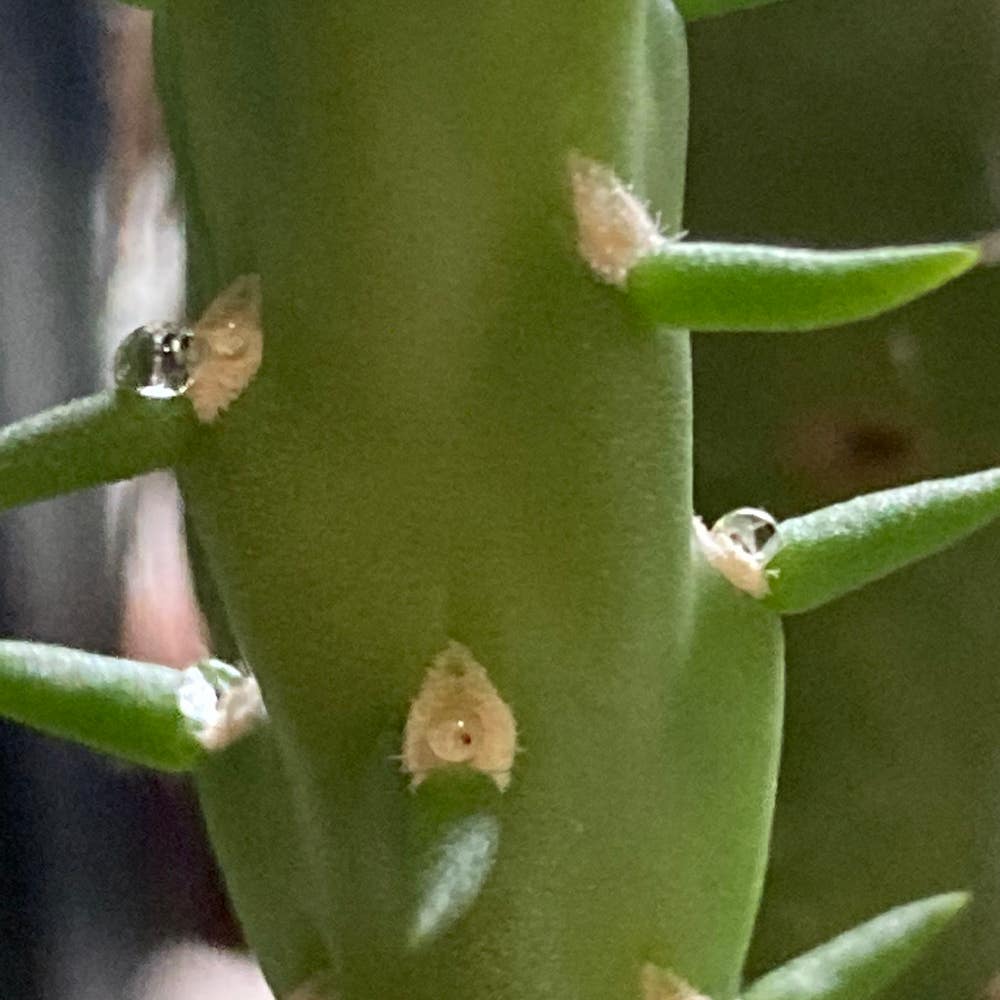
Black Spots on My Staghorn Cholla Leaves
Cylindropuntia versicolor
By the Greg Editorial Team
Apr 24, 2024•5 min read
This article was created with the help of AI so we can cover more plants for you. May contain errors. See one? Report it here.
Banish black spots 🕵️♂️ and boost your Staghorn Cholla's health with this definitive care guide! 🌵
- Black spots hinder photosynthesis, stunting Staghorn Cholla growth.
- Fungal infections, sunburn, physical damage are common causes.
- Early detection and treatment are crucial for plant health.
Spotting the Trouble: Recognizing Black Spots
🕵️ What Do Black Spots Look Like?
Black spots on Staghorn Cholla leaves are visual red flags. They range from tiny dots to larger blotches, often with a distinct edge. Some spots may have a brownish tinge or a peculiar halo, setting them apart from the plant's natural leaf variegation.
🌿 Where Do They Show Up on the Leaves?
These troublemakers prefer the undersides of leaves but don't mind a sunbath on the top surfaces either. They're not picky about location; you'll find them wherever they can get a foothold. Regular inspections are crucial—flip those leaves and examine every nook and cranny.
🌱 How Do They Impact Your Staghorn Cholla?
Black spots are more than unsightly; they're photosynthesis blockers. This can stunt your Cholla's growth, turning a vibrant plant into a lackluster shadow of its former glory. If left unchecked, they can spread, leading to a plant crisis. It's like your cactus is trying to thrive with one arm tied behind its back.
Unearthing the Culprits: Common Causes of Black Spots
🍄 Fungal Foes: Identifying Signs of Infection
Fungal infections are the party crashers of the plant world, leaving black spots as their calling card. Circular lesions or spots with dark margins are telltale signs. If your Staghorn Cholla is throwing a fungal fiesta, you'll notice these spots start small and expand over time. Overwatering and poor air circulation roll out the red carpet for these uninvited guests.
☀️ Sun Scorch: When Too Much Sun is a Bad Thing
Just like a bad tan, sunburn spots on your Staghorn Cholla show up on the sun-facing side. These black spots are the plant's equivalent of a sunburn and are found on areas that receive the most intense rays. If your Cholla is looking like it forgot the sunscreen, it's time to reconsider its sunbathing habits.
💥 Wound Woes: Physical Damage and Its Aftermath
Sometimes, black spots are nothing more than battle scars from physical damage. A bump or scrape can leave a flat, non-spreading mark. These spots don't change shape or size; they're simply cosmetic blemishes. However, they can also be an open invitation to pests or fungal gatecrashers, so keep an eye on these spots.
The Detective Work: How to Diagnose Black Spots
🔍 Examining Your Plant: A Step-by-Step Guide
First things first, sanitize your tools. You wouldn't want to play the spreader in this black spot saga. Next, remove the affected leaves with precision—think surgeon, not lumberjack.
Inspect the plant from every angle. Under the leaves is where the secrets often hide. Check for patterns in the spots; a yellow halo or a sticky residue could be telling.
Deciphering Symptoms: What Are They Telling You?
Now, observe. Are the spots uniform or more like a chaotic paint splatter? This could be the difference between a fungal fiesta and a sunburnt leaf.
Consider the environment—too much water or sun can turn your Staghorn Cholla into a drama queen. If the spots are random, it's likely a cry for help due to environmental stress.
Patterns matter. Nature's got its own Morse code, and it's up to you to crack it. Uniform spots? Think infection. Random patterns? Suspect sun scorch or physical damage.
Still puzzled? Don't just stand there—act. Consult a plant pathologist or hit up a trusted nursery. They're the plant world's version of the detective squad.
Remember, regular inspections are key. Catch those black spots early, and you're a step closer to plant salvation. If you're meticulous, your Staghorn Cholla will thank you with spotless leaves.
Plant Care 101
Choosing the Right Plant for Your Space
When it comes to choosing the right plant for your space, there are a few key factors to consider. You'll want to think about the amount of natural light the area receives, as well as the overall size of the plant. Additionally, consider the level of care and maintenance the plant will require.
Watering and Soil Tips
Proper watering and soil are essential for the health of your plants. Different plants have different watering needs, so it's important to research the specific needs of your plant. Additionally, the type of soil you use can impact the growth and overall health of your plant.
Dealing with Pests and Diseases
Unfortunately, pests and diseases can affect your plants. It's important to be proactive in preventing and addressing these issues to keep your plants healthy and thriving. Keep an eye out for any signs of pests or diseases, and take action as soon as you notice any problems.
Repotting and Pruning
As your plants grow, they may need to be repotted to provide more space for their roots to grow. Additionally, regular pruning can help promote healthy growth and maintain the overall shape of the plant. Understanding the proper techniques for repotting and pruning is essential for the well-being of your plants.
Fortifying Your Cholla: Prevention Strategies
🌱 Cultivating Resistance: Building a Stronger Plant
Consistency is your plant's best friend. Like a well-oiled machine, your Staghorn Cholla needs regular care to build resilience. Balanced fertilization is akin to a nutritious diet, promoting robust health and warding off diseases.
🌿 Environmental Harmony: Adjusting Your Care Routine
Creating the ideal home for your Cholla is about more than just aesthetics. It's about crafting an environment where it can thrive without the threat of black spots. Regular check-ups are crucial; they're like routine health screenings for your plant. Adjust your watering and lighting to mimic the Cholla's natural habitat—too much love in the form of water or sunlight can lead to disaster.
Airflow is another non-negotiable. Stagnant air is a playground for fungal foes. Ensure your plant has enough breathing room, literally. Cleanliness is next; keep your tools and your Cholla's living space spotless to minimize disease transmission.
Lastly, isolation for new plants is a smart move. Think of it as a quarantine to keep potential pests from spreading. It's a simple step that can save you a world of trouble down the line.
⚠️ Safety First
This content is for general information and may contain errors, omissions, or outdated details. It is not medical, veterinary advice, or an endorsement of therapeutic claims.
Always consult a qualified healthcare professional before using any plant as food, medicine, or supplement.
Never eat any plant (or feed one to pets) without confirming its identity with at least two trusted sources.
If you suspect poisoning, call Poison Control (800) 222-1222, the Pet Poison Helpline (800) 213-6680, or your local emergency service immediately.
Spotted an error? Please report it here.
Keep your Staghorn Cholla thriving 🌵 by using Greg to schedule regular leaf inspections and connect with experts for spot-on advice at the first sign of trouble.