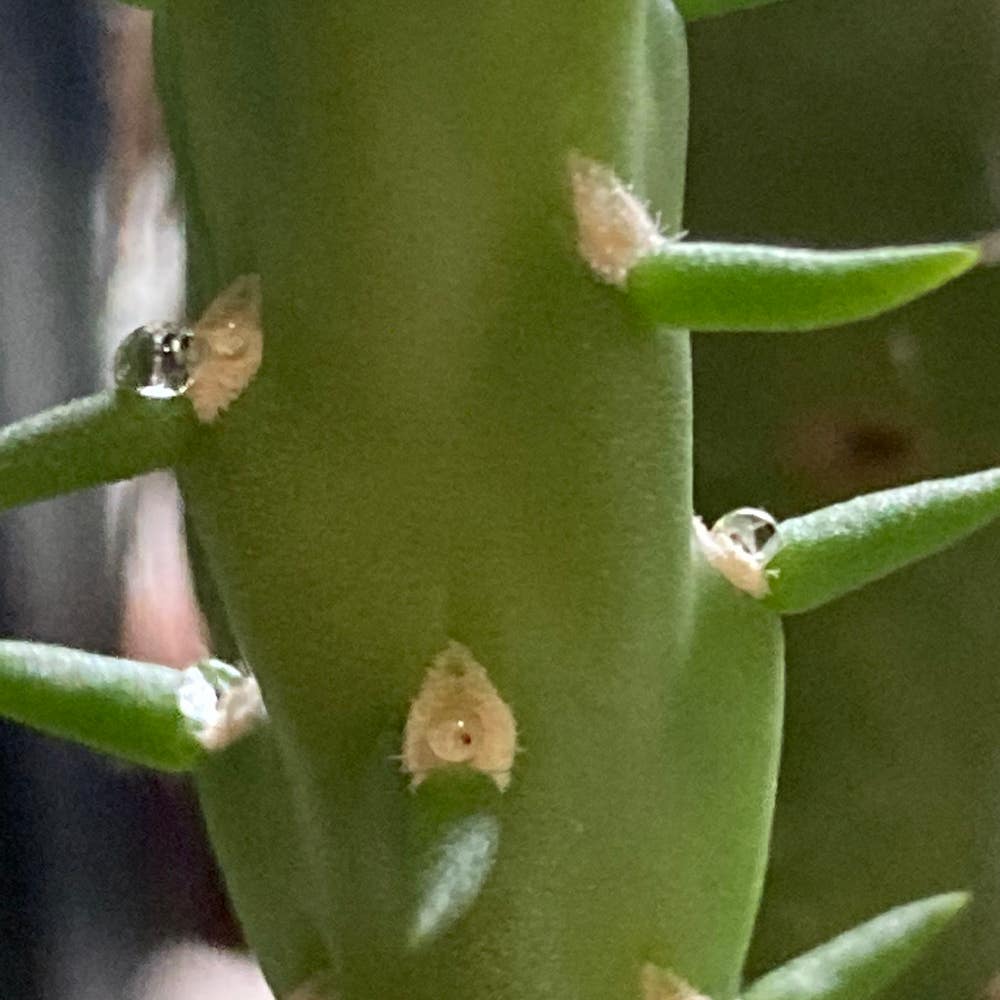
How Can You Tell If A Staghorn Cholla Is Dying?
Cylindropuntia versicolor
By the Greg Editorial Team
Apr 24, 2024•4 min read
This article was created with the help of AI so we can cover more plants for you. May contain errors. See one? Report it here.
Revive your Staghorn Cholla 🌵 and prevent its demise with these essential, life-saving plant care tips!
- Soft stems, discoloration signal overwatering; let soil dry to save your Cholla.
- Brown patches or bleached areas mean too much sun; opt for bright, indirect light.
- Blackened, squishy roots indicate root rot; remove affected parts and repot.
When Water Works Against You
🌊 Over-watering Woes
Soft stems and discoloration are the distress signals of an overwatered Staghorn Cholla. If the soil feels like a swamp, you've definitely overdone it.
🔄 Turning the Tide
To save your soggy Cholla, stop watering and let the soil dry out. Check the soil an inch deep; if it's damp, your watering can needs a time-out. In severe cases, repotting into fresh, well-draining soil is your plant's lifeline.
The Thirsty Cholla
A dehydrated Staghorn Cholla will have wilting leaves and bone-dry soil. It's a plant's way of begging for a drink without saying a word.
💧 Quenching the Thirst
Rehydrate your Cholla by watering deeply but infrequently. Ensure the soil is dry before you water again. It's all about finding that sweet spot of moisture without creating a mini flood.
Light and Temperature: The Balancing Act
🌞 Too Much Sun, Too Little Shade
Scorching Symptoms
Excessive sunlight can turn your Staghorn Cholla into a crispy critter. Brown patches or a bleached look are your plant's version of a sunburn. If the stems start to look more like they belong in a fryer than in your garden, you've got a problem.
Shady Solutions
To prevent your Cholla from becoming a desert casualty, aim for bright but indirect light. A sheer curtain might just become your plant's best friend, diffusing those harsh rays. Alternatively, reposition it to avoid the sun's midday smackdown.
🥶 Chilly Cholla Challenges
Cold Symptoms
If your Cholla is shivering, it's not going to thrive. Signs of cold stress include slow growth and a general look of dejection. If it's too cold, your Cholla might as well be sending out smoke signals for help.
Keeping Warm
Your Cholla's not a fan of the cold—keep it cozy. Steer clear of drafty windows and aim for a steady temperature that echoes its natural, toasty desert origins. Think of it as creating a mini desert oasis, minus the sand and camels.
Uninvited Guests: Pests and Pathogens
🐜 Pests on the Prowl
Aphids, mealybugs, and spider mites are the bane of a Staghorn Cholla's existence. These pests suck the life out of your plant, leaving it weak and wilted. Check the undersides of leaves and stems for these sap-sucking menaces. If you spot a buffet line of bugs, it's time for action.
🦟 Bug Bites and Battles
Isolate the affected plant to prevent a full-blown infestation. A strong water spray can dislodge the less tenacious pests. For the stubborn ones, insecticidal soap or neem oil can be your green gauntlet. Throw it down.
🛡️ Pest Prevention
Prevention is your Cholla's best armor. Maintain clean surroundings and avoid overwatering—damp conditions are a red carpet for pests. Introduce beneficial predators like ladybugs to keep the pest population in check.
Fungus Among Us
Mold and fungus are the silent assassins of the plant world. They sneak in with a musty odor and leave your Cholla with unsightly spots or a powdery coating. Poor airflow and excess moisture are their allies.
🍄 Moldy Manifestations
Black or brown spots with a yellow halo signal a fungal attack. If you find fuzzy growths or a flour-like substance on your Cholla, it's time to mobilize your defenses. Cut out the affected areas with sterilized tools to stop the spread.
🌿 Fungus Fix
Improve air circulation and reduce humidity to make your Cholla's environment hostile to fungi. If the invasion persists, a targeted fungicide might be necessary. But remember, the best offense is a good defense—keep conditions dry and airy to prevent future fungal gatecrashers.
Root of the Problem: Root Rot
🚨 Rotten Telltales: How to spot root rot before it's too late
Root rot in Staghorn Cholla sneaks up like a thief in the night. Blackened roots, squishy to the touch, are the main culprits. If the roots are holding onto soil like a lifeline, they're crying out for help. Above ground, if your Cholla's got a case of the droops or its skin is turning a sickly yellow, it's waving a red flag. A foul smell from the soil is the plant's S.O.S. signal.
🩹 Root Recovery: Steps to rescue your Cholla from root rot
First things first: stop watering. Gently unpot your Cholla and shake off the excess soil. If the roots look like they've seen better days, it's time to play surgeon. Sterilize your shears and cut away the rot, showing no mercy. Match the top pruning to the amount of root lost to keep things balanced. Repot in a well-draining mix, and resist the urge to water right away. Let the roots breathe and recover. Remember, a Cholla prefers tough love—water sparingly and only when the soil is bone dry.
⚠️ Safety First
This content is for general information and may contain errors, omissions, or outdated details. It is not medical, veterinary advice, or an endorsement of therapeutic claims.
Always consult a qualified healthcare professional before using any plant as food, medicine, or supplement.
Never eat any plant (or feed one to pets) without confirming its identity with at least two trusted sources.
If you suspect poisoning, call Poison Control (800) 222-1222, the Pet Poison Helpline (800) 213-6680, or your local emergency service immediately.
Spotted an error? Please report it here.
Ensure your Staghorn Cholla avoids the perils of overwatering and pests by following a custom care schedule 📅 with Greg, tailored to keep it healthy and resilient.