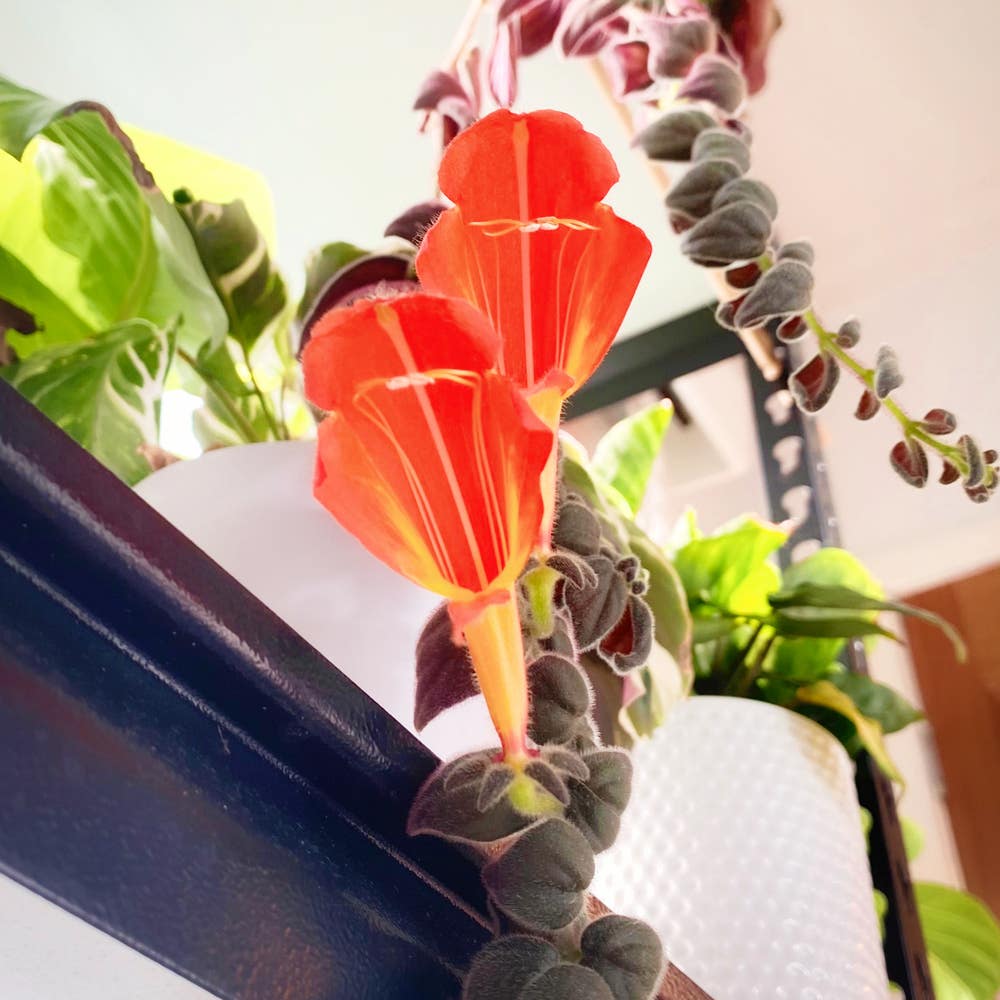
🐬 How to Propagate Your Dancing Dolphin
Columnea microcalyx
By the Greg Editorial Team
Feb 11, 2024•6 min read
This article was created with the help of AI so we can cover more plants for you. May contain errors. See one? Report it here.
Multiply your Dancing Dolphin plants 🌿 with these foolproof propagation techniques for a thriving indoor oasis!
- Choose vibrant stems and make angled cuts below nodes for successful propagation.
- Root cuttings or air layer, and divide during dormancy for more plants.
- Post-propagation care is crucial: well-draining soil, indirect light, and patience.
Snip & Root: Stem Cutting Success
🌱 Choosing Your Champion Stem
In the pursuit of propagation, selecting a robust stem is paramount. Look for a stem that's a beacon of health: vibrant green, sturdy, and unblemished. Leaves should radiate vitality, not just exist.
✂️ The Perfect Cut
Armed with disinfected shears, aim for a 4-6 inch segment just below a node—this is your root's future birthplace. A clean, angled cut here maximizes potential for growth. Let the cutting callous for a few days; it's like a pre-rooting pep talk.
🌱 Rooting Your Cuttings
The rooting arena: soil or water? Soil offers a stable start, moist and nurturing. Alternatively, water rooting provides a clear view of progress, changing the liquid every few days to keep oxygen flowing. Either way, patience is your silent partner in this dance of growth.
Air Layering: Aerial Roots Adventure
🌱 The Lowdown on Air Layering
Air layering is the propagation ninja move for your Dancing Dolphin plant. It's a slick way to coax roots into existence while the stem is still living it up on the parent plant. This technique is a lifesaver for those gangly plants that have lost their lower leaves and are looking a bit too much like a twiggy mess.
Step-by-Step Air Layering
- Select a Healthy Stem: Eye up a robust stem on your Dancing Dolphin. You're looking for one with some meat on its bones, not a flimsy twig.
- Make the Cut: With a clean, sharp blade, notch the stem about halfway through. Angle it upwards to prevent water from getting too cozy and causing rot.
- Rooting Hormone: Optional, but a dab of rooting hormone is like a turbo boost for root growth.
- Moss It Up: Swaddle the cut in moist sphagnum moss. Think of it as a comfy bed for the roots to kick back in.
- Plastic Wrap: Envelop that moss in plastic wrap to keep the humidity just right. Secure it with twist ties or string, but don't suffocate it – roots need to breathe.
- Patience, Grasshopper: Roots should start showing off in about 6-10 weeks. When you've got a good root ball, it's time to cut the umbilical cord. Snip the stem below the roots and pot it up in a well-draining mix.
- Aftercare: Go easy on the water for your new plant. It's like a newborn – too much too soon is a no-go. Keep it light until you see new growth popping up.
Splitting Up: Division with Precision
🕰️ When to Divide Your Dancing Dolphin
Timing is crucial when dividing your Dancing Dolphin plant. The best period for division is during the plant's dormant phase, typically in early spring or fall. This allows the plant to recover and establish itself before the stress of extreme temperatures. Ensure the plant is well-hydrated a few days before division, making the roots more flexible and easier to work with.
🛠 Division Steps
Preparing to Divide
First, water your Dancing Dolphin plant a couple of days before the division to ease the process. Gather your tools: sharp knife or shears, new pots, and fresh potting mix.
The Division Process
- Remove the plant from its pot carefully, shaking off excess soil to expose the root ball.
- Identify natural divisions in the root ball where the plant can be separated with minimal damage.
- Cut or gently pull apart the divisions, ensuring each section has a fair amount of roots and foliage.
- Pot each division into its own container with fresh soil, tamping down lightly to eliminate air pockets.
Aftercare
Immediately after potting, water the new divisions thoroughly. Place them in a location with indirect light and avoid fertilizing until signs of new growth appear. Monitor soil moisture closely as the new plants establish their root systems.
Post-Propagation Care: The First Dance
🌱 Settling In
After the propagation hustle, it's time to nurture your Dancing Dolphin's roots. Choose a pot with ample drainage and cozy it up in a well-draining mix—peat moss, perlite, and compost are your go-tos. Think of it as a plush, breathable mattress for your plant's underground parts.
🌿 Early Days Care
Watering is your new ritual; aim for moist soil, but avoid a swamp situation. Use the topsoil dryness test—when the top inch feels like a parched desert, it's time to quench. Bright, indirect light is your plant's new best friend, shielding it from the harsh reality of direct sunbeams. Hold off on the fertilizer fiesta; let the roots find their groove first. Keep an eye out for new growth—it's the ultimate plant high-five.
Propagation Pitfalls: Troubleshooting Tips
🚨 Spotting the Signs
In the propagation game, vigilance is your best friend. Yellowing leaves? Could be a distress signal. Stunted growth? Your plant's way of saying it's not happy. These are the red flags you want to catch early, before your Dancing Dolphin's performance turns into a flop.
🛠 Quick Fixes
🚰 Drainage Drama
Got a waterlogged plant? Check for drainage holes. No escape route for excess water is like a pool party without a bathroom—messy and uncomfortable. Mix in some perlite or sand to your soil to get that water flowing through.
🌱 Root Rot Rumble
Roots looking like soggy cereal? Time for a pot switcheroo. Fresh soil, a snip of the rotten bits, and a new home with proper drainage can turn the tide on root rot.
🌞 Light Laments
If your plant's throwing shade, it's craving sunlight. Find a brighter spot, but dodge the midday sunburn. Grow lights can be a solid Plan B, a disco ball for your Dolphin's roots.
🐜 Pest Problems
Bugs crashing the party? Show them out with neem oil or insecticidal soap. Pests are clingy guests; best to deal with them before they settle in.
🍽 Nutrient Nudges
Neglected the fertilizer? Your plant's hangry. Get on a consistent watering and feeding schedule, but don't drown or overfeed—think tapas, not an all-you-can-eat buffet.
❄️ Temperature Tantrums
Wilting like a forgotten salad? Might be too cold. Move your cuttings to a warmer spot—think cozy, not tropical.
Remember, plants need time to adjust and recover. Rushing them is like expecting a newborn to run a marathon. Patience isn't just a virtue; it's the secret sauce in the propagation recipe.
⚠️ Safety First
This content is for general information and may contain errors, omissions, or outdated details. It is not medical, veterinary advice, or an endorsement of therapeutic claims.
Always consult a qualified healthcare professional before using any plant as food, medicine, or supplement.
Never eat any plant (or feed one to pets) without confirming its identity with at least two trusted sources.
If you suspect poisoning, call Poison Control (800) 222-1222, the Pet Poison Helpline (800) 213-6680, or your local emergency service immediately.
Spotted an error? Please report it here.
Propagate your dancing dolphins 🌱 with confidence as Greg guides you through each step, from cutting to rooting, tailored to your home's conditions for flourishing new growth.