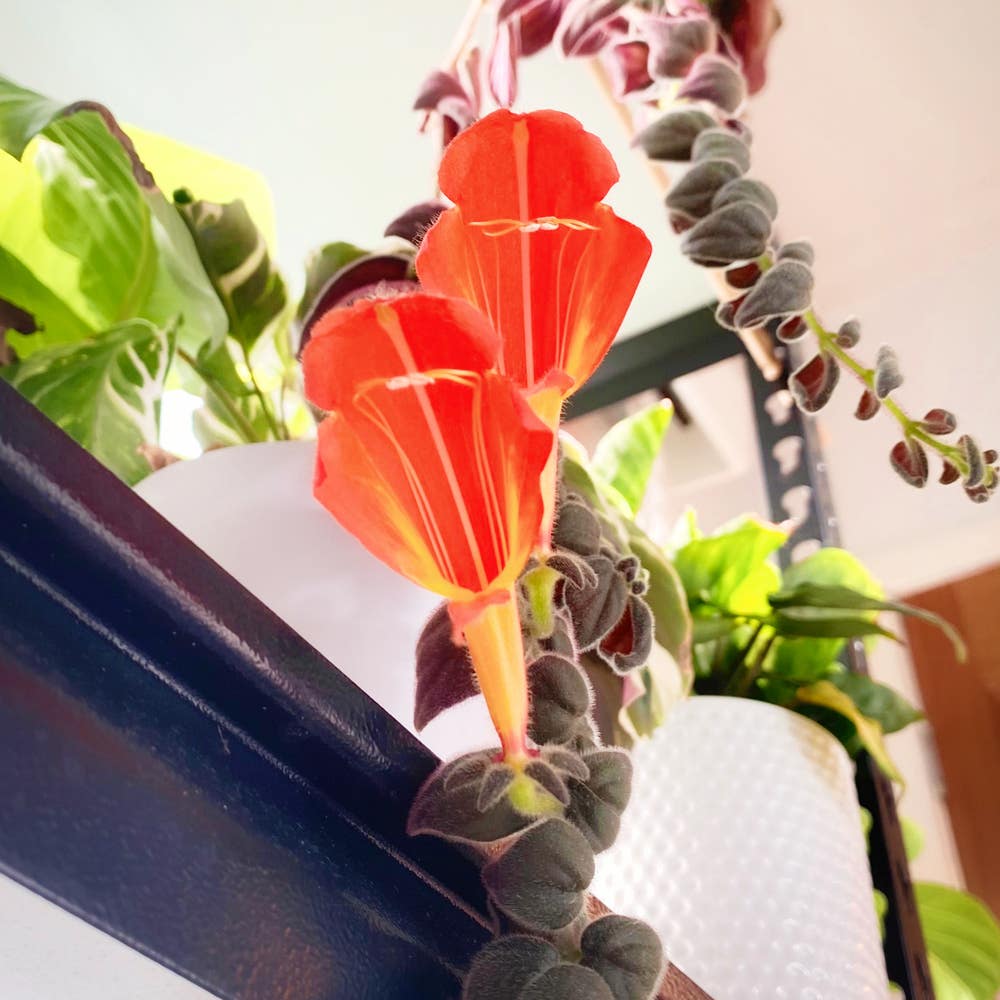
Should I Repot My Dancing Dolphin? 🐬
Columnea microcalyx
By the Greg Editorial Team
Feb 11, 2024•4 min read
This article was created with the help of AI so we can cover more plants for you. May contain errors. See one? Report it here.
Keep your Dancing Dolphin plant's groove alive 🌿—discover the signs and steps for timely repotting!
- 🕵️♂️ Roots peeking out? Time to consider repotting your Dancing Dolphin.
- 🌱 Stunted growth and droopy leaves signal the need for a new pot.
- 🏺 Choose terracotta, ceramic, or plastic pots—avoid metal and glass without drainage.
Spotting the Tell-Tale Signs to Repot
🌱 Root clues: When roots take the stage
Roots peeking out of the pot's drainage holes? That's your Dancing Dolphin's way of waving a white flag. It's cramped and needs a new home. If you're seeing a root spectacle at the bottom, it's time to repot.
💧 Thirsty plant, dry drama: Watering woes as a repotting cue
Is your watering routine feeling like a pointless endeavor? When water zips through the pot without pausing, or if the soil dries out faster than a gossip spreads, your plant is screaming for a space upgrade.
🌱 Slowing down the dance: Recognizing stunted growth
When your Dancing Dolphin's growth hits a wall, it's not just being lazy. It's a subtle SOS. If you notice fewer blooms or your plant's leaves look more downtrodden than a Monday morning, it's time to consider giving it a new, roomier pot.
Choosing the Right Pot: Material Matters
🌱 Terracotta vs. Ceramic vs. Plastic: The Great Debate
Terracotta is the breathable choice, allowing air and moisture to pass through its walls, which helps prevent root rot. However, its porous nature means more frequent watering, and it's a heavyweight that can crack under pressure. Ceramic pots, the terracotta's glitzy siblings, offer less breathability due to glazing but keep soil moist for longer. They're prone to breakage, so handle with care. Plastic pots are the lightweights—easy to move and less breakage-prone. They retain moisture well, which can be a blessing for forgetful waterers or a curse if overwatering is your vice.
When Pots Turn Problematic: Materials to Avoid for Your Dancing Dolphin
Metal pots can cook or chill your plant's roots, depending on the weather, while glass containers often lack drainage, creating a soggy mess. Always opt for pots with drainage holes to avoid waterlogged soil. Remember, the right pot is a balance of form and function, ensuring your Dancing Dolphin continues to thrive.
The Repotting Rendezvous: A Step-by-Step Dance
🌱 Prepping the Stage: Selecting Soil and a New Pot
Before the big shuffle, choose wisely. Your Dancing Dolphin deserves a pot that’s just one size up—room to grow, but not drown. Terracotta is the go-to; it breathes like cotton underwear. As for soil, grab a mix that drains faster than a sink in a spy movie. Think cactus mix, with a dash of perlite for extra aeration.
🌿 The Main Event: Gently Transitioning Your Plant
It’s game time. Water lightly before the move; it loosens up the roots like a good stretch. Tilt and tap the pot to encourage your plant to slide out. No yanking—this isn’t a tooth extraction. If the roots are circling like they’re chasing their own tail, it’s a clear sign they needed this move yesterday.
🌱 Inspecting the Roots: What to Look for and How to Handle
Roots are the heart of the operation. Gently tease them apart if they’re tangled like last year’s Christmas lights. Snip the dead ends—only the dead ones. Think of it as a trim at the salon, not a full-on haircut. Place your plant in the new pot, ensuring it’s not sitting too high or too low, like Goldilocks’ porridge, it has to be just right. Fill in the sides with your well-draining soil, but don’t pack it down like you’re stuffing a turkey. Water thoroughly to settle the soil and give your Dancing Dolphin the spa treatment it deserves.
Post-Repotting Care: The Encore Performance
💦 Hydration Harmony: Watering After the Big Move
After repotting, watering is not just routine—it's a revival. Your Dancing Dolphin has just undergone the equivalent of plant surgery, and it's parched. Immediately after the repot, give it a drink that reaches all the fresh soil, ensuring even moisture without creating a swamp. Then, enter into a rhythm; keep the soil consistently moist but not waterlogged. This is the hydration sweet spot that will help your plant recover and flourish.
🌅 Settling In: Light and Temperature Tips for a Happy Plant
Light and temperature are the dance floor for your Dancing Dolphin's post-repotting performance. Find a cozy spot with bright, indirect light—direct sunlight is the party crasher you don't want. As for temperature, think stable and comfortable. Avoid placing your plant in drafty areas or next to heat sources. This isn't the time for your plant to weather a climate rollercoaster. Keep it in its comfort zone, and you'll see your Dancing Dolphin settle in and start to grow with confidence.
⚠️ Safety First
This content is for general information and may contain errors, omissions, or outdated details. It is not medical, veterinary advice, or an endorsement of therapeutic claims.
Always consult a qualified healthcare professional before using any plant as food, medicine, or supplement.
Never eat any plant (or feed one to pets) without confirming its identity with at least two trusted sources.
If you suspect poisoning, call Poison Control (800) 222-1222, the Pet Poison Helpline (800) 213-6680, or your local emergency service immediately.
Spotted an error? Please report it here.
Ensure your Dancing Dolphin thrives in its new home by using Greg's tailored alerts 🌿 to nail the timing for a seamless repotting experience.