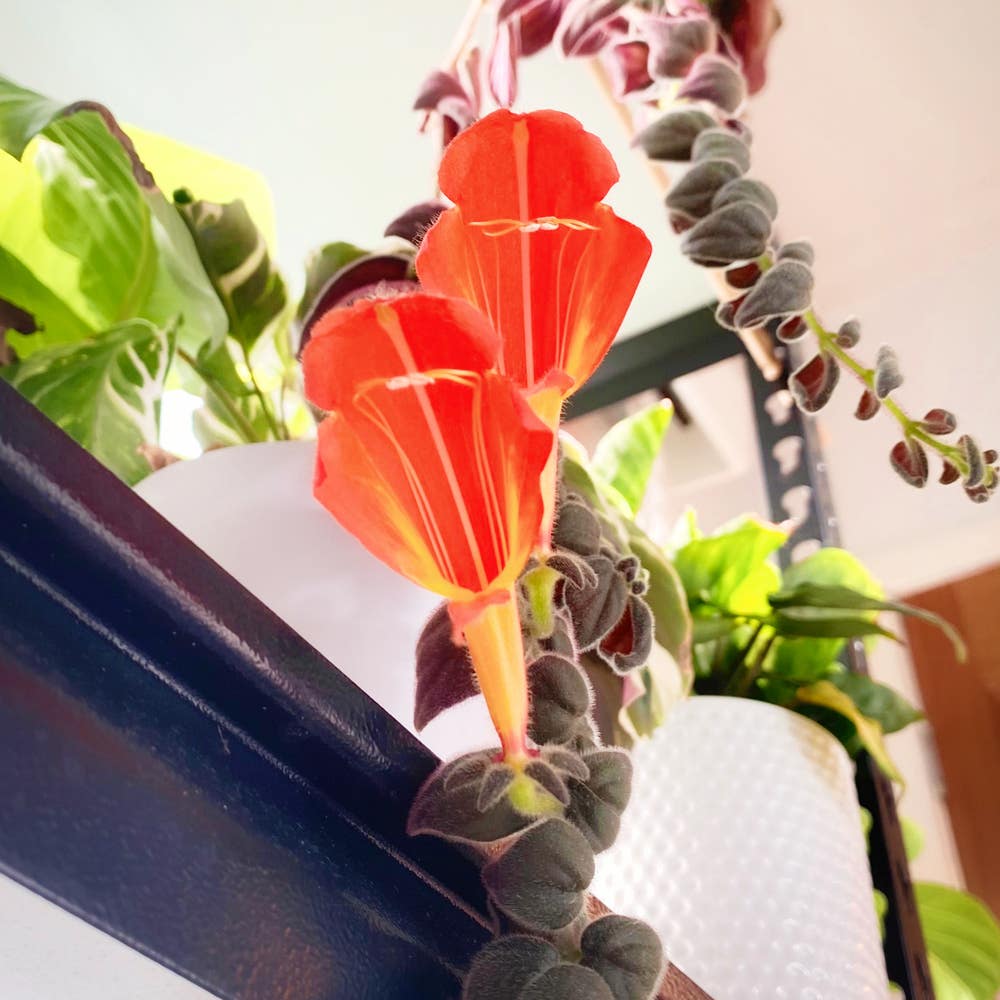
🐬 Fertilizing My Dancing Dolphin
Columnea microcalyx
By the Greg Editorial Team
Feb 11, 2024•4 min read
This article was created with the help of AI so we can cover more plants for you. May contain errors. See one? Report it here.
Nurture a blooming 🌸 Dancing Dolphin with the right fertilizer mix and timing!
- N-P-K ratio matters for Dancing Dolphin's health and blooming.
- Fertilize every 2-4 weeks during growth; less in dormant phase.
- Watch for over-fertilization signs, like yellow leaves and crusty soil.
Choosing the Right Fertilizer for Your Dancing Dolphin
💧 Understanding the N-P-K Ratio
Nitrogen (N), phosphorus (P), and potassium (K) are the trinity of plant nutrition, each playing a unique role in your Dancing Dolphin's health. Nitrogen is the leafy growth champion, phosphorus is the bloom booster, and potassium is the overall health guru. For a blooming bonanza, you'll want a fertilizer that's not too heavy on nitrogen.
🌱 Liquid vs. Slow-Release vs. Organic Options
Liquid fertilizers are like a shot of espresso for your plant—quick and potent. They're great for a fast nutrient boost but can overwhelm your plant if you're heavy-handed. Slow-release fertilizers are the marathon runners, providing a steady supply of nutrients over time, promoting consistent growth without the risk of nutrient burn. Organic options, like worm compost or fish emulsion, offer a buffet of benefits, improving soil health while feeding your plant. Each type has its place, but it's all about matching the right one to your Dancing Dolphin's rhythm.
Timing is Everything: When to Fertilize
⏰ During the Growing Season
Fertilize your Dancing Dolphin plant every two to four weeks during spring and summer. This is the plant's prime growth period, and it needs consistent nutrients to support its vigorous development.
🛌 When the Dance Slows Down: The Dormant Phase
In the dormant phase, typically fall and winter, reduce fertilization. Your Dancing Dolphin is resting, not actively growing, so it requires fewer nutrients. Fertilize once every six to eight weeks, or even less, depending on the plant's response.
The Fertilizing Tango: How to Apply Fertilizer
💧 Step-by-Step Fertilizer Application
Mixing your Dancing Dolphin's fertilizer is like crafting a bespoke drink for a discerning guest. It's essential to dilute the solution according to the instructions—think bartender precision. A common approach is to use a half-strength mixture, which typically means combining equal parts water and fertilizer. This prevents the nutrient overload that can stress your plant.
To apply, gently pour the diluted fertilizer at the base of your Dancing Dolphin, avoiding the leaves to prevent potential chemical burn. If you're using a watering can, ensure it's well mixed and apply with care, as if you're seasoning a fine dish.
Frequency and Quantity
Your Dancing Dolphin's appetite for nutrients will vary. During the growing season, a more frequent feeding schedule is beneficial. This could mean fertilizing as often as every two weeks. However, always observe your plant's response and adjust accordingly. If you notice signs of over-fertilization, such as leaf burn or stunted growth, it's time to cut back.
In the dormant phase, reduce the frequency significantly. Your plant is resting, not running a marathon. A light feeding every month or two should suffice. Remember, overindulgence can be as harmful as neglect, so when in doubt, underdo it.
Spotting Trouble: Over-Fertilization and Its Fixes
🚨 Recognizing the Signs of Too Much Love
Your Dancing Dolphin plant is a resilient performer, but even the best dancers can stumble with too much support. Over-fertilization is like an overzealous back-up dancer — it can throw off the whole routine. Look for yellowing leaves or brown tips; they're the plant's way of waving a red flag. A crusty soil surface is a tell-tale sign of excess fertilizer salts. And if you spot stunted growth or a lack of blossoms, despite your diligent care, you might be dealing with nutrient overload.
💊 The Recovery Steps
Caught in the act of over-loving your plant with fertilizer? Don't panic. First, remove any visible salt crust from the soil surface. Then, flush the soil with water to wash away excess nutrients—think of it as a root detox. Hold off on further fertilization until your plant has forgiven you and shows signs of recovery. Remember, in the plant world, tough love sometimes means doing less. If the situation is dire, consider a soil swap or repotting to give your Dancing Dolphin a fresh start. Moving forward, dial back the enthusiasm and dilute your fertilizer to half-strength to prevent a repeat performance.
⚠️ Safety First
This content is for general information and may contain errors, omissions, or outdated details. It is not medical, veterinary advice, or an endorsement of therapeutic claims.
Always consult a qualified healthcare professional before using any plant as food, medicine, or supplement.
Never eat any plant (or feed one to pets) without confirming its identity with at least two trusted sources.
If you suspect poisoning, call Poison Control (800) 222-1222, the Pet Poison Helpline (800) 213-6680, or your local emergency service immediately.
Spotted an error? Please report it here.
Ensure your Dancing Dolphin thrives with just the right nutrients by following custom fertilizing reminders 🌿 from Greg, tailored to your plant's unique needs and seasons.