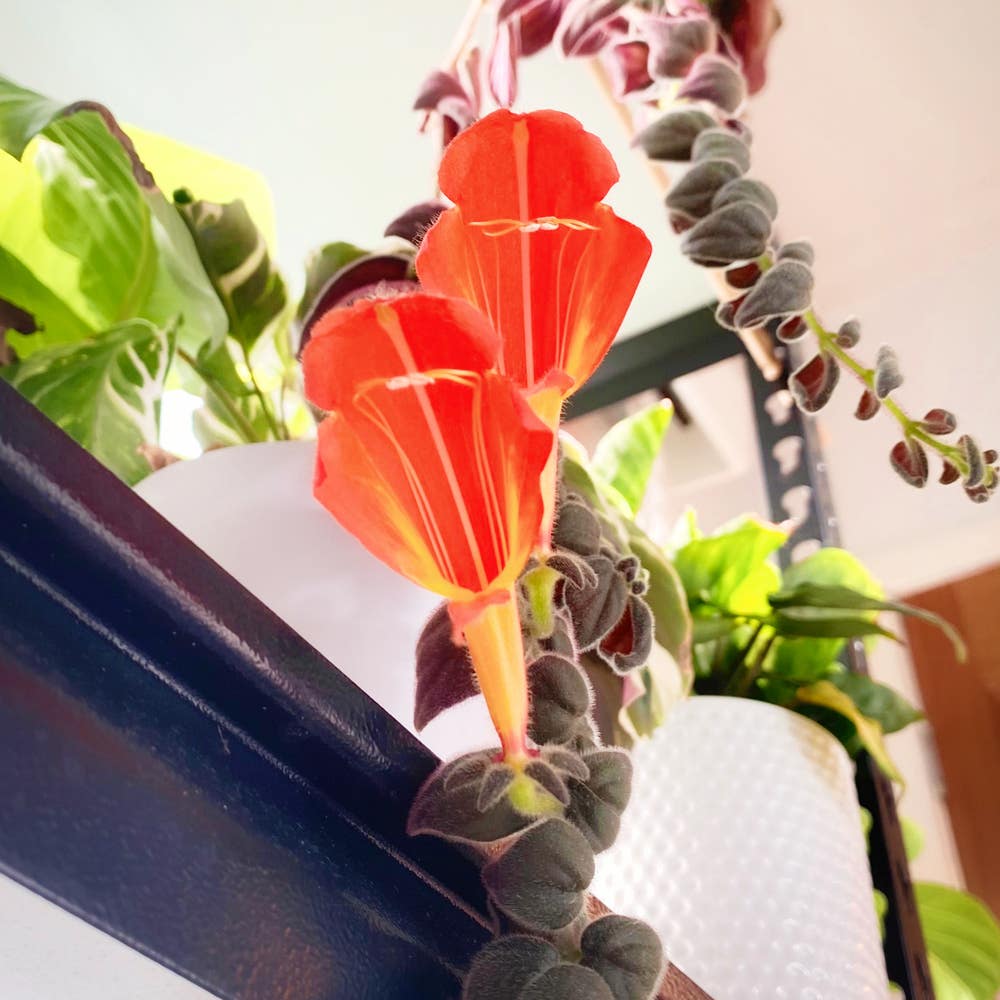
🐬 Is My Dancing Dolphin Getting Too Much Direct Sunlight?
Columnea microcalyx
By the Greg Editorial Team
Feb 11, 2024•4 min read
This article was created with the help of AI so we can cover more plants for you. May contain errors. See one? Report it here.
Shield your Dancing Dolphin 🐬 from sunburn and keep it dancing with these radiant care tips! ✨
- Wilting and discoloration indicate too much direct sunlight.
- Bright, indirect sunlight for 12-14 hours is ideal for Dancing Dolphins.
- Relocate and use sheer curtains to protect from sun overexposure.
Spotting the Signs of Too Much Sun
🌞 Telltale Symptoms of Overexposure
Wilting or leathery leaves are your Dancing Dolphin's way of waving a white flag. If you spot yellowing leaves, it's not trying to change its style—it's stressed. Brown patches? That's the plant equivalent of a bad sunburn. And when the vibrant colors start to fade, it's a sign that your plant's pigments are surrendering to the sun's might.
Quick Fixes for Sun-Struck Plants
If your Dancing Dolphin looks like it's had one too many in the sun, relocate it to a shadier spot, stat. Water it well, but don't drown your sorrows—or your plant's. Consider a sheer curtain to serve as a sunscreen for your leafy friend. Keep an eye on the new growth; it should look healthy, not like it's still reeling from a day at the beach.
Dancing Dolphin's Sunlight Sweet Spot
🌞 Ideal Lighting Conditions
The Dancing Dolphin plant flourishes in a delicate balance of light and shade. To mimic its natural habitat, aim for a spot that offers bright, indirect sunlight. This is the kind of light found near an east or west-facing window, where the sun's rays are filtered through a medium like sheer curtains or partially shaded by outdoor foliage.
Duration and Intensity
Duration of light exposure is just as crucial as the quality. Your Dancing Dolphin should enjoy a steady 12 to 14 hours of light each day. This ensures robust growth without the risk of scorching. As for intensity, it's a fine line; too direct, and you risk leaf burn, too dim, and you may notice a lackluster plant. Keep it one meter away from a south-east facing window with a sheer curtain to hit the sweet spot. Adjust this setup as the seasons change to maintain the perfect light dance for your Dolphin.
Windows and Hemispheres: Navigating the Sun's Path
💡 Understanding Window Orientation
South-facing windows are the sunbathing hotspots for your Dancing Dolphin, especially if you're in the Northern Hemisphere. They're like the beachfront property of the plant world—prime real estate for maximum light exposure. But beware, this can lead to a sunburn for your leafy friend if not monitored.
North-facing windows, on the other hand, are the introverts of window orientations. They offer a consistent, gentle light that won't overwhelm your plant. It's like a steady, reliable friend that's always there but never too intense.
🌍 Hemisphere Hints
If you're in the Southern Hemisphere, flip the script. Your north-facing windows become the sun-drenched stages, potentially too intense for the Dancing Dolphin's liking. East-facing windows greet the day with a gentle morning sun, making them a safe bet for a softer touch of light without the risk of scorching.
Remember, as the Earth tilts with the seasons, your plant's needs shift too. It's a dance with the sun, and you're leading. Keep an eye on the sky and adjust your plant's position with the seasons—your Dancing Dolphin will thank you with healthy growth.
Shielding Your Dolphin from the Sun's Gaze
🎨 Creative Shading Techniques
Sheer curtains are your Dancing Dolphin's best friend. They act as a gentle filter, softening the sun's intensity without depriving your plant of its life-giving rays. Think of them as a plant's version of sunglasses, providing a cozy glow rather than a harsh glare.
For those seeking a more permanent solution, UV protective film is an invisible shield that sticks right onto your window, cutting down on the UV without sacrificing brightness. If you're feeling crafty, a DIY sun barrier like a white cardboard reflector can also do the trick, bouncing back those aggressive beams.
Relocation, Relocation, Relocation
Sometimes, the best defense is a good offense. If your Dancing Dolphin is showing signs of sun stress, it might be time to move. Bright indirect light is the sweet spot, so play a game of musical chairs with your plant until it finds its happy place.
Consider the time of year; as seasons change, so does the sun's path. Your plant might thrive on a west-facing sill in the spring but need a shift as summer approaches. Keep an eye on the light and don't be afraid to shuffle your green buddy around—it's all part of the dance.
⚠️ Safety First
This content is for general information and may contain errors, omissions, or outdated details. It is not medical, veterinary advice, or an endorsement of therapeutic claims.
Always consult a qualified healthcare professional before using any plant as food, medicine, or supplement.
Never eat any plant (or feed one to pets) without confirming its identity with at least two trusted sources.
If you suspect poisoning, call Poison Control (800) 222-1222, the Pet Poison Helpline (800) 213-6680, or your local emergency service immediately.
Spotted an error? Please report it here.
Discover the ideal home for your Dancing Dolphin 🐬 with Greg's PlantVision, ensuring it dances happily in the perfect light, season after season.