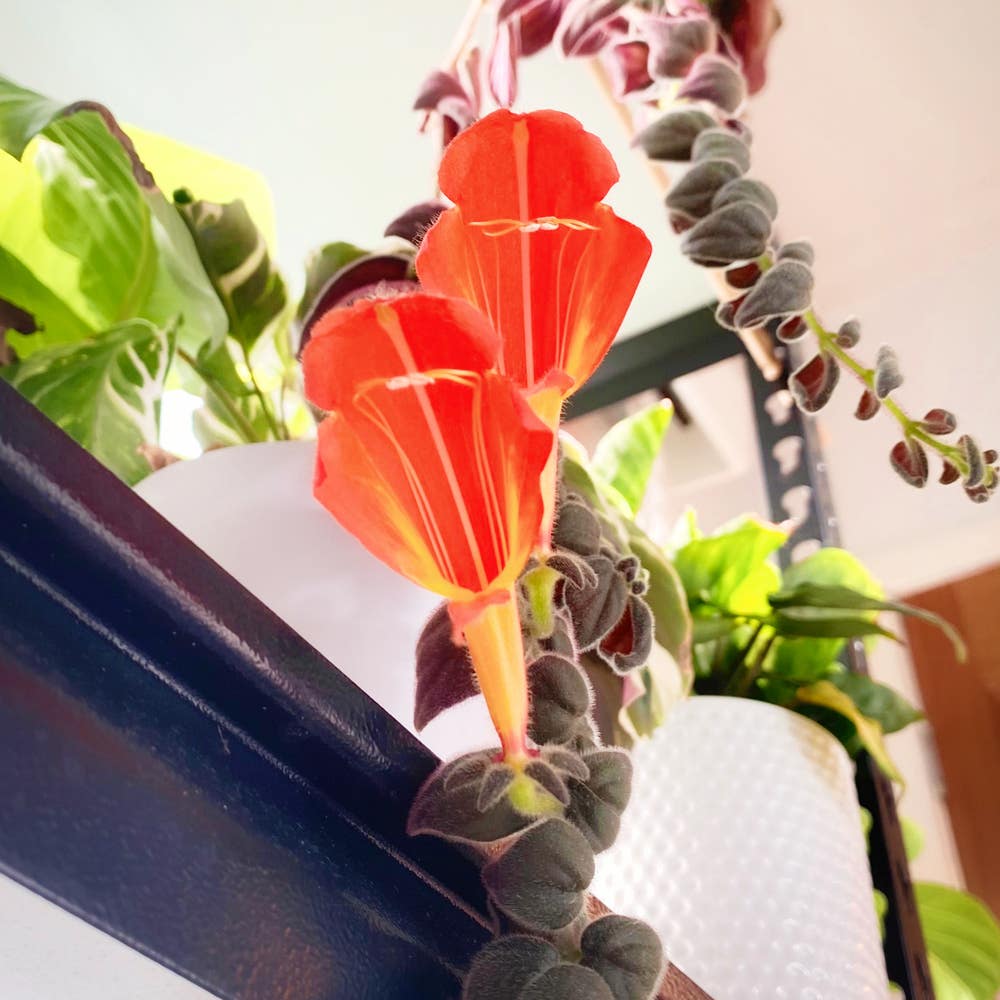
Why Are My Dancing Dolphin Leaves Falling Over? 🐬
Columnea microcalyx
By the Greg Editorial Team
Feb 11, 2024•4 min read
This article was created with the help of AI so we can cover more plants for you. May contain errors. See one? Report it here.
Prevent your Dancing Dolphin's leafy plunge 🍂 by mastering the signs of stress and their remedies.
- Signs of stress: Wilting leaves, loss of sheen, and root rot.
- Water wisely: Use the finger test to prevent over/underwatering.
- Ideal conditions: Bright, indirect light and 65-75°F temperatures.
Spotting the Signs: How to Tell Your Dancing Dolphin is in Distress
🍂 Identifying Droopy Leaves
Wilting Dancing Dolphin leaves are your first hint of trouble. If they're hanging down like a deflated balloon, it's time to take action. Leaves that have lost their sheen or are starting to curl are broadcasting stress signals loud and clear.
🦠 Checking the Roots: When to Suspect Root Rot
If your plant's roots are darker than a stormy sky and give off a foul odor, root rot could be the villain. Yellow leaves and a wilted stance are the plant's way of waving a white flag. Don't ignore these signs; it's a cry for help.
💧 Feeling the Soil: The Tell-Tale Signs of Watering Issues
Soil should feel like a well-wrung sponge, not a swamp or a desert. If the soil is soggy, your watering might be overzealous. Conversely, if it's as dry as a bone, your plant is parched. Adjust your watering to hit that sweet spot of moisture.
Water Woes: Striking the Right Balance
⚠️ The Perils of Overindulgence: Overwatering and Its Fallout
Overwatering is like an uninvited guest at a party—it only causes problems. Your Dancing Dolphin's roots can't breathe underwater, leading to a soggy, root-rot mess. Leaves may yellow, wilt, or fall, signaling distress. If the soil clings to your fingers, it's a cry for less water, not more.
🏜️ The Thirst Trap: Recognizing Underwatering Before It's Too Late
Underwatering turns your plant's soil into a barren wasteland. Look for drooping leaves and browning tips, which are your plant's way of waving a white flag. When the soil crumbles like stale bread, it's past time to quench your plant's thirst.
💧 Fine-Tuning Your Watering Routine: Tips for Perfect Hydration
To avoid the extremes of too wet or too dry, perform the finger test: stick a finger an inch into the soil. If it's damp, hold off on watering; if dry, it's time to hydrate. Water thoroughly, letting excess drain freely, and wait for the soil to dry slightly between sessions. Adjust your routine with the seasons—more in the heat, less in the cool. And if you're forgetful, consider a moisture meter or a self-watering pot to keep your plant's hydration on track.
Light and Temperature: Creating the Ideal Dance Floor
⚡️ Too Much Spotlight: Avoiding Leaf Burn from Excessive Light
Bright, indirect sunlight is the sweet spot for your Dancing Dolphin plant. Direct rays can be too intense, leading to leaf burn. If your plant's leaves are looking more sun-kissed than healthy, it's time to move it away from the window or filter the light with a sheer curtain.
🎶 Keeping the Rhythm: Why Consistent Temperatures Matter
Dancing Dolphins prefer a steady beat when it comes to temperature. Aim to maintain a room temperature between 65-75°F (18-24°C). Fluctuations can stress your plant, causing leaves to droop or fall. Keep it away from drafts, heaters, and air conditioning units to avoid sudden temperature changes.
🌟 Finding the Sweet Spot: Ideal Light and Temperature Settings
Locate a spot that offers bright, indirect light without the harsh direct rays that can scorch leaves. A north-facing window or a position near an east or west window is often ideal. Use a thermometer to monitor the room's temperature, ensuring it stays within the plant's comfort zone. Remember, as seasons change, so might your plant's needs. Adjust its position to avoid cold drafts in winter and intense heat in summer.
Pruning and Support: Getting Your Dolphin Back on Its Fins
✂️ The Art of the Trim: Pruning for Health and Balance
Pruning your Dancing Dolphin plant isn't just about aesthetics; it's essential for its health. Trimming encourages new growth and helps maintain a balanced shape. Use clean, sharp scissors to snip away any dead or overly long stems. This isn't a full-scale haircut but more of a strategic snip here and there. Aim to prune during the plant's active growth phase, usually in spring, to facilitate quick recovery.
🌿 Support Systems: Staking and Other Methods to Prevent Drooping
When your Dancing Dolphin's stems start to resemble overcooked spaghetti, it's time to bring in reinforcements. Staking is your go-to move. Insert a stake next to the drooping stem and gently tie it up with soft plant ties. This is like a secret handshake with your plant, a silent agreement to keep it standing tall. If you're dealing with a full-on droop festival, consider a trellis or a pebble-filled tray for added stability and humidity. Remember, support is not just emotional; it's practical and sometimes made of bamboo.
⚠️ Safety First
This content is for general information and may contain errors, omissions, or outdated details. It is not medical, veterinary advice, or an endorsement of therapeutic claims.
Always consult a qualified healthcare professional before using any plant as food, medicine, or supplement.
Never eat any plant (or feed one to pets) without confirming its identity with at least two trusted sources.
If you suspect poisoning, call Poison Control (800) 222-1222, the Pet Poison Helpline (800) 213-6680, or your local emergency service immediately.
Spotted an error? Please report it here.
Prevent your Dancing Dolphin's leaves from drooping by using Greg to nail the perfect watering schedule 💧 and keep it thriving.