


Looking Glass Cane Begonia
About Looking Glass Cane Begonia
There are over 2,000 species of Begonia, and horticulturalists have created even more varities by cultivating all sorts of shapes and colors! They're native to tropical regions around the world, but are now found in homes in cold climates as well. Their taxonomy is far more complex than other plants, with species belonging to different cultivar groups. They contain oxalic acid, so be sure to keep them out of reach in homes with pets or children! ⚠️
Taxonomy

Begonia 'Looking Glass'
Begonia
Begoniaceae
Cucurbitales

How to care for Looking Glass Cane Begonia
How often to water your Looking Glass Cane Begonia

every 7
Looking Glass Cane Begonia needs 0.5 cups of water every 7 when it doesn’t get direct sunlight and is potted in a 5" pot.
Use our water calculator to personalize watering recommendations to your environment or download Greg for more advanced recommendations for all of your plants.

Water 0.5 cups every
7
Finding light for Looking Glass Cane Begonia in your home

a window
Looking Glass Cane Begonia may have difficulty thriving, and will drop leaves 🍃, without ample sunlight.
Place it less than 3 feet from a south-facing window to maximize the potential for growth.
Select your region to see how the current weather in your area affects the placement of Looking Glass Cane Begonia in your home 🏡.
How to fertilize Looking Glass Cane Begonia

Most potting soils come with ample nutrients which plants use to produce new growth.
By the time your plant has depleted the nutrients in its soil it’s likely grown enough to need a larger pot anyway.
To replenish this plant's nutrients, repot your Looking Glass Cane Begonia after it doubles in size or once a year—whichever comes first.
-
What would make my branches limp? They've been growing like this for quite a while #Begonia
-
Whoa that’s a flower! #Begonia ahhhh!!!! It’s flowering!!!!
-
Who does she think she is? I gave Cleopatra her own pedestal and she decided to take off…again! #StoryofCleopatra #PlantsMakePeopleHappy #HappyPlants #PlantAddict #NewGrowth #PlantTherapy #PlantLove #Begonia #BegoniaBunch
-
#HappyPlants #PlantsMakePeopleHappy #Begonia #PlantAddict #PlantTherapy #PlantMail I found a great nursery on Etsy that sells Begonias!! Look what arrived today finally!! My Strawberry Twist Rex Begonia!!!🍓🤩I’m so excited. She’s a little damaged from the travel because the post office 🏤 didn’t deliver on Saturday as promised. I was worried knowing she had to sit in a dark box for two extra days☹️. She has a few browning/crunchy leaves but overall she still looks 😊. I can’t wait to see how she flourishes once I get her potted up and she recovers. @princesspitstop @LilRootedWitch @MariansOasis
-
Hi, #Greggers 🌿 I want to shoutout my bestie Rachael! You all may know her as @theloveofplants 💖 Those who know her, know she is one of the kindest humans alive😇 Case in point: she sent me #PlantMail, from my very favorite nursery! 📦🤗 I was elated upon opening the box—She got me two of my #wishlistplant—an #AlocasiaDragonScale and a variegated #StrawberryBegonia 😍🍓♥️🥰 They are both SO beautiful, the pictures don’t even do them justice. The pink underside of the Strawberry begonia leaves, the beautiful colors on both plants, the gorgeous texture of their leaves—can you tell I’m in love? 😍🪴 I am so blessed to have met her (and honestly, all of you! I love this community 😘). Gotta give Rachael her flowers 💐—both figuratively and literally! I thought she deserved a public shoutout 😊 Thank you again, girl! You are wonderful, not only for your generosity, but your support, encouragement, and making me laugh daily! You are definitely my kindred spirit 👯♀️🥹🌿💖 #HappyPlants #PlantsMakePeopleHappy #PlantAddict #AlocasiaAddicts #Alocasia #BegoniaBunch #Begonia #PlantHaul #PLANTMAFIA #plantfriendsarethebestfriends #GregGang #PlantGiftsAreTheBestGifts #GabriellasNursery
-
My sad Begonia My poor Begonia is not doing well. I always felt the leaves were thin. Now its completely droopy. I am not sure if its over watered or underwatered or if its too much sun (in a south facing window). Thoughts? HELP. #BEGONIA #happyplants #unhappyplants #ilovegreg #plantsmakepeoplehappy
-
I finally got the courage to repot Ms. Queen Cleopatra over the weekend. I had the help of my husband- thank goodness! 😅 #StoryofCleopatra I was SO nervous to repot her because I didn’t want to disturb her beauty! But we did it - and so far - so good. She still loves me. #HappyPlants #LookingGlassCaneBegonia #Begonia #PlantsMakePeopleHappy #repotting #PlantAddict #PlantTherapy #NewGrowth #PlantLove
-
Check out my favorite begonia leaf prop... #begonia #begoniabunch #propagationstation
-
Today, I built a terrarium! I put in a fern, a begonia, a nerve plant and a random tiny plant I had laying around! Hopefully, the plants will play nicely together. In the meantime, I’m just enjoying my latest project! 😁 #HappyPlants #PlantsMakePeopleHappy #PlantAddict #GregGang #Greggers #Terrariums #Terrarium #Terrariumtribe #NervePlant #Begonia #FernFriends #theamigos #LaSiguanaba
-
I can’t….I just can’t. 🫠 #StoryofCleopatra I moved Cleopatra today to clean around her and pick off some dead leaves. I set her on the top counter of my desk…and I just can’t with her. These pictures do not even do her justice. 🫨😲😧 I included the last picture to show the underside of her leaves 😍 I can’t stop staring at her….what did I do to deserve her beauty? I don’t think I have ever fertilized her. Just water. And she gives me THIS!? 🥹 #HappyPlants #PlantsMakePeopleHappy #PlantAddict #NewGrowth #PlantTherapy #PlantLove #Begonia #BegoniaBunch


Care Summary for Looking Glass Cane Begonia

Looking Glass Cane Begonia
 Greg recommends:
 Water
Water
0.5 cups every 7 days
 Placement
< 3ft from a window
 Nutrients
Repot after 2x growth
Based on the 4” pot your plant is in, and that it doesn’t get direct sunlight.
 Trending in your area









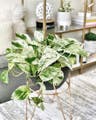
 Similar to Looking Glass Cane Begonia


✨ Discover rare plants

Croton Nervia

Crassula 'Purple Drag…

Fernleaf Lavendar

Orange Lipstick Plant

Large Leaf Elephant B…

Caladium
Astroloba congesta

Anthurium Fingers

Fagraea ceilanica

Stomatium acutifolium

Chandelier Plant
Hoya crassipetiolata

Radiator Plant

Raphionacme flanaganii

Munstead Lavender

Treasure Flower

Aeonium 'Blushing Bea…
