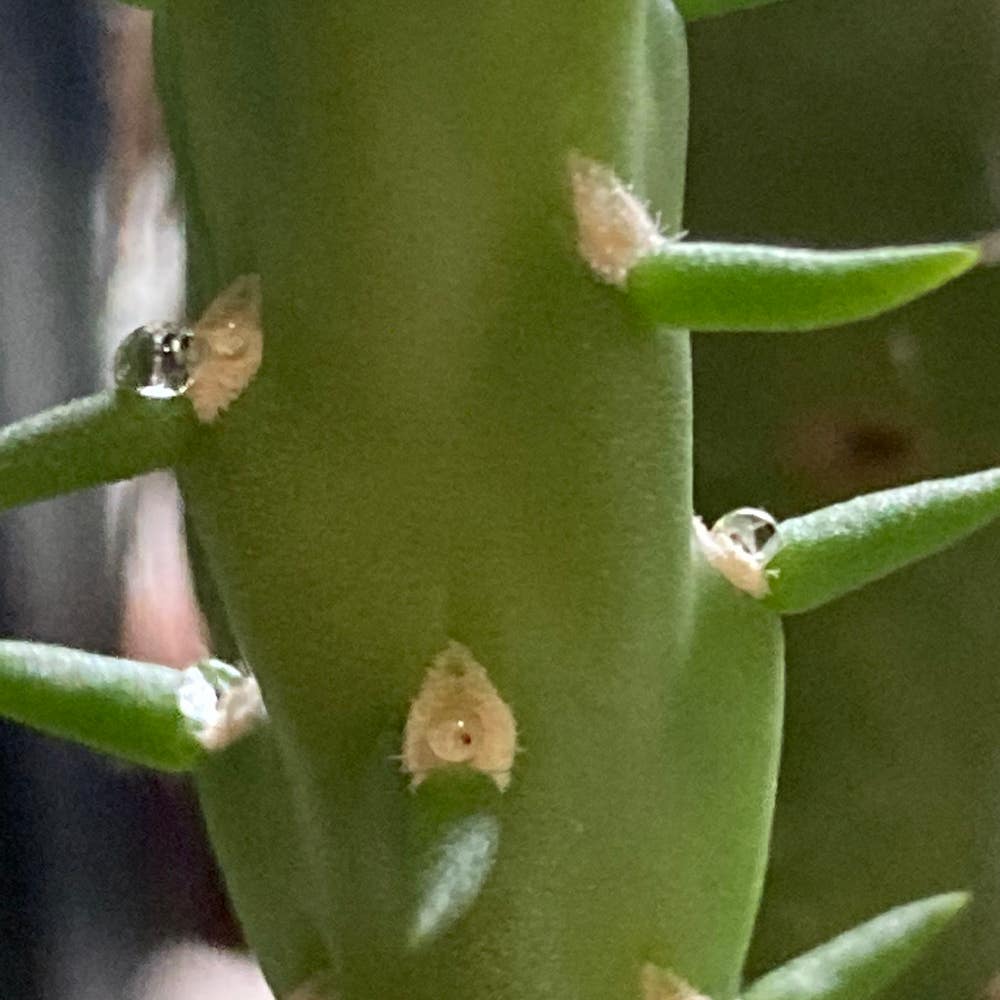
🌵 How Can You Tell If A Mini Cholla Is Dying?
Cylindropuntia 'Mini Cholla'
By the Greg Editorial Team
Mar 12, 2024•4 min read
This article was created with the help of AI so we can cover more plants for you. May contain errors. See one? Report it here.
Rescue your Mini Cholla 🌵 from demise by decoding its distress signals early!
- Wilting or discoloration signals health issues like pests or watering problems.
- Consistent watering and light are key to avoiding Mini Cholla distress.
- Watch for root rot—over-watering's a common killer; let soil dry between waterings.
Spotting Trouble: Key Symptoms to Watch For
🥀 Wilting, Yellowing, or Browning
Wilting is your Mini Cholla's version of a distress signal. It's not just being dramatic; it's genuinely struggling. When the vibrant green turns to a yellow or brown, it's time to sit up and take notice. This could be a cry for help from the roots up.
🕵️ Unusual Spots or Discoloration
Spots on your Mini Cholla aren't adding character; they're pointing to trouble. Whether it's a fungal fiesta or a bacterial bash, these uninvited guests leave a mark. Discoloration isn't a fashion statement; it's a sign that your plant is under the weather.
🤔 Texture Changes: Soft or Brittle Segments
If your Mini Cholla feels like a squishy marshmallow or a fragile twig, it's screaming for an intervention. Soft segments may suggest overwatering, while brittle ones hint at dehydration. Get to know your plant's normal feel, so you can detect these textural red flags.
📉 Altered Growth Patterns
When growth hits a wall, it's not your Mini Cholla being lazy. If it's been the same size since you last rearranged your furniture, there's an issue. Altered growth patterns are the plant's subtle way of saying, "Hey, I'm not okay here."
Common Culprits: Issues and How to Fix Them
💧 Inconsistent Watering
Consistency is your Mini Cholla's best friend when it comes to watering. Shriveled segments are a tell-tale sign of neglect. Establish a watering routine that allows the soil to dry slightly between sessions. This prevents the extremes of dehydration and waterlogging.
🌞 Irregular Light Exposure
Your Mini Cholla craves the sweet spot of sunlight. Too much light leads to a sunburned cactus, while too little results in a pale, stretched-out plant. Rotate the pot for even light distribution and use sheer curtains to diffuse intense sunlight.
🌡️ Temperature Tantrums
Mini Chollas don't appreciate extreme temperature swings. Keep them in a stable environment, away from drafts and direct heat sources. Think 'room temperature'—not too hot, not too cold.
💦 The Dangers of Over-watering
Over-watering is the fast track to root rot. If the soil feels swampy, it's time to cut back on the H2O. Let the soil dry completely before the next watering, and consider using a well-draining soil mix to prevent future water retention.
🏜️ The Perils of Under-watering
Conversely, under-watering turns your Mini Cholla into a cactus jerky. The soil should be dry an inch below the surface before watering again. Deep, infrequent waterings encourage strong root growth and prevent withering.
Pests and Other Nasties: Tackling Uninvited Guests
🐜 Pests: The Mini Invaders
Your Mini Cholla might be under siege by miniature marauders. Spider mites are the ninjas of the pest world, barely visible but deadly to your plant. Blast them with water to disrupt their stealthy webs. Introduce natural predators like ladybugs to keep them in check. If you're going for the kill, a diluted isopropyl alcohol spray can be your weapon of choice.
Mealybugs and scale insects are like the vandals of the plant world, leaving a mess of cottony deposits and waxy bumps. Keep your plant's area tidy to discourage them, and if they show up, dab them with alcohol or apply insecticide as per the instructions—no freestyling here.
Scorching: When the Sun is Too Much
Scorching is your Mini Cholla crying out for a sunscreen. If the leaves are looking like they've had a bad day at the beach, it's time to dial back the sun exposure. Provide some shade to give your plant a break from the intense rays.
Mold and Fungus: The Silent Creepers
Mold and fungus are the creepers at the party, showing up uninvited and spreading fast. Improve air circulation and water at the base to keep the leaves dry. If they've already made themselves at home, a succulent-safe fungicide can show them the door. Remember, dry and breezy conditions are your best defense against these silent invaders.
Root Rot: The Underground Killer
Root rot is like the horror movie monster lurking beneath the surface. If your Mini Cholla is getting too much water, its roots might be drowning in silence. Mushy stems are a telltale sign. Unpot your plant, trim any rotten roots, and repot in fresh, well-draining soil. Keep the watering balanced—your Mini Cholla isn't a fish, it doesn't need to swim.
⚠️ Safety First
This content is for general information and may contain errors, omissions, or outdated details. It is not medical, veterinary advice, or an endorsement of therapeutic claims.
Always consult a qualified healthcare professional before using any plant as food, medicine, or supplement.
Never eat any plant (or feed one to pets) without confirming its identity with at least two trusted sources.
If you suspect poisoning, call Poison Control (800) 222-1222, the Pet Poison Helpline (800) 213-6680, or your local emergency service immediately.
Spotted an error? Please report it here.
Avoid a Mini Cholla meltdown with Greg's tailored care reminders 🌵, ensuring your spiky friend thrives with just the right amount of water and sun.