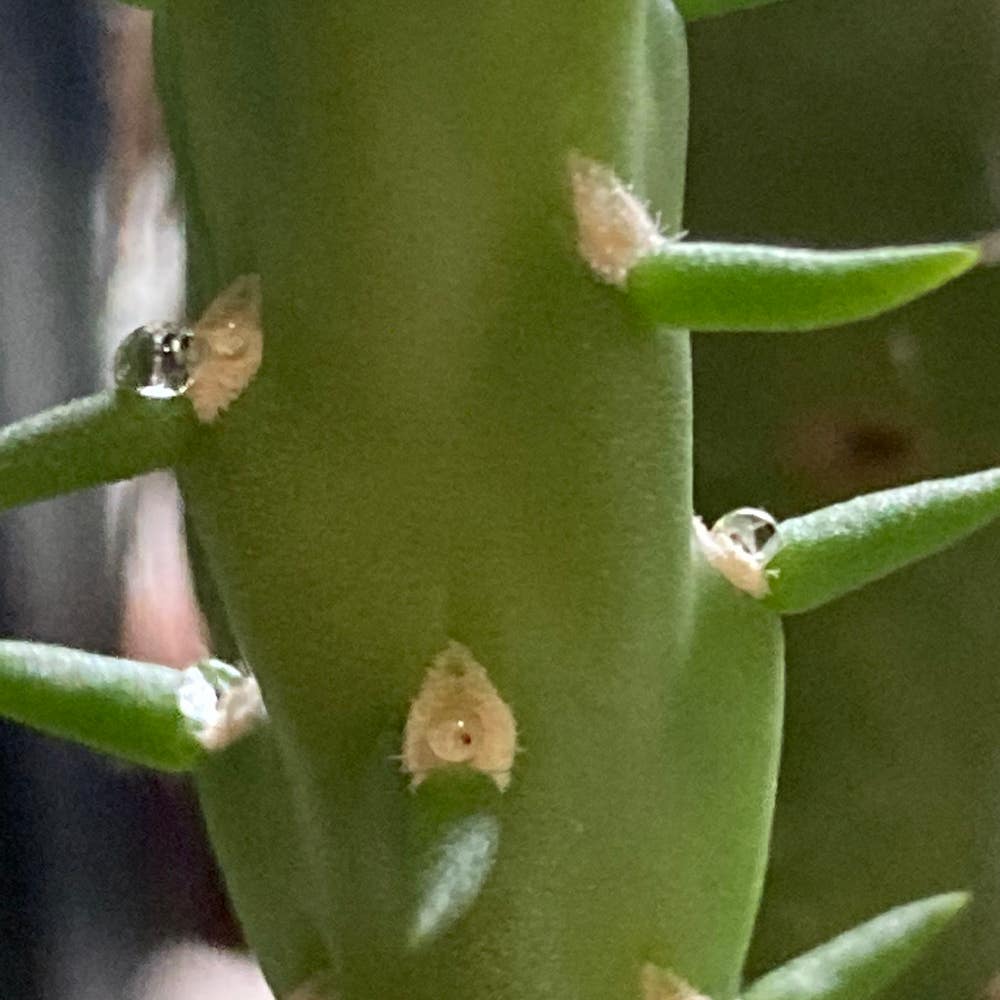
What To Do About Bugs on My Mini Cholla? 🐛
Cylindropuntia 'Mini Cholla'
By the Greg Editorial Team
Mar 15, 2024•4 min read
This article was created with the help of AI so we can cover more plants for you. May contain errors. See one? Report it here.
Shield your Mini Cholla 🌵 from bug bullies with expert tips for a thriving, pest-free plant life!
- 🕸️ Identify pests early with webbing, stickiness, and unusual bumps.
- Use water, predators, or insecticides to combat different Mini Cholla bugs.
- Prevent infestations with cleanliness, humidity, and careful watering.
Meet the Mini Cholla's Most Unwanted
🕷️ Spider Mites: The Sneaky Sap-Suckers
Spotting the Web: Identifying Spider Mites on Your Mini Cholla
Tiny webbing on your Mini Cholla? That's the calling card of spider mites. These minuscule marauders are hard to spot, but their damage isn't. Look for yellow speckling on leaves, a sign they're feasting on your plant.
Booting Them Out: Effective Spider Mite Remedies
Blast them with water to ruin their day and their webs. Introduce predatory insects like ladybugs for a natural hit job. For stubborn infestations, mix isopropyl alcohol and water and spray with abandon. Repeat as necessary.
Keeping the Mites at Bay: Prevention Tips
Keep your Mini Cholla dust-free and the air around it more humid than a swamp. New plants can be Trojan horses for mites, so inspect them thoroughly before they join your collection.
🦠 Scale: The Sticky Freeloaders
Unmasking the Camouflage: How to Spot Scale on Mini Cholla
Scale insects are the masters of disguise, pretending to be harmless bumps. If your Mini Cholla is sticky, or you see sooty mold, it's time to evict these freeloaders.
Scrubbing Off the Scale: Remedies to Reclaim Your Plant
Rubbing alcohol is your targeted weapon—apply with a cotton swab. For a full-on assault, insecticides can be necessary. Just remember, it's a war, not a skirmish.
Fortifying Your Mini Cholla: Scale Prevention Strategies
Inspect new plants like a hawk and quarantine them if needed. Companion planting can also help; some herbs and ornamentals are like bouncers, keeping scale at bay.
🦟 Fungus Gnats and Fruit Flies: The Fuzzy Fliers
Catching the Buzz: Identifying Fungus Gnats and Fruit Flies
Fungus gnats and fruit flies are more than a buzzkill. They're a sign of overwatering and can carry plant pathogens. Catch them early before they turn into a bigger headache.
Clearing the Air: How to Get Rid of Fuzzy Fliers
Yellow sticky traps are like flypaper for these pests. For larvae, let the soil dry out or use a bacterial insecticide. Keep your Mini Cholla's soil on the drier side to avoid a repeat infestation.
Making Your Mini Cholla a No-Fly Zone: Prevention Tips
Overwatering is an open invitation. Keep the soil lightly moist and ensure good drainage. Covering the soil with sand can also deter egg-laying.
🐛 Mealybugs: The Cotton-Clad Invaders
The White Warning Signs: Spotting Mealybugs Early
White, cottony clumps are a dead giveaway. These pests love cozy nooks, so inspect your Mini Cholla's crevices regularly. Sticky honeydew is another red flag.
Cleaning Up the Cotton: Mealybug Eradication Tactics
Insecticidal soap or neem oil are your go-to for these pests. Apply diligently, focusing on those hard-to-reach areas. Patience and persistence are key.
Mealybug Moats: Preventative Measures
Isolation is the name of the game. New plants should be kept away from your collection until they're cleared. Regular checks and prompt action will keep your Mini Cholla mealybug-free.
Other Frequent Foes: Aphids and Thrips
Quick ID Guide: Recognizing Aphids and Thrips
Aphids are tiny but mighty, often green or black. Thrips are slender and love to suck the life out of new growth. Both leave
Early Warning Signs: Catching Pests Before They Multiply
👀 Visual Clues: What to Look For
Inspect regularly—like you're proofreading your favorite mystery novel for the umpteenth time. Look for webbing, a classic sign of spider mites, or a sticky residue that screams scale insects. Don't forget to flip those leaves; pests love the underside like kids love hide-and-seek spots.
✋ Touch and Tell: Physical Signs of Pests
Feel your Mini Cholla; it's not weird, it's necessary. If it's sticky or has unusual bumps, you might be shaking hands with scale or mealybugs. A plant that's more flimsy than usual could be waving a white flag of surrender to an aphid invasion.
🌱 Plant Behavior: Understanding Stress Signals
Watch for drama—like wilting or yellowing leaves. It's your Mini Cholla's way of saying, "I'm not okay." Stunted growth is another red flag; it's like your plant is stuck in a perpetual Monday. These signs can mean pests are throwing a party, and they didn't even invite you.
⚠️ Safety First
This content is for general information and may contain errors, omissions, or outdated details. It is not medical, veterinary advice, or an endorsement of therapeutic claims.
Always consult a qualified healthcare professional before using any plant as food, medicine, or supplement.
Never eat any plant (or feed one to pets) without confirming its identity with at least two trusted sources.
If you suspect poisoning, call Poison Control (800) 222-1222, the Pet Poison Helpline (800) 213-6680, or your local emergency service immediately.
Spotted an error? Please report it here.
Prevent pests from bugging your Mini Cholla by using Greg's custom care alerts 🌵 to keep your plant healthy and catch critters early!