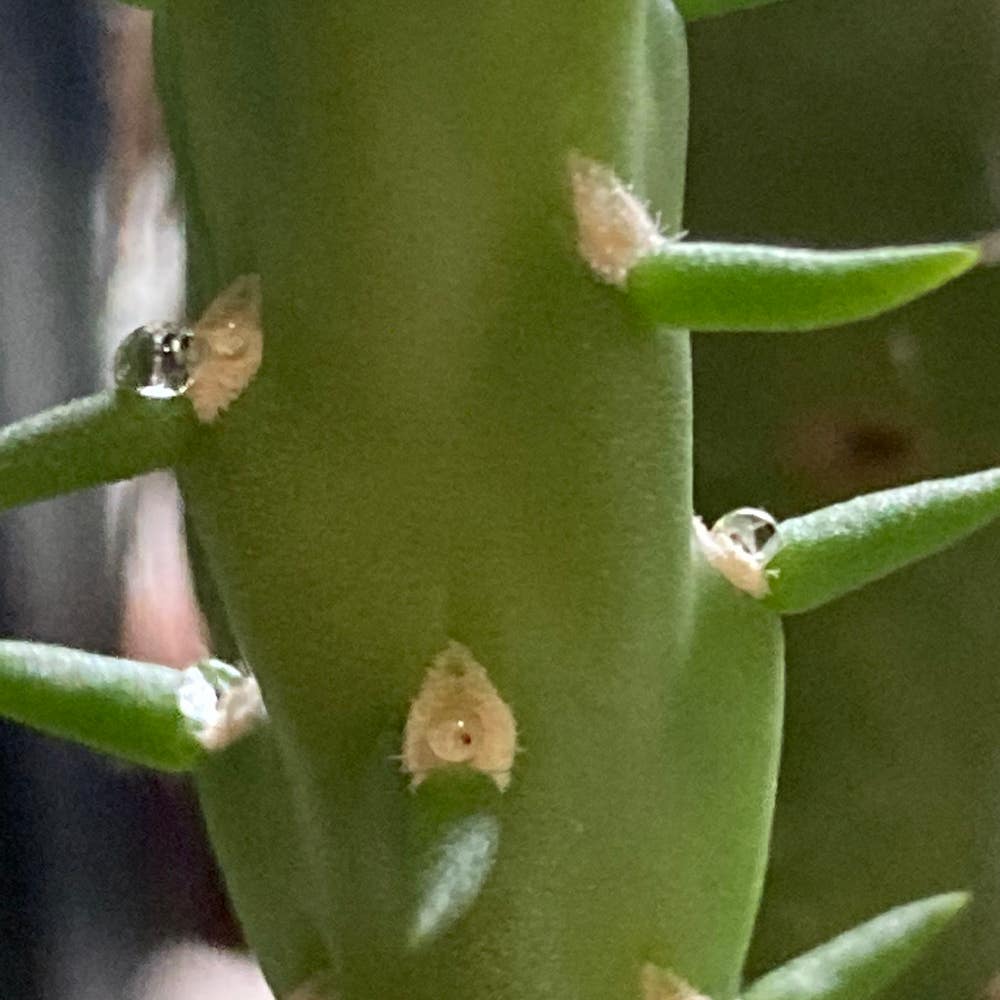
🌵 Why Are My Mini Cholla Leaves Mushy?
Cylindropuntia 'Mini Cholla'
By the Greg Editorial Team
Mar 12, 2024•3 min read
This article was created with the help of AI so we can cover more plants for you. May contain errors. See one? Report it here.
Rescue your Mini Cholla from squishy despair 🌵—learn the signs and fixes for soggy troubles!
- 🌵 Overwatering causes mushy leaves; check soil moisture before watering.
- Root rot and fungal infections are serious threats to Mini Cholla.
- Well-draining soil and good airflow prevent overwatering and disease.
Spotting the Trouble: Signs Your Mini Cholla is Unhappy
💧 Overwatering Symptoms
Yellowing leaves are your Mini Cholla's way of saying, "Ease up on the aqua!" If the leaves are mushy or feel like overripe fruit, it's a clear sign you've been too generous with the water. Translucent leaves are another distress signal, indicating your plant is more waterlogged than a sunken ship.
🚫 Root Rot Red Flags
When roots turn from sturdy white to a mushy brown mess, it's an SOS from below the soil. A plant leaning more than a tipsy guest or displaying pale growth is your cue to check for squishy, blackened roots. A foul smell from the soil is the equivalent of a rotten egg at a perfume factory—unmistakable and unwelcome.
🍄 Fungal Infections: More Than Just Mush
Mushy leaves sporting brown or black spots are the signature of a fungal fiesta. If your Mini Cholla's home feels more like a swamp than a desert, it's time to cut back on moisture. And if you spot mold or fungus gatecrashing the soil's surface, consider it a neon sign pointing to a watering intervention.
First Aid for Your Mini Cholla
🚱 Cutting Back on Water
Overwatering is a common misstep for Mini Cholla parents. To remedy this, check the soil an inch deep; if it feels damp, hold off on watering. Remember, Mini Chollas are desert natives that prefer a drought over a deluge.
🏞️ Soil SOS: Revamping Your Plant's Foundation
The right soil is crucial for your Mini Cholla's recovery. Opt for a well-draining mix with perlite, pumice, or coarse sand. This ensures any water given has a quick escape route, preventing root parties in soggy soil.
✂️ Pruning with Precision
When pruning, think of yourself as a sculptor, not a lumberjack. Remove only the damaged leaves, and never more than one-third of the plant at once to prevent shock. Sterilize your tools before cutting to avoid introducing pathogens.
Turning the Tide: Preventative Measures
💧 Mastering the Watering Schedule
Creating a watering routine that keeps the mush at bay is more art than science. It's about vigilance and adaptation. Start by checking the soil's top inch; if it feels like a dry handshake, it's time to water. If it's a wet fish, hold off. Use tools like moisture meters or calendar alerts, but trust your instincts too. Remember, consistency is key, but so is flexibility—adjust for seasonal changes.
🌱 The Right Soil for the Job
The right soil mix is your Mini Cholla's best friend. Aim for a blend that's more draining than a colander. Incorporate materials like perlite or coarse sand to ensure quick drainage. The pot is part of the equation too—make sure it has drainage holes to rival Swiss cheese. This setup will help prevent water from overstaying its welcome.
💨 Boosting Airflow
Your Mini Cholla craves fresh air like a breeze on a stuffy day. Ensure it's not suffocating in a crowded space. Good airflow keeps humidity in check and deters fungal party crashers. Think of positioning your plant like picking the best seat at a party—not too crowded, with plenty of space to mingle. This simple step is a giant leap towards a healthier plant.
⚠️ Safety First
This content is for general information and may contain errors, omissions, or outdated details. It is not medical, veterinary advice, or an endorsement of therapeutic claims.
Always consult a qualified healthcare professional before using any plant as food, medicine, or supplement.
Never eat any plant (or feed one to pets) without confirming its identity with at least two trusted sources.
If you suspect poisoning, call Poison Control (800) 222-1222, the Pet Poison Helpline (800) 213-6680, or your local emergency service immediately.
Spotted an error? Please report it here.
Avoid the mushy mess and keep your Mini Cholla perfectly parched 🌵 with Greg's personalized reminders that ensure you water only when the time is just right.